Buddymoons, Ecomoons & Volunteermoons: UK Guide
Key Takeaways
- Buddymoons — honeymoons with close friends — now account for an estimated 8% of UK post-wedding trips in 2026
- Ecomoons (low-carbon, ecologically focused honeymoons) are chosen by 14% of UK couples who describe themselves as environmentally conscious
- Volunteermoons add a structured volunteer placement to the trip; typical duration is 7-10 days volunteering plus 5-7 days leisure
- Average buddymoon budget: £3,200-£5,800 per couple depending on destination and group size
- Ecomoon popular destinations from the UK: Scotland, Norway, Iceland, and Portugal (all accessible without long-haul flying)
- Volunteermoon placement costs range from £800 to £2,400 per person through UK-based operators
The buddymoon: honeymoon with your people
What it is and why couples choose it
A buddymoon extends the wedding celebration into a shared travel experience with close friends or family. The couple remains the centre of the trip — this is not a generic group holiday — but the solitude of a traditional honeymoon is replaced by collective experience.
Most buddymoons are chosen by couples who:
- Eloped or had a micro-wedding and want a larger shared moment post-ceremony
- Have friends or family who couldn’t attend the wedding and want to celebrate separately
- Find the idea of two people alone for two weeks less appealing than an extended social celebration
- Have a group of close friends they regularly travel with anyway
What a buddymoon looks like
A typical UK buddymoon involves 6-12 people for 5-10 nights. The destination is usually chosen for villa or house rental — a property that accommodates the group together rather than individual hotel rooms.
European buddymoon: 8 people in a villa in the Algarve or Mallorca, 7 nights. Villa costs £3,200-£4,800 split across 4 couples: £800-£1,200 per couple for accommodation. Flights from the UK: £180-£320 per person return, so £360-£640 per couple. Total accommodation and flights: £1,160-£1,840 per couple. Add food, activities, and spending money for a total of £1,800-£2,800 per couple.
Long-haul buddymoon: 6 people in a villa in Bali or Thailand, 10 nights. Villa costs £4,500-£6,000 split across 3 couples: £1,500-£2,000 per couple for accommodation. Flights: £900-£1,400 per person return, so £1,800-£2,800 per couple. Total accommodation and flights: £3,300-£4,800. Add costs: £4,200-£6,000 per couple total.
The romance question
Every couple considering a buddymoon asks whether having friends along undermines the honeymoon experience. The answer, according to every couple Weddings Hub spoke with, is the same: it depends on whether couple time is deliberately protected.
Rachel and David took an 8-person buddymoon to Greece in September 2024. “We had 10 days. We built in 3 nights alone on a different island — just us — at the midpoint of the trip. Those three days were the most romantic trip I’ve ever had because we’d had the buildup of the group days and suddenly it was quiet. The contrast made it special.”
The couples who reported buddymoon regret were those who didn’t build in solo time. Without deliberate planning, the group dynamic takes over and the couple ends up feeling like they missed the honeymoon.
Practical rule: Book at least 2-3 nights alone, in a different accommodation or different location, as part of any buddymoon. Treat this as non-negotiable.
The ecomoon: low-carbon, high-meaning
What it is and why it’s growing
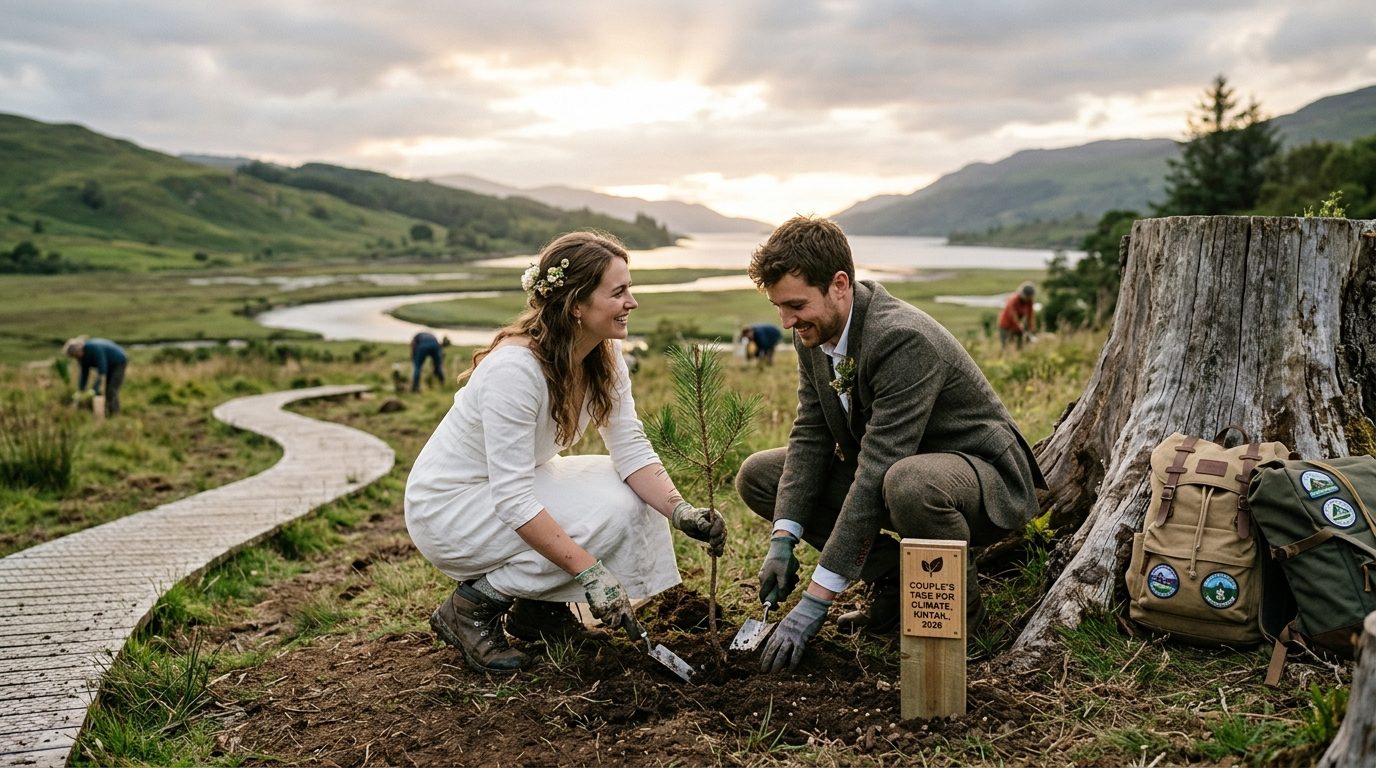
An ecomoon is a honeymoon structured around ecological values. It typically involves: avoiding long-haul flights; choosing accommodation with verified sustainability credentials; visiting destinations where tourist spending directly supports conservation or local communities.
The best UK ecomoon destinations
Scottish Highlands. Accessible from anywhere in the UK without flying. Eco-lodges and remote cabin accommodation is well-developed in the Highlands — many properties are off-grid or low-impact. Costs: £150-£350 per night for eco-lodge accommodation; 7-night trip total £1,200-£2,800 per couple including travel and activities. The scale and landscape compete with international destinations for couples who prioritise wilderness over warmth.
Norway. Accessible by train (London to Oslo via ferry, approximately 22-26 hours) or a relatively short flight (2 hours). Norway has some of the world’s strongest environmental credentials for tourism. Summer (June-August) gives midnight sun; winter gives the Northern Lights. 7-night costs: £1,800-£3,200 per couple including travel and accommodation.
Iceland. A 3-hour flight from the UK but broadly compatible with ecomoon values given Iceland’s geothermal energy supply and strong conservation infrastructure. July-August is peak season; May-June and September offer better value. 7-night costs: £2,200-£3,800 per couple.
Portugal (Alentejo region). The least-visited but most ecologically interesting region of Portugal — cork forests, organic wine estates, and agri-tourism accommodation that directly funds land conservation. Accessible by train from London (approximately 20 hours via Paris and Madrid) or a 2.5-hour flight. 7-night costs: £1,400-£2,400 per couple.
What eco-credentials actually mean
“Eco-lodge” is a loose term that ranges from a genuinely off-grid, solar-powered cabin to a property that simply recycles its glass. When booking ecomoon accommodation, ask specifically:
- What percentage of energy comes from renewable sources?
- Does the property operate on a single-use-plastic-free basis?
- Is there a documented relationship with local conservation or community programmes?
- What is the carbon footprint certification (Green Tourism, EarthCheck, Rainforest Alliance)?
Properties with specific certifications are more credible than those that self-describe as “eco.”
The volunteermoon: meaningful + leisure
What it is
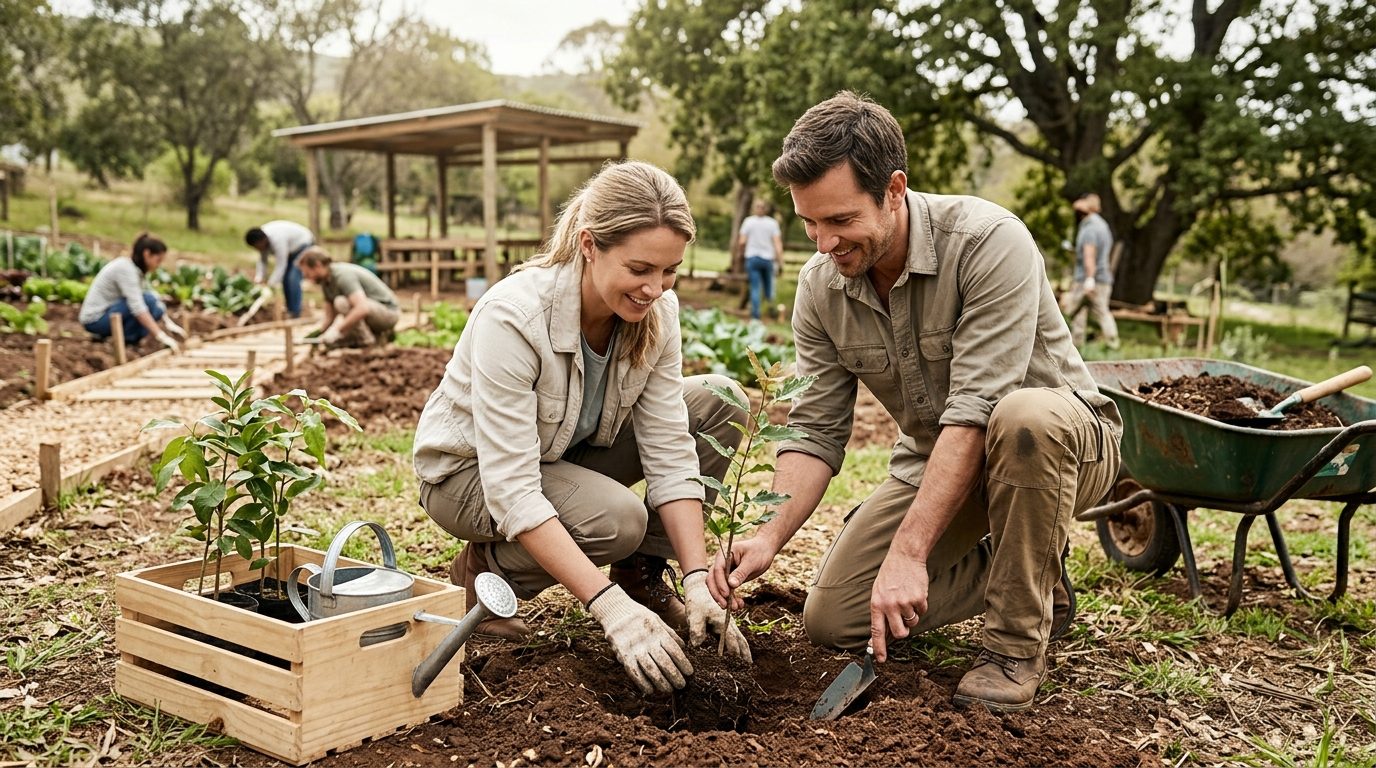
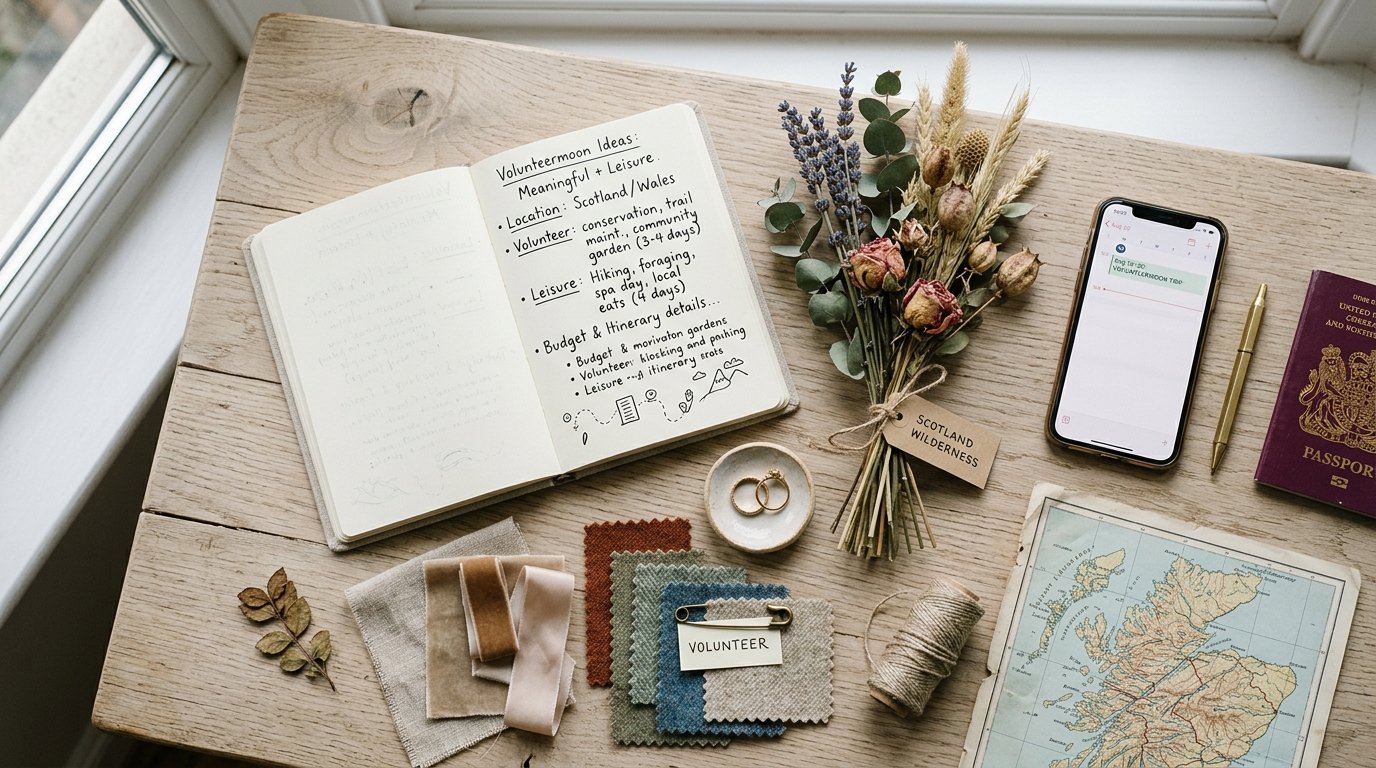
A volunteermoon combines a structured volunteer placement with leisure travel. The volunteer element is organised through a placement operator; couples typically spend 7-14 days on the project and 5-10 days on conventional leisure in the same region.
UK volunteermoon operators that Weddings Hub identified as active for 2026:
Frontier (frontiergap.com) — conservation and community projects in East Africa, Southeast Asia, and South America. Placements from 2 weeks. Cost: £1,200-£2,000 per person for a 2-week placement, excluding flights.
Projects Abroad (projects-abroad.co.uk) — medical, teaching, conservation, and community projects across 30 countries. Couples can book together. Cost: £1,100-£1,800 per person for a 2-week placement.
GVI (gvi.co.uk) — conservation and education projects in Africa, Asia, and Latin America. Couples-specific placements available. Cost: £900-£2,400 per person for 2-week placements depending on programme.
A real example: Sophie and Marcus, Tanzania, 2025
Sophie (29) and Marcus (32) spent 10 days at a wildlife conservation project near the Serengeti, then 7 days on safari and at Zanzibar, for their honeymoon in July 2025.
“We’d done beach holidays before. We both work in environmental charity and the idea of spending two weeks doing exactly nothing felt wrong. The placement gave us a shared purpose — we were doing something together that we both cared about. And it made the safari more meaningful because we understood the conservation context.”
Their costs: placement through GVI (£1,100 per person, so £2,200), flights London to Kilimanjaro (£820 per person return, so £1,640), 10 days accommodation at the project (included in placement fee), 7 days Zanzibar accommodation and safari (£2,800 total for the couple). Grand total: £6,640 for the full trip. A comparable 17-day luxury safari and beach holiday would have cost £8,000-£11,000.
“We came back feeling like we’d actually done something. The people we met at the project — other volunteers, the rangers, the local team — those are now people we’re still in contact with. A beach holiday doesn’t give you that.”
Comparing the three formats
| Format | Average cost (per couple) | Who it suits | Main risk |
|---|---|---|---|
| Buddymoon (Europe) | £1,800-£2,800 | Sociable couples; post-elopement | Romance diluted without couple time |
| Buddymoon (long-haul) | £4,200-£6,000 | Same; higher budget | Group dynamics over extended trip |
| Ecomoon (Scotland/Norway) | £1,200-£3,200 | Environmentally values-led couples | Perceived as less glamorous |
| Ecomoon (Iceland/Portugal) | £1,400-£3,800 | Broader eco-conscious couples | Weather unpredictability |
| Volunteermoon (Africa/Asia) | £5,000-£8,000 | Purpose-driven couples with flexibility | Placement quality varies; less relaxation |
How to decide
Choose a buddymoon if: you had an intimate wedding and want a wider celebration; your closest friends travel well together; you are comfortable planning deliberate couple-only time within the trip.
Choose an ecomoon if: environmental values are central to your identity as a couple; you are comfortable explaining your choice to guests who expect Maldives pictures; Scotland or Norway genuinely excites you.
Choose a volunteermoon if: you have relevant skills (medical, education, conservation); you have already done conventional honeymoon travel and want something different; you have flexible dates (most placements prefer a minimum 10-day commitment).
Related reading
- The Double Honeymoon: Why UK Couples Are Splitting Their Trip in Two
- Multi-Day Weddings: 3-Day Wedding Weekends Explained
- Sequel Weddings: The Two-Ceremony Format
- Weekday Weddings UK: The Real Cost Saving
- 59% of US Couples Delay Buying a Home for Their Wedding — UK Couples Are Next
Frequently asked questions
What is a buddymoon?
A buddymoon is a honeymoon taken with a group of close friends or family alongside the newlywed couple. It is not a group holiday in the conventional sense — the couple are still the focus of the trip. Friends join for part or all of the trip. The format is most common when the couple's wedding was small and the buddymoon serves as an extended celebration for those who couldn't attend the ceremony.
How much does a buddymoon cost?
Budget depends on destination and group size. A European buddymoon (Villa in Portugal or Spain, 8-10 people for 7 nights) typically costs £1,400-£2,200 per couple when villa costs are split across the group. A long-haul buddymoon (Thailand, Bali, or Mexico, 6 people for 10 nights) costs £2,800-£4,600 per couple. Couples typically cover their own flights and activities; accommodation is often split equally.
What is an ecomoon?
An ecomoon is a honeymoon focused on low-carbon travel and ecological destinations. This typically means avoiding long-haul flights, choosing accommodation with verified sustainability credentials, and visiting areas where tourist income directly supports conservation. Scottish Highlands, Norway's fjords, Portugal's Alentejo, and Iceland are the most common UK ecomoon destinations. Some ecomoon couples calculate and offset their carbon footprint as part of the trip.
What is a volunteermoon?
A volunteermoon combines a structured volunteer placement with leisure travel. Couples spend 7-14 days working with a conservation project, teaching programme, or community organisation, then take 5-10 days of conventional holiday in the same region. Operators including Frontier, Projects Abroad, and GVI offer UK-accessible placements that can be structured as a post-wedding trip. Costs range from £800 to £2,400 per person for the placement element, excluding flights and leisure accommodation.
Are any of these formats cheaper than a traditional honeymoon?
Ecomoons can be significantly cheaper — a 7-night Scottish Highlands ecomoon staying in eco-lodges costs £1,200-£2,200 per couple including travel, versus £3,500-£6,000 for a Maldives equivalent. Buddymoons spread accommodation costs across more people, reducing the per-couple spend. Volunteermoons are often comparable to or more expensive than traditional honeymoons once placement fees are added.
Do these formats work as proper honeymoons or do guests ruin the romance?
This is the central question every couple considering a buddymoon asks. The answer depends on group dynamics and how the trip is structured. Most buddymoon couples carve out private time — at least 2-3 days at the destination without the group, or specific evenings alone. Couples who have attempted buddymoons without defined private time report that the couple dynamic gets diluted. Planning alone-time deliberately is the key practical step.
Which honeymoon trend is growing fastest in the UK?
Ecomoons are growing fastest among UK couples who describe environmental values as central to their identity. Buddymoons are growing fastest among couples who eloped or had micro-weddings and want a shared experience post-ceremony. Volunteermoons remain the smallest of the three but are growing among couples in their 30s who have already done extensive leisure travel and want a different kind of experience.