Bridesmaid Dress Trends 2026: Mismatched & Convertible
Key Takeaways
- Mismatched bridesmaid dresses now account for 58% of UK bridesmaid dress orders — up from 34% in 2022
- Two-tone and colour-block bridesmaid dresses have doubled in share since 2023, now at 14% of orders
- Convertible dresses (one dress, multiple wearing configurations) are the fastest-growing format at 11% of orders
- Sage green remains the leading bridesmaid colour for 2026, held for three consecutive years; dusty rose is declining
- Average UK bridesmaid dress spend in 2026: £145 per person. Brides paying in full: 38% of couples
- Floor-length dresses held at 61% of UK orders; midi length growing to 27%; mini dresses at 12%
The three dominant trends: mismatched, two-tone, convertible
The 2026 bridesmaid dress market has fractured into three distinct approaches, each addressing a different problem the identical-dress format created.
Mismatched styles (58% of UK orders)
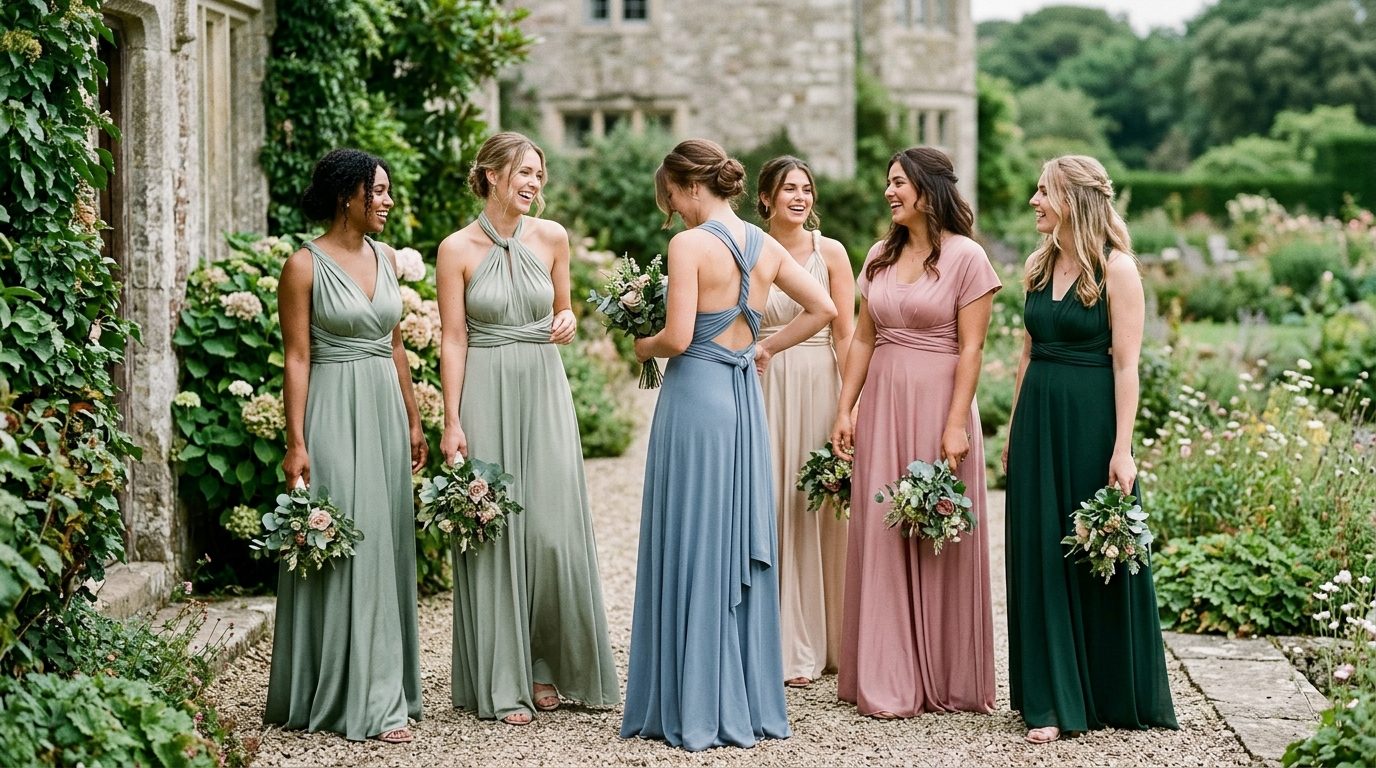
Same colour, different cuts. Each bridesmaid wears a dress in the wedding colour that suits her own body shape and preference. This approach has grown from 34% of UK orders in 2022 to 58% in 2026 — the single largest trend shift in UK bridesmaid dressing in recent years.
Why mismatched works:
- Every bridesmaid wears a style that flatters her — not a compromise cut chosen for the group
- Individual comfort increases dramatically: bridesmaids who hated traditional bridesmaid dresses now have a dress they might actually wear again
- Photographs with more visual interest than a line of identical outfits
Making mismatched work:
The critical rule is colour consistency. All dresses must be the same dye lot from the same supplier, or as close as possible. Even a small colour variation between two different brands reads as unplanned rather than intentional in photographs.
The most reliable approach: choose a colour from a single supplier’s bridesmaid range and allow each bridesmaid to pick the cut she prefers within that range. Brands with wide mismatched ranges that UK boutiques recommend most frequently include Rewritten, TFNC, JJ’s House, and Dessy UK.
Two-tone and colour-block dresses (14% of UK orders)
Two-tone and colour-block bridesmaid dresses have doubled their share in the UK market since 2023. The format — a single dress with two distinct colours or a graduated colour transition — is particularly strong at:
- Bohemian outdoor weddings with a natural, earthy palette
- Maximalist tablescapes where the bridesmaid dresses are part of the colour story
- Weddings where the bride wants visual interest without fully mismatched looks
The 2026 two-tone pairings gaining traction:
| Primary tone | Secondary tone | Wedding style |
|---|---|---|
| Sage green | Warm ivory | Botanical, outdoor |
| Dusty rose | Champagne | Classic, ballroom |
| Terracotta | Rust orange | Autumn, barn |
| Deep wine | Blush | Formal, winter |
| Cornflower blue | White | Summer, coastal |
The transition can be horizontal (bodice one colour, skirt another), vertical (asymmetric colour division), or a fabric overlay (chiffon overlay in a different tone over a satin base). UK bridal boutiques report the satin-plus-chiffon-overlay approach is the most ordered two-tone construction.
Convertible dresses (11% of UK orders)
Convertible bridesmaid dresses — one dress that can be worn in multiple configurations — are the fastest-growing format in the UK market. In 2024 they accounted for 6% of orders; by early 2026 they are at 11% and accelerating.
How convertible dresses work:
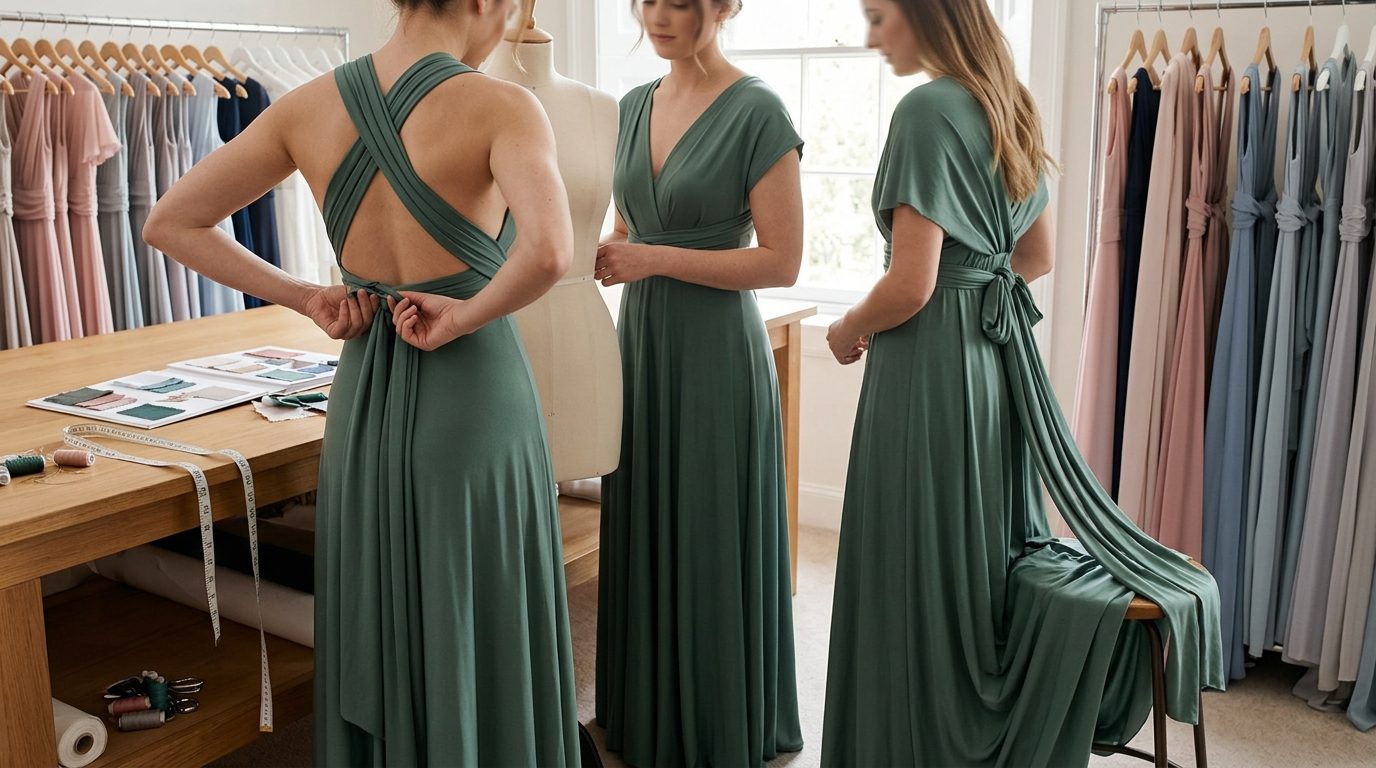
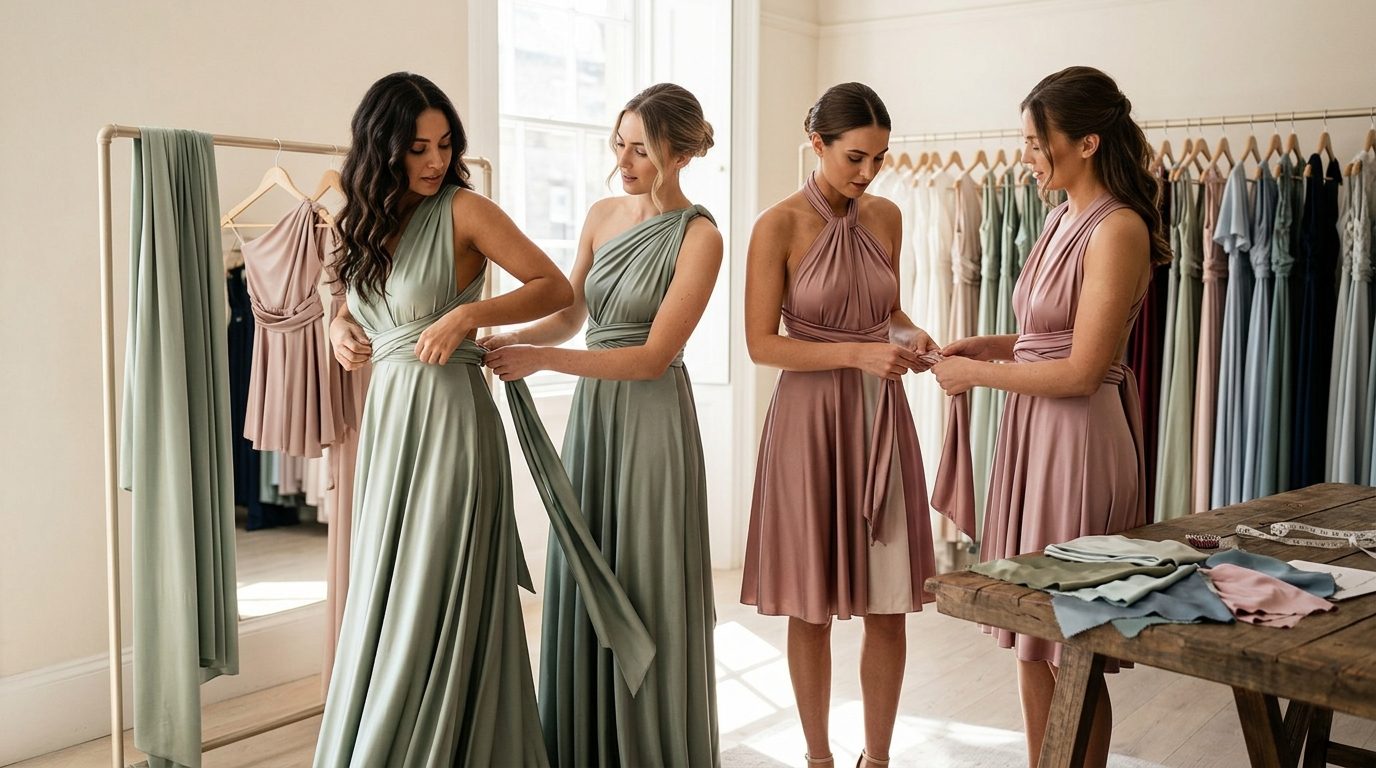
A convertible dress typically has long ribbons, removable straps, or adjustable tie elements that allow the wearer to create multiple silhouettes from the same garment:
- Strapless bandeau
- One-shoulder asymmetric
- Halter neck
- Crossed-back
- Off-shoulder
- Traditional spaghetti straps
All bridesmaids receive the identical garment. Each wears it in the configuration that flatters her most. The result photographs as mismatched but costs the same as matching — all from a single order and single colour batch.
The practical advantage: Convertible dresses work for brides who want the visual variety of mismatched but the simplicity of a single bulk order. The bride can buy all dresses at once without knowing exactly which configuration each bridesmaid will prefer.
UK suppliers specialising in convertible bridesmaid dresses include Rewritten London (their Infinity Dress), ASOS Design (several multi-way styles), and dedicated brands such as Henkaa UK and the Convertible Dress Company.
Colour trends for 2026 UK bridesmaid dresses
| Colour | Share of UK orders |
|---|---|
| Sage green | 22% |
| Dusty rose / mauve | 16% |
| Champagne / warm ivory | 13% |
| Navy | 10% |
| Terracotta / clay | 9% |
| Powder blue / cornflower | 8% |
| Deep burgundy / wine | 7% |
| Lavender | 6% |
| Warm stone / taupe | 5% |
| Other | 4% |
Sage green has held the top position for three consecutive years. It is versatile across venue types, photographs well in natural and indoor light, and works with a wide range of bridesmaid complexions.
Dusty rose is in decline — down from 21% in 2024 to 16% in 2026. The overexposure of the millennial-pink period has driven brides toward warmer, earthier tones.
The growth colours for autumn 2026: Terracotta and clay are the biggest movers, up from 4% in 2024. Deep burgundy and wine are also growing ahead of the autumn wedding peak (September-October). Warm stone and taupe are gaining as neutral alternatives to champagne.
For more on the broader colour trends shaping UK weddings this year, see the 2026 UK bridal trends direct from London Bridal Week.
Length and silhouette trends 2026
Floor-length: 61% of orders
Full-length bridesmaid dresses remain the dominant choice despite the growth of shorter options. Floor length is strongly associated with:
- Traditional church and formal venue weddings
- Winter and autumn weddings
- Couples with a formal or classic aesthetic
The most popular floor-length silhouettes in 2026 are A-line (flowing, universally flattering) and column/sheath (sleek, works best on bridesmaids comfortable in a fitted style). Ballgown and structured skirts have declined — they are less flexible when bridesmaids choose individual styles.
Midi-length: 27% of orders (growing)
Midi-length (typically hitting mid-calf or below the knee) has grown from 19% in 2024 to 27% in 2026. The growth is driven by:
- Outdoor and barn wedding popularity — midi lengths are more practical in grass, gravel, and uneven terrain
- Warmer summer weddings where full-length gowns feel heavy
- Younger bridesmaid parties (particularly Gen Z brides) who prefer a less formal silhouette
Midi dresses work particularly well in the convertible format, where the length is part of a modern, less-traditional aesthetic.
Mini-length: 12% of orders
Mini-length bridesmaid dresses (above the knee) account for 12% of UK orders, primarily at:
- Evening-only receptions rather than full-day weddings
- Relaxed outdoor ceremonies at home or in unconventional spaces
- Brides in their late twenties and early thirties who want a less traditional aesthetic
Mini options from ASOS, Boohoo, and Fast Fashion brands pull the price point down significantly — mini mismatched sets can be assembled for as little as £30-£50 per person. Quality control on sizing and colour consistency is lower at this price point.
Cost guide: what UK bridesmaids are actually spending in 2026
By price tier
| Price tier | Brands / sources | Cost per dress |
|---|---|---|
| Budget | ASOS, Shein, Quiz, Nasty Gal | £40-£80 |
| Mid-range | Coast, Phase Eight, Monsoon, Chi Chi London | £100-£180 |
| Premium | Rewritten, TFNC, JJ’s House UK, Ghost | £180-£280 |
| Designer/boutique | Dessy UK, Wtoo, Donna Morgan, Alfred Sung | £250-£400 |
Who pays in 2026
- 38% of brides pay for bridesmaid dresses in full — down from 47% in 2020
- 31% split costs with bridesmaids — the most common approach for mid-range purchases
- 31% expect bridesmaids to buy their own — most common in mismatched arrangements where bridesmaids choose their own style within a colour brief
The trend toward mismatched has made it easier for bridesmaids to buy their own — because they choose from their own budget and comfort level rather than being assigned a dress. The bride sets the colour and length rule; the bridesmaid handles the cost.
Fabric trends 2026
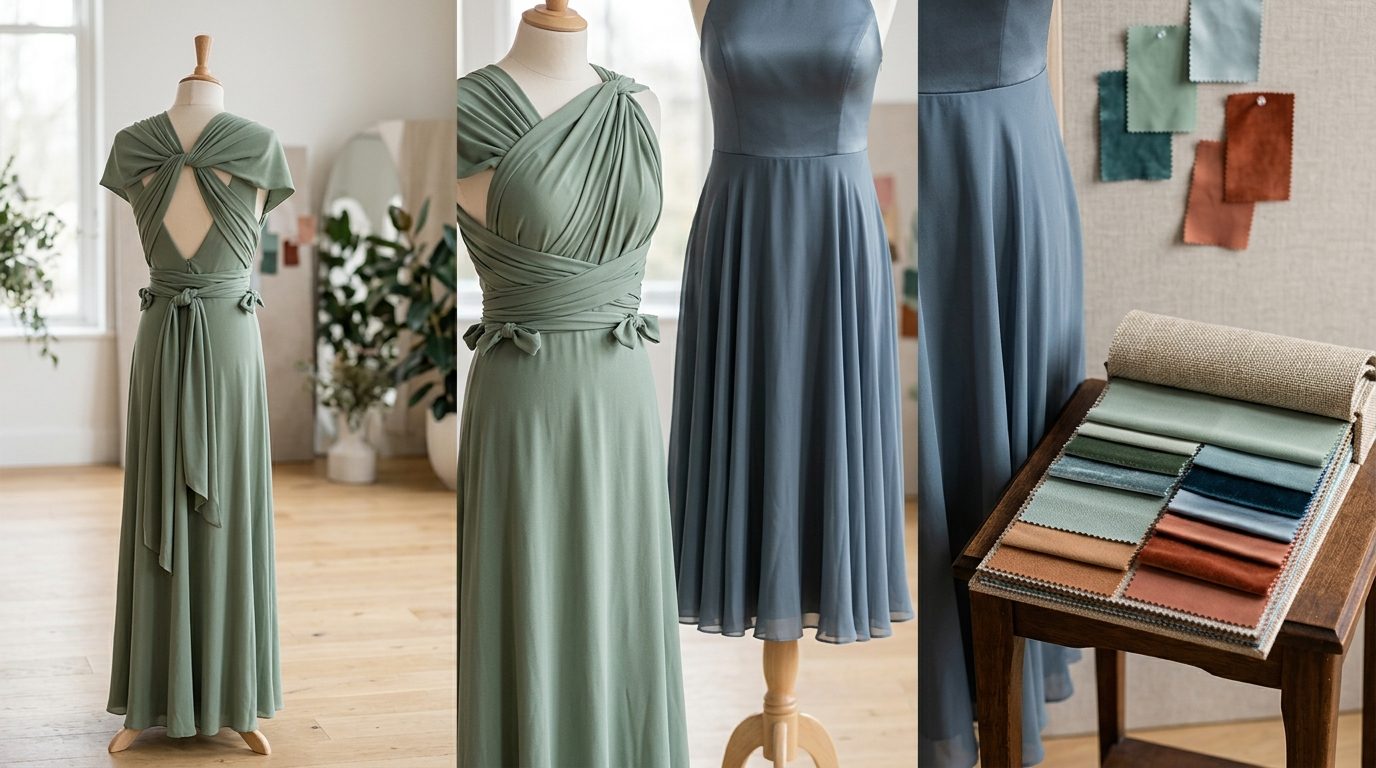 Chiffon remains the dominant bridesmaid fabric in the UK (39% of orders), but its share has declined as satin, velvet, and lace gain ground.
| Fabric | 2026 share | Change from 2024 |
|---|---|---|
| Chiffon | 39% | -6% |
| Satin (soft / charmeuse) | 24% | +3% |
| Velvet | 11% | +4% |
| Stretch jersey | 9% | +1% |
| Lace or embroidered | 8% | -1% |
| Organza / tulle | 6% | -2% |
| Other | 3% | +1% |
Velvet is the standout growth fabric. Used primarily for autumn and winter weddings, velvet bridesmaid dresses have nearly doubled their share since 2022. Deep wine, forest green, and midnight blue velvet options are among the most-bookmarked bridesmaid styles on UK bridal Pinterest boards in 2026.
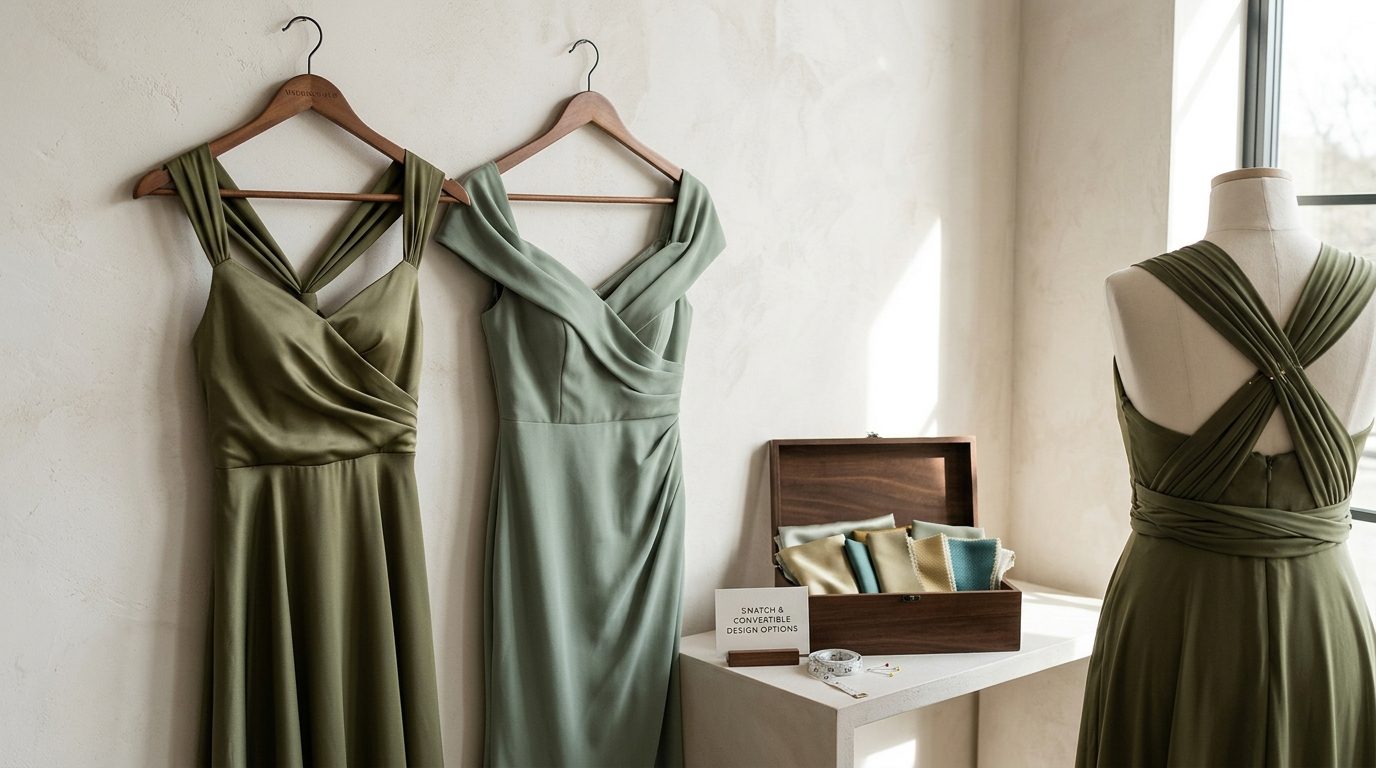
Soft satin is replacing chiffon at the higher end of the market — particularly in the floor-length convertible format, where the fabric’s drape is important to making multi-wear configurations look intentional.
A real 2026 bridesmaid party
Anna married at a Somerset manor house in April 2026 with five bridesmaids. She chose a sage green colour with fully mismatched styles — all ordered from Rewritten London’s Spring 2026 collection, which offered eight different dress cuts in the same Sage dye lot.
Each bridesmaid chose her own style: two chose the slip dress, one the A-line gown, one the convertible wrap, and one the cowl-neck. Anna paid for three dresses (£196 each from Rewritten) as a gift; two bridesmaids bought their own. Total bridesmaid dress cost to the bride: £588. Total spend across the wedding party: £980.
The mismatched result photographed as intentional rather than uniform. All five dresses were the same batch — the Rewritten sage green dye lot was consistent throughout.
Related articles
Frequently asked questions
What bridesmaid dress trends are popular in the UK for 2026?
Mismatched styles are the dominant trend at 58% of UK orders. Two-tone and colour-block dresses are growing fast. Convertible dresses — one dress worn multiple ways — are the fastest-rising format at 11% of orders.
What is the most popular bridesmaid dress colour in the UK in 2026?
Sage green leads UK bridesmaid colour choices for the third consecutive year. Dusty rose is declining. Terracotta, warm champagne, and deep wine are growing for autumn 2026 weddings.
How much should UK bridesmaids expect to spend on their dresses in 2026?
The average UK bridesmaid dress spend in 2026 is £145 per person. Budget options (ASOS, Shein) cost £40-£80. Mid-range (Coast, Phase Eight, Monsoon) cost £100-£180. Premium options (Rewritten, TFNC, Ghost) cost £180-£350.
What is a convertible bridesmaid dress?
A convertible dress has adjustable straps or detachable elements so each bridesmaid can wear it in a different configuration — strapless, one-shoulder, crossed back, or halter. All bridesmaids get the same dress but each wears it in the style that suits her best.
Should bridesmaids all wear the same colour in 2026?
Same colour, different styles is now the most popular UK approach at 58% of orders. Fully matching identical dresses have declined to 21%. Colour families (different shades of the same hue) account for 14% of orders.
When should I order bridesmaid dresses in the UK?
Order bridesmaid dresses 5-6 months before the wedding. Most UK bridal boutiques take 12-16 weeks for made-to-order styles. Allow 4-6 weeks for alterations. Order all dresses at the same time to ensure colour consistency across the batch.
Are long or short bridesmaid dresses more popular in the UK in 2026?
Floor-length dresses remain the most popular at 61% of UK orders. Midi-length is growing to 27%, particularly at outdoor summer and barn weddings. Mini-length dresses account for 12%, mainly at evening receptions and smaller ceremonies.