Home / Articles / Food & Drink
Wedding Drinks: Bar Options and Budget Guide
Key Takeaways
- Budget 30 to 60 pounds per guest for drinks at a UK wedding in 2026, depending on bar type
- An open bar costs 40-60 pounds per head. A limited bar with welcome drinks and wine costs 20-30 pounds
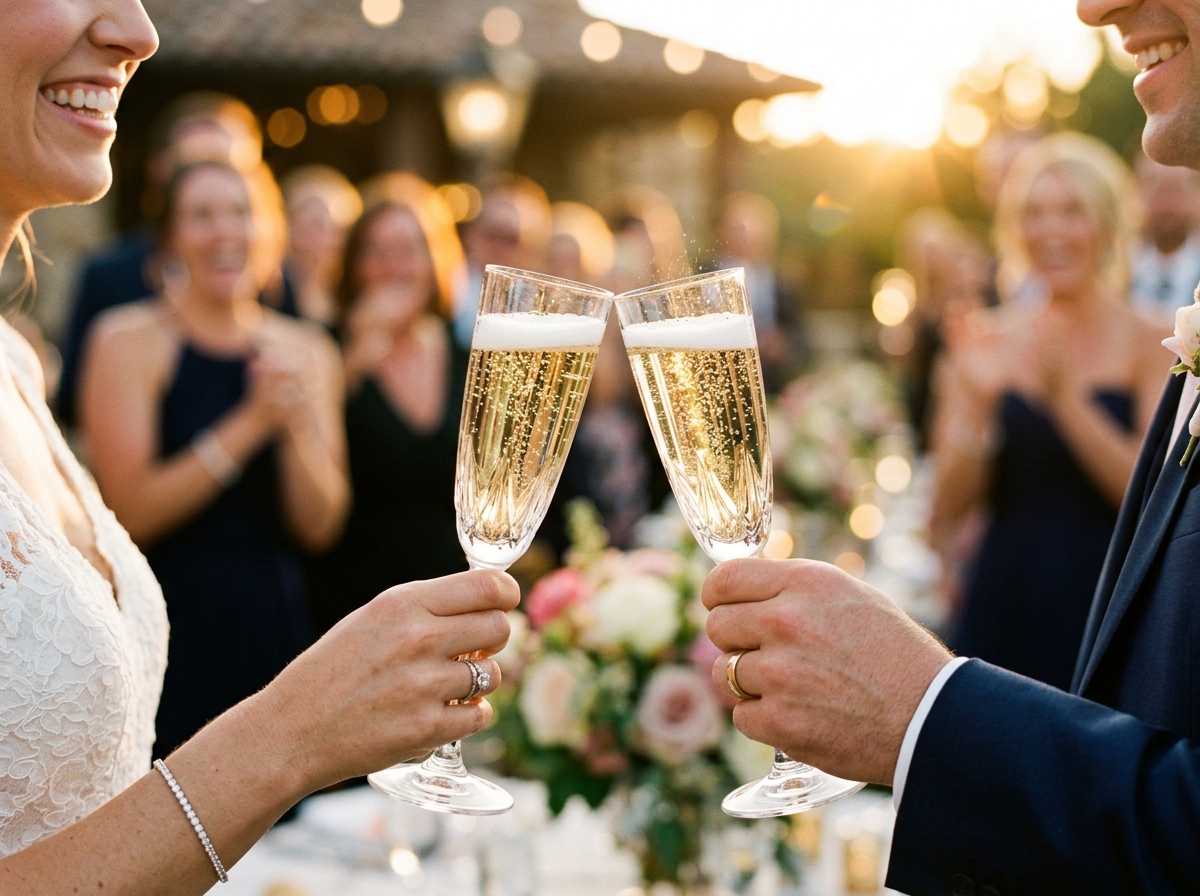
- Allow half a bottle of wine per person during the meal and one glass of fizz for toasts
- Corkage fees range from 8 to 15 pounds per bottle at most UK venues if you supply your own
- Always offer at least two non-alcoholic options beyond water, including a proper mocktail
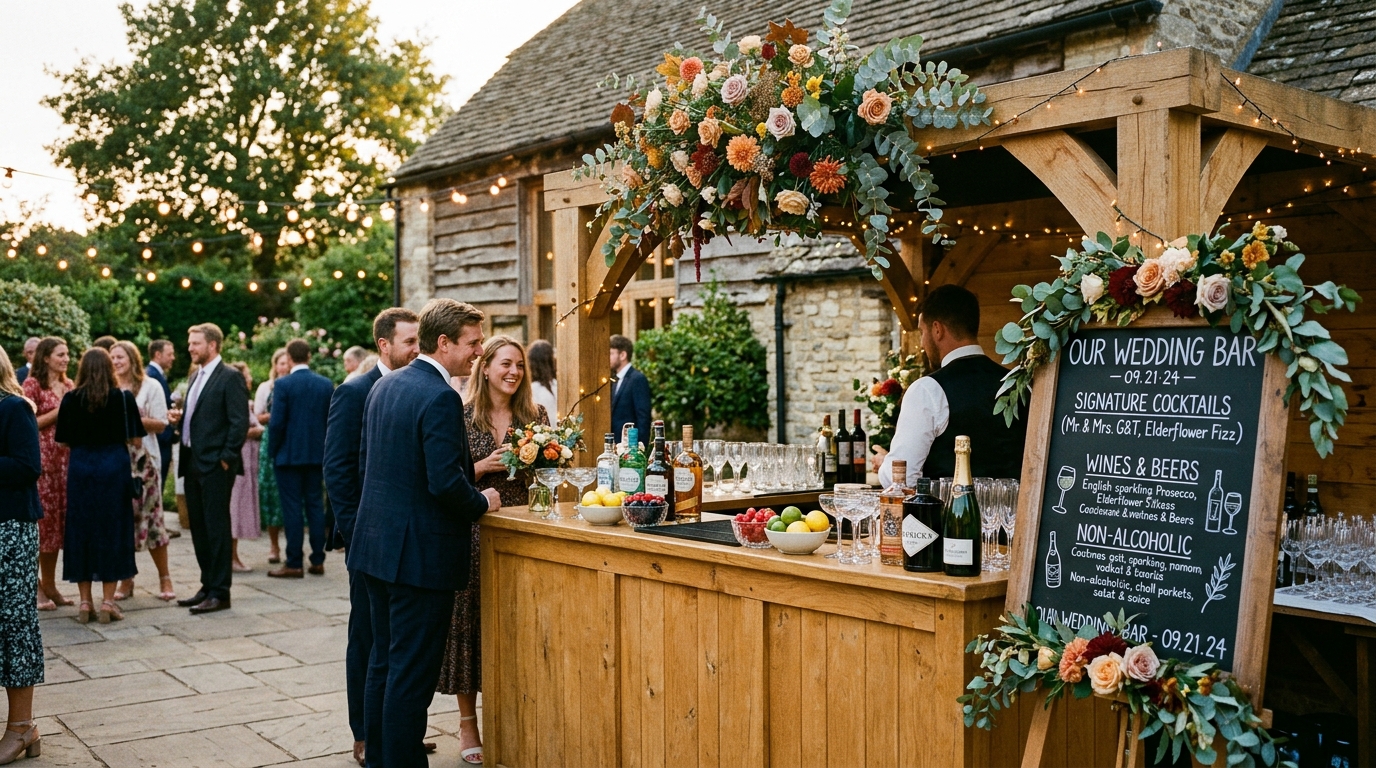
Wedding drinks account for a significant portion of your overall wedding budget. The bar bill regularly surprises couples who have not planned it carefully. Whether you choose an open bar, a cash bar, or something in between, getting the drinks right means guests stay happy without your budget getting out of control.
This guide covers every bar option available at UK weddings, how much alcohol to buy per guest, trending drink stations from cocktail bars to prosecco walls, non-alcoholic options, corkage fees, and practical budget tips that actually work.
Bar types compared
The bar setup you choose determines your budget and your guests’ experience. Here are the four main options for UK weddings.
Open bar (free bar)
The couple pays for all drinks. Guests order whatever they want at no charge. This is the most generous option and the most expensive. Budget 40-60 pounds per person for a 5-6 hour evening reception.
Pros: Guests love it. No awkward wallet-fumbling. Feels luxurious. Cons: Expensive. Hard to predict final cost. Heavy drinkers can push the bill up.
Limited bar (part-hosted)
The most popular option at UK weddings. The couple provides welcome drinks, wine with the meal, and a glass of fizz for toasts. After that, guests buy their own drinks from the bar.
Pros: Controls cost. Covers the essentials. Guests expect to buy evening drinks. Cons: The transition from free to paid can feel abrupt if not communicated.
Cash bar
Guests buy all their own drinks from the start. The couple provides nothing beyond the meal itself. Common at casual weddings, pub weddings, and second marriages.
Pros: Lowest cost for the couple. Simple to manage. Cons: Some guests find it unwelcoming. Not traditional at formal UK weddings.
Dry wedding (no alcohol)
Increasingly common for religious, cultural, or personal reasons. The couple provides non-alcoholic drinks only. This requires more thought on the drink selection to keep the celebration feeling festive.
Pros: Inclusive. Lower cost. No drunk guests. Cons: Some guests may be surprised. Needs strong non-alcoholic alternatives.
| Bar Type | Cost Per Head | Couple Pays | Guest Pays | Best For |
|---|---|---|---|---|
| Open bar | 40-60 | Everything | Nothing | Generous budgets, formal weddings |
| Limited bar | 20-30 | Welcome + wine + toast | Evening drinks | Most UK weddings |
| Cash bar | 0-5 | Nothing or welcome only | Everything | Casual, pub, budget weddings |
| Dry wedding | 10-15 | Non-alcoholic drinks | Nothing | Religious, cultural, sober weddings |
Read our wedding catering cost guide for how drinks costs fit into the overall catering budget.
How much alcohol to buy per guest
Getting quantities right avoids two problems: running out (embarrassing) and buying too much (wasteful). Use these UK averages as a starting point.
For a wedding of 100 guests:
| Drink | Quantity | When Served |
|---|---|---|
| Welcome drinks (prosecco/cocktail) | 100-120 glasses | Arrival (1-2 per person) |
| White wine | 25 bottles | Wedding breakfast |
| Red wine | 20 bottles | Wedding breakfast |
| Rose wine | 10 bottles | Wedding breakfast |
| Toast drink (prosecco/champagne) | 15 bottles | After speeches |
| Beer (bottles/cans) | 48-72 | Evening bar |
| Spirits | 4-6 bottles | Evening bar |
| Soft drinks and mixers | 48 litres | Throughout |
These numbers assume 20% of guests are non-drinkers and 30% are light drinkers. If your crowd skews younger or more social, increase quantities by 15-20%. If many guests are driving or your wedding is midweek, reduce by 10%.
Most wine merchants and wholesale suppliers offer sale or return on unopened bottles. This removes the risk of over-ordering. Always check the return policy before purchasing.
Trending drink stations
Cocktail bar
A dedicated cocktail station with a bartender mixing drinks to order. Offer 2-3 signature cocktails rather than a full menu. This controls cost and speeds up service.
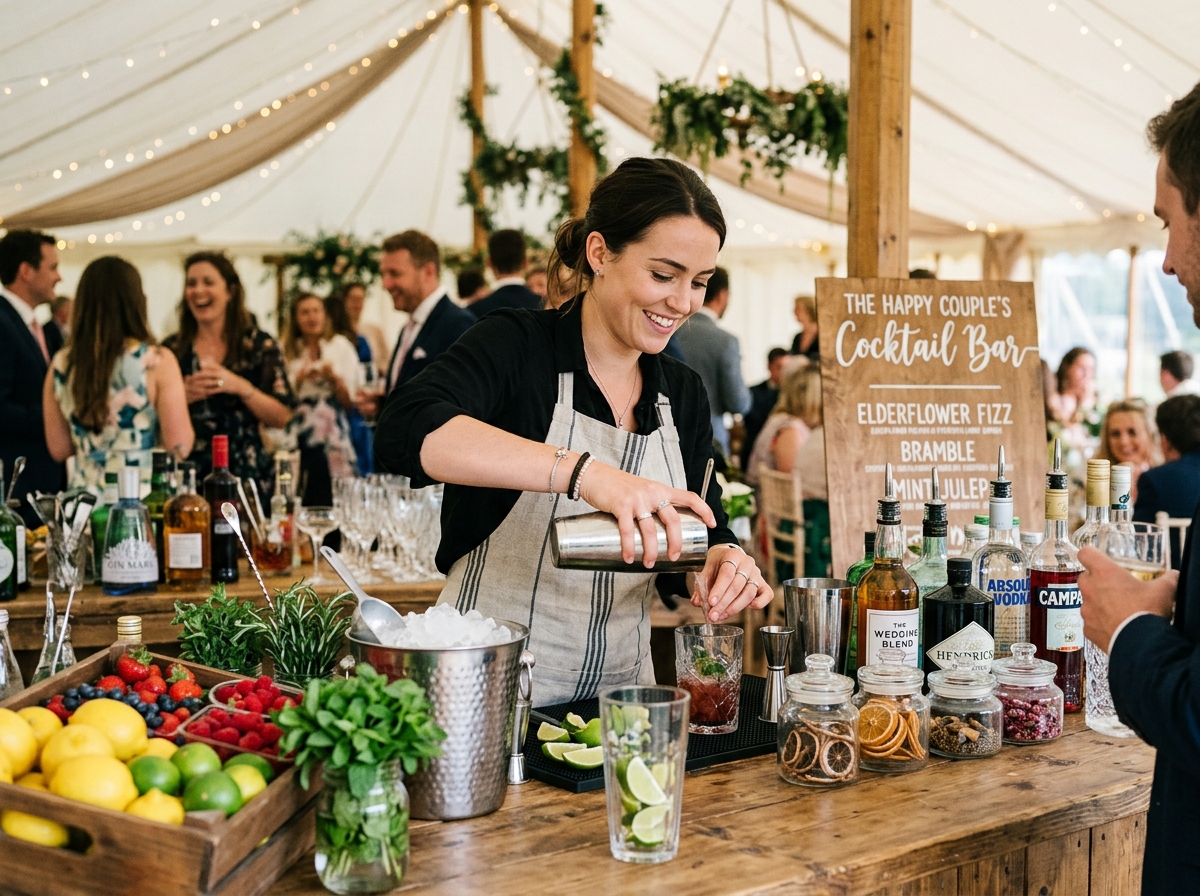
Popular signature cocktails for UK weddings include Aperol Spritz (summer), Espresso Martini (all year), Bramble (autumn), and French 75 (formal). Name them after meaningful places or inside jokes to personalise the experience. A cocktail bar typically costs 8-12 pounds per cocktail served.
Prosecco wall
A wall-mounted display of prosecco-filled flutes that guests help themselves to on arrival. Visually striking, great for photos, and eliminates queuing at the bar.
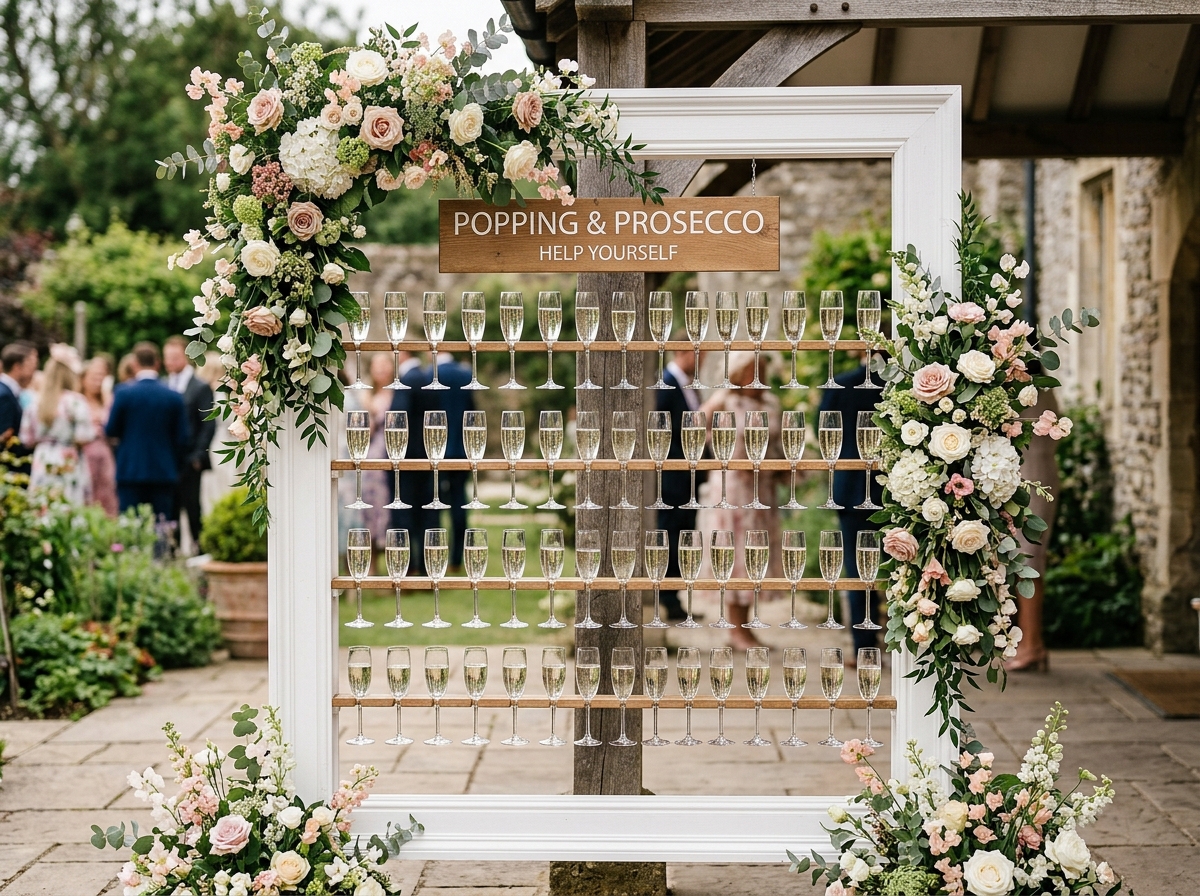
You can hire a prosecco wall for 100-200 pounds. Fill it with prosecco at 6-8 pounds per bottle (roughly 6 glasses per bottle). For 80 guests, you need 14-15 bottles. Some couples add a prosecco wall as the welcome drink and skip the traditional tray service entirely.
Beer and wine table
A self-service table with wine bottles and craft beers in ice buckets. Guests help themselves. This suits relaxed weddings and reduces staffing costs. Label wines with tasting notes and pair suggestions.
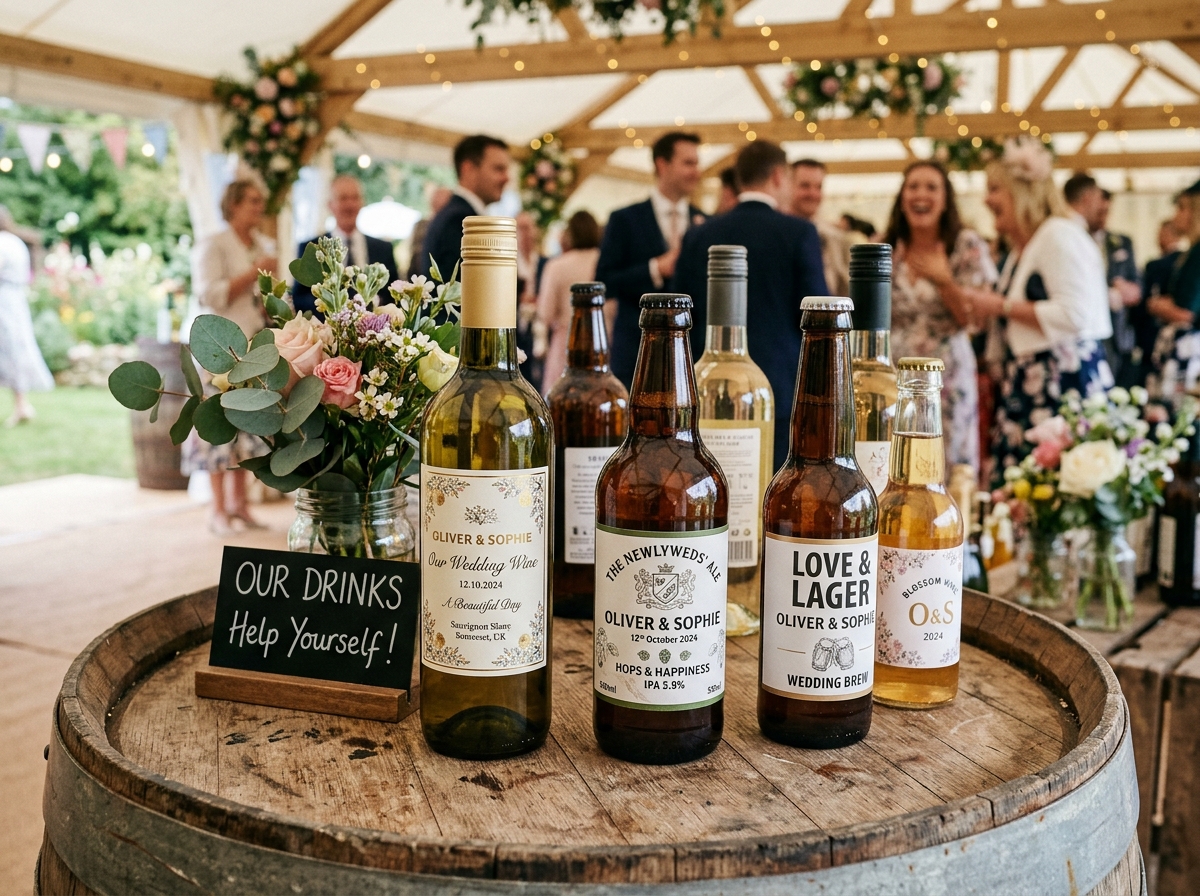
Buy wine in cases of 12 from wholesale suppliers like Majestic, Laithwaites, or local independent merchants. Wedding wine costs 7-15 pounds per bottle wholesale. Do not buy the cheapest. Guests notice bad wine.
Non-alcoholic options
Good non-alcoholic drinks are no longer optional. Around 20% of UK adults now identify as non-drinkers, and many more are reducing their intake. Offering water and orange juice is not enough.
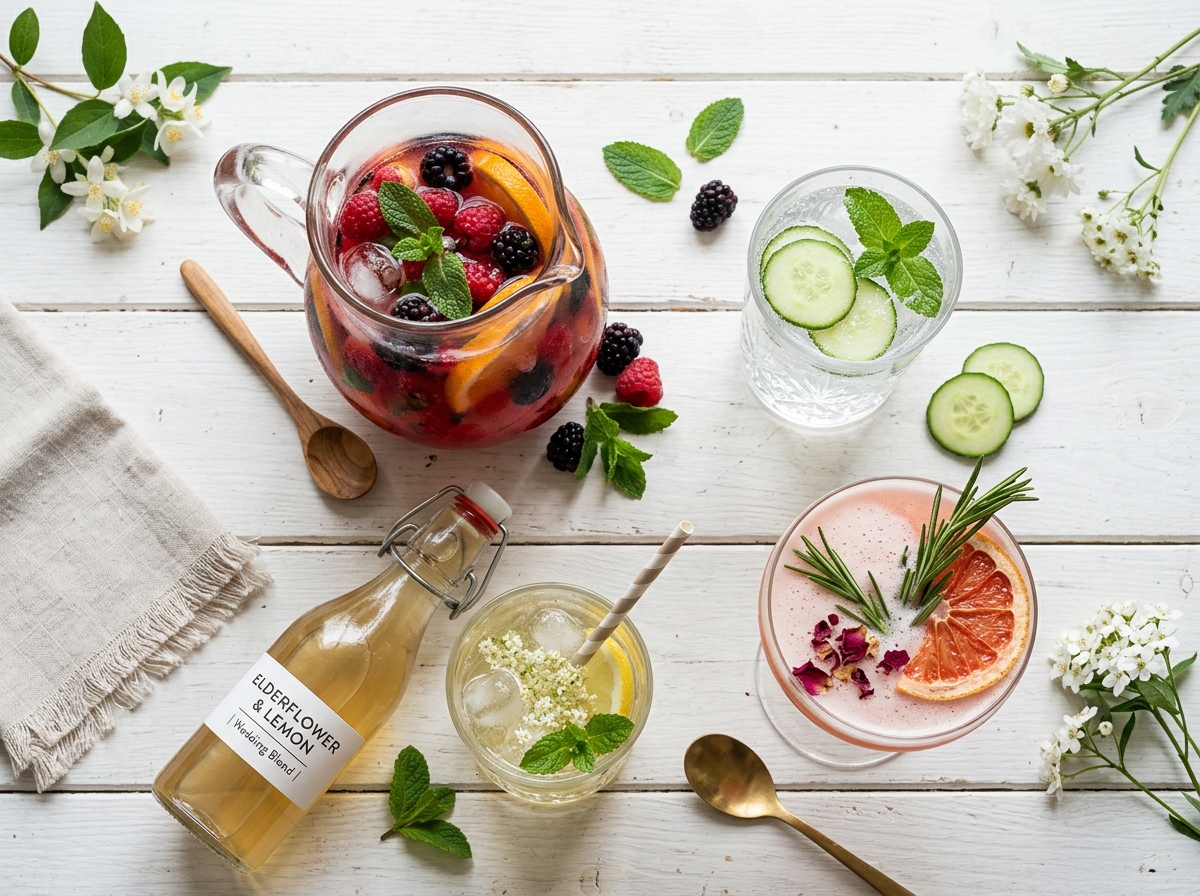
Signature mocktail: Create a non-alcoholic version of your signature cocktail. An elderflower and cucumber spritz, a virgin mojito, or a passion fruit fizz all look and taste festive.
Alcohol-free beer: Lucky Saint, Big Drop, and Athletic Brewing are widely available in UK supermarkets and wholesalers. Stock 2-3 options alongside regular beer.
Alcohol-free fizz: For the toast, offer alcohol-free prosecco (Nosecco, Noughty, or Thomson and Scott Noughty are the UK’s best sellers). Non-drinkers want to raise a glass too.
Fruit juices and cordials: Belvoir, Fentimans, and Fever-Tree mixers work well as standalone soft drinks. They look and feel more premium than supermarket cordials.
Corkage fees: supplying your own
Many UK venues allow you to bring your own alcohol and charge a corkage fee per bottle. This can save significant money if you buy wine wholesale.
| Drink Type | Typical Corkage Fee |
|---|---|
| Wine (per bottle) | 8-15 |
| Champagne/prosecco (per bottle) | 10-18 |
| Beer (per bottle/can) | 1-2 |
| Spirits (per bottle) | 15-25 |
Do the maths before assuming corkage saves money. If your venue charges 12 pounds corkage per bottle and you buy wine at 8 pounds, your total is 20 pounds per bottle. If the venue sells the same wine at 22 pounds, you save 2 pounds per bottle. On 50 bottles, that is only 100 pounds. Factor in the hassle of transporting, chilling, and storing the wine yourself.
Corkage works best when you have access to cheap, good wine through personal contacts, trade accounts, or bulk buy offers. It also works well for budget weddings where every saving counts.
Check your venue contract carefully. Some venues do not allow outside alcohol at all.
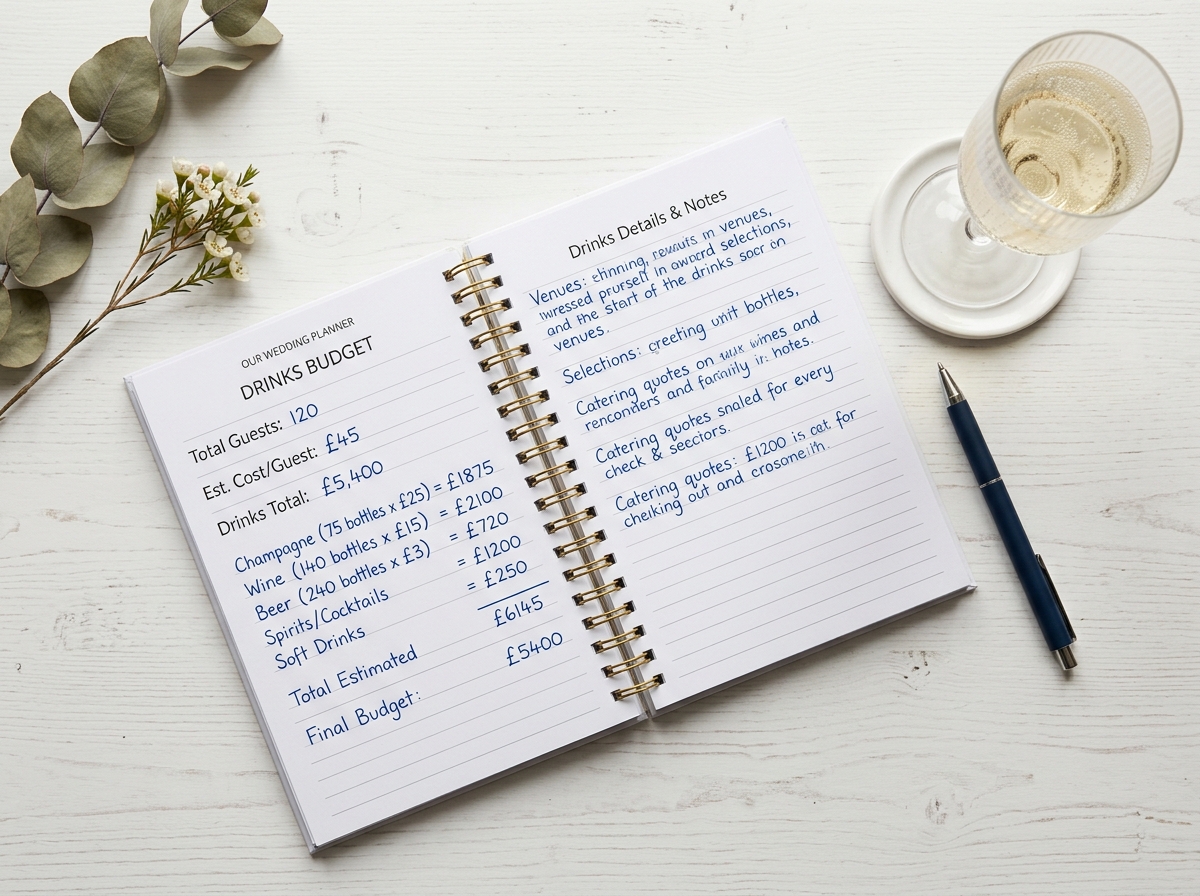
Budget tips that actually work
Buy prosecco, not champagne. For toasts, most guests cannot tell the difference. Good prosecco costs 8-10 pounds per bottle. Champagne starts at 25 pounds. Nobody notices mid-toast.
Offer beer and wine only. Cutting spirits from the bar reduces cost by 20-30% and reduces mess. Most guests are happy with wine and beer.
Batch cocktails. Pre-mix large quantities of 2 signature cocktails. This costs 2-3 pounds per glass rather than 8-12 pounds for individually made drinks. Use dispensers or punch bowls.
Set a bar tab with a limit. Run an open bar until the tab reaches a set amount (e.g., 1,500 pounds), then switch to cash bar. Communicate this to your bar staff, not your guests.
Skip the evening bar snacks. Crisps and nuts at the bar add 3-5 pounds per head. Your wedding buffet or evening food should be enough.
Provide water freely. Place water carafes on every table and at the bar. Guests who stay hydrated drink less alcohol and feel better the next day. It also reduces your overall drinks bill.
Seasonal drink ideas
Spring: Elderflower gin and tonic, rose lemonade, Pimms on arrival.
Summer: Aperol Spritz, fruit-infused water stations, cold craft beer, frozen cocktails.
Autumn: Mulled cider, bramble cocktails, spiced apple punch, warming reds.
Winter: Mulled wine on arrival, hot chocolate station, whisky bar, rich port with cheese.
Match your drinks to your wedding menu. A heavy winter meal pairs better with full-bodied red wine. A light summer salad works with crisp white and rose.
What to tell your venue
Ask these questions when booking your venue’s bar package:
- Is the bar included or an additional charge?
- Can we supply our own alcohol? What is the corkage fee?
- Is there a minimum spend at the bar?
- What non-alcoholic options do you offer?
- Do you provide glassware, ice, and bar staff?
- What time does the bar close?
- Can we set a tab limit on an open bar?
- Do you charge a cake-cutting or cork-popping fee?
Getting clear answers avoids surprises on the final invoice. Read our questions to ask your wedding venue for the complete list of questions every couple should ask before signing.
Frequently asked questions
How much alcohol do you need for a wedding?
For 100 guests, plan on roughly 60 bottles of wine for the meal (half a bottle per person), 100 glasses of prosecco or champagne for toasts (one each), 3-4 kegs of beer, and a selection of spirits if running an open bar. Non-drinkers make up around 20% of the average UK guest list, so adjust quantities down accordingly. Most suppliers offer sale or return on unopened bottles.
What is the difference between an open bar and a cash bar?
An open bar means the couple pays for all drinks and guests drink for free. A cash bar means guests buy their own drinks at the bar. A limited bar is the middle ground: the couple provides welcome drinks, wine with the meal, and a toast drink, then guests buy their own after that. The limited bar is the most popular option at UK weddings.
How much does an open bar cost at a wedding UK?
An open bar costs 40-60 pounds per person for a 5-6 hour evening reception. This includes beer, wine, spirits, mixers, and soft drinks. The exact cost depends on your venue's pricing, how much your guests drink, and whether you include premium spirits. Some venues offer fixed-price packages that cap the spend per head.
Can you bring your own alcohol to a wedding venue?
Many UK venues allow you to supply your own alcohol and charge a corkage fee per bottle. Corkage typically ranges from 8 to 15 pounds per bottle for wine and champagne. Beer corkage is usually 1-2 pounds per bottle or can. Check your venue contract carefully. Some venues do not permit outside alcohol at all, especially hotels with their own bars.
What non-alcoholic drinks should you have at a wedding?
Offer at least two proper non-alcoholic options beyond water. A signature mocktail gives non-drinkers something festive and special. Elderflower spritz, virgin mojitos, and fruit punch are popular choices. Add alcohol-free beer (brands like Lucky Saint and Big Drop are widely available in the UK) and alcohol-free prosecco for toasts.
When should wedding drinks be served?
Welcome drinks on arrival (prosecco, Pimms, or a cocktail), wine with the wedding breakfast, a glass of fizz for toasts after the speeches, and then the evening bar opens for the reception. The transition from afternoon to evening is where drinks service matters most. A gap without drinks kills the mood.