Tasting-Menu Wedding Receptions: When Food Is the Event
Key Takeaways
- A tasting-menu reception replaces the traditional three-course meal with 8-12 small courses served over 3-4 hours
- Cost per head: £95-£180 for an 8-course tasting menu with wine pairing, versus £85-£140 for a traditional three-course
- UK private dining caterers who offer tasting-menu formats have a 12-16 week lead time as of May 2026
- The format works best with guest lists of 30-60 — larger groups require multiple kitchen teams and lose the intimate feel
- Speeches move to pre-dinner or post-dinner — they don't interrupt a tasting-menu service
- London, Edinburgh, and Bath have the strongest supply of caterers experienced in tasting-menu wedding formats
Why this format is arriving in UK weddings now
The tasting-menu restaurant format has been a mainstream experience for affluent UK diners for the past decade. Dishes Michelin, tasting menus at middle-market restaurants, the “chef’s table” private dining experience — these are all now familiar. The conceptual jump from “going to Mana in Manchester for a 12-course tasting menu” to “having a 10-course tasting menu at my wedding” is smaller than it used to be.
Three trends are converging to drive this:
Higher per-head spend. The shift toward fewer guests but higher quality is visible across every spending category. Couples choosing tasting-menu formats are explicitly trading headcount for per-head investment. The logic: 40 guests at £180 per head produces a better experience than 80 guests at £90 per head.
Foodie culture. The generation currently getting married in the UK has grown up with a food culture that didn’t exist 20 years ago. Restaurant week, food tourism, cooking as a hobby, delivery of high-end meal kits — this generation treats food as a form of entertainment and identity. Their wedding catering is an expression of that.
What an 8-course tasting menu looks like
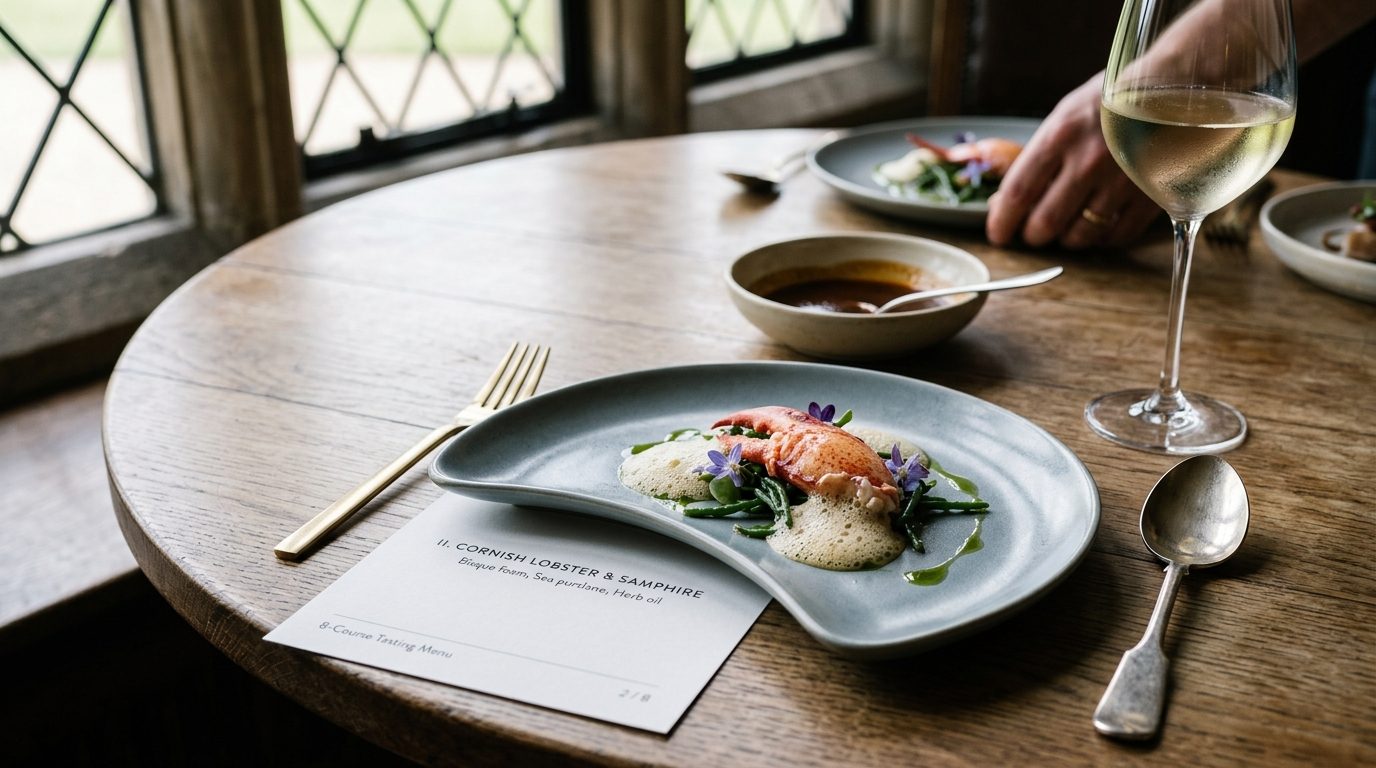
Menus vary enormously by caterer and couple. A representative 8-course format for a summer 2026 UK wedding, as described by one of the caterers Weddings Hub spoke with:
Course 1: Snacks. Three bites each — cured salmon on cucumber, beef tartare tart, pea and mint amuse-bouche. Served with a welcome cocktail or champagne.
Course 2: Cold starter. Dressed crab with kohlrabi remoulade and caviar cream. Wine pairing: Chablis Premier Cru.
Course 3: Warm starter. Pan-fried scallop with cauliflower, brown butter, and roe. Wine pairing: Burgundy blanc.
Course 4: Palate cleanser. A lemon verbena granita with elderflower. No wine pairing.
Course 5: Fish main. Roasted turbot with sea herbs, new potatoes, and crab bisque. Wine pairing: Pouilly-Fumé.
Course 6: Meat course. Dry-aged beef fillet with truffle, charred leek, and bone marrow jus. Wine pairing: Saint-Émilion.
Course 7: Cheese. A selection of three British cheeses with quince, honeycomb, and walnut bread. Wine pairing: port or a dessert wine.
Course 8: Dessert. Dark chocolate delice with salted caramel and Sauternes cream. Wine pairing: Sauternes.
Petit fours with coffee.
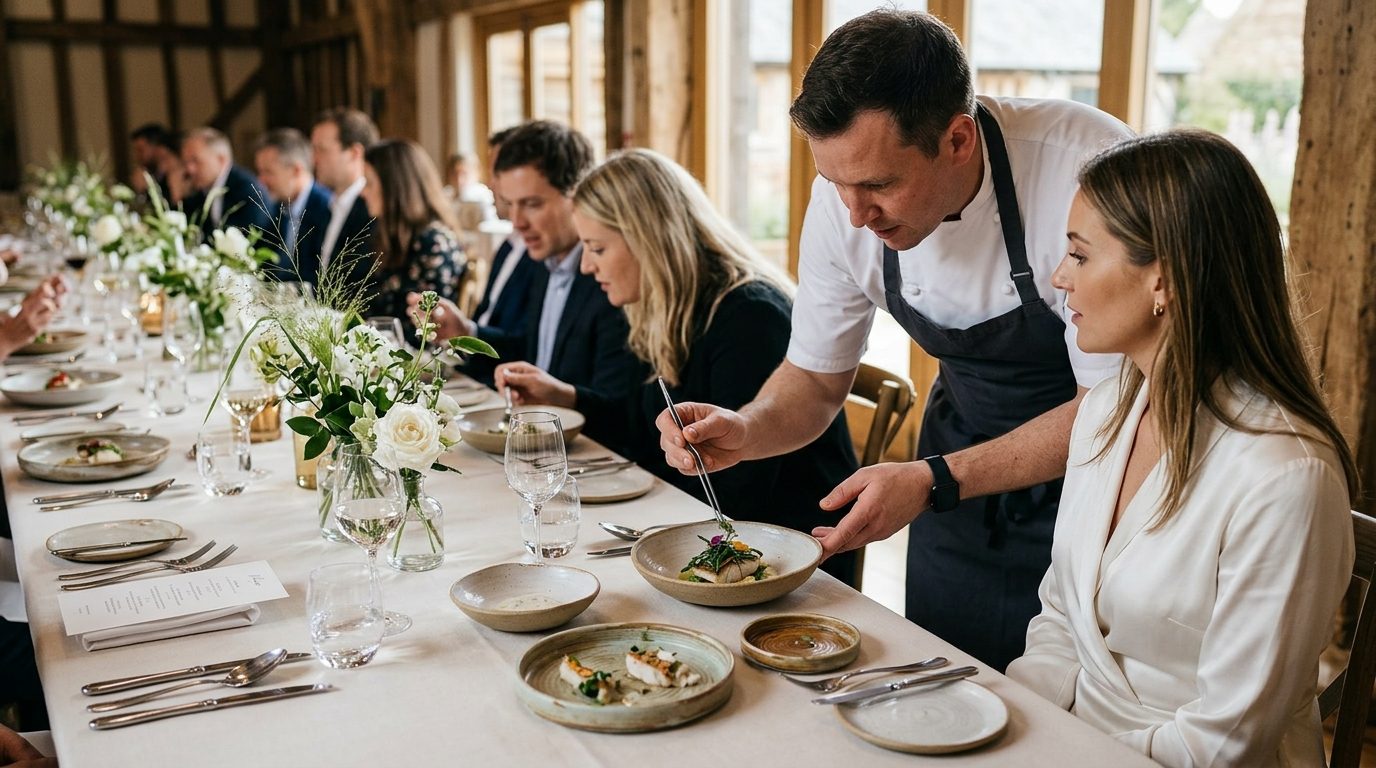
Total dining time: approximately three hours twenty minutes. Each course presented and briefly described by the front-of-house team. The chef visits the room twice — after the fish course and at the end — to take questions.
The cost breakdown
The cost of a tasting-menu wedding reception from a specialist UK private dining caterer, for 45 guests, as of May 2026:
Food (8 courses): £52-£75 per head. That is £2,340-£3,375 for 45 guests. Wine pairing (5 pours): £28-£45 per head. That is £1,260-£2,025. Staff (front-of-house and kitchen): £1,200-£2,200 depending on team size and event length. Kitchen hire or dry-hire premium: £0-£800 depending on venue. Total: approximately £4,800-£8,400 for 45 guests, including food, wine, and staff.
That is £107-£187 per head. A traditional three-course wedding meal for 45 guests from a comparable caterer would cost £85-£130 per head, or £3,825-£5,850 in total.
The difference in absolute terms: £975-£2,550 more for the tasting menu. Less than most couples assume.
The difference in experience terms: significantly greater. Four caterers all described the same pattern — guests at tasting-menu receptions consistently tell them it was “the best meal of their lives.” That reaction is rare at a standard wedding reception.
The speeches problem — and the solution
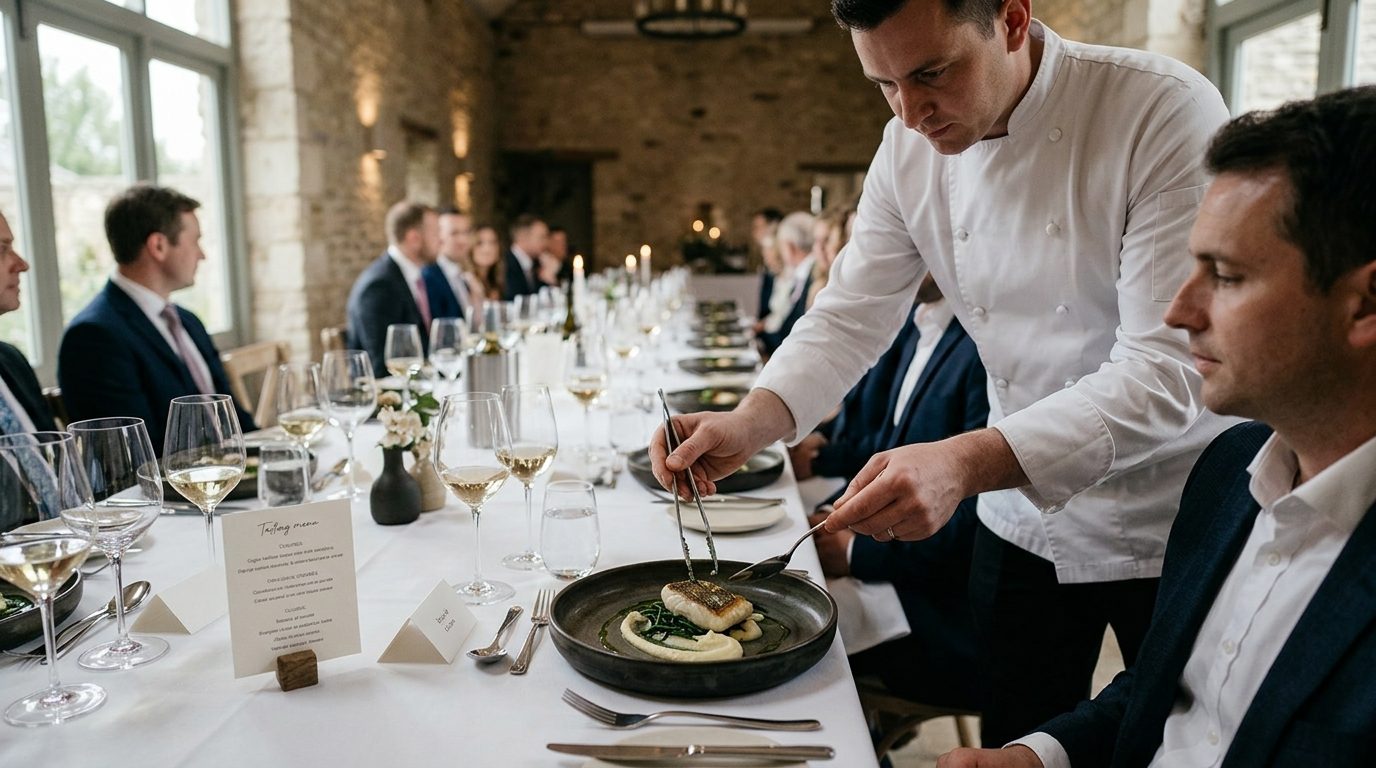
A tasting-menu format cannot accommodate speeches mid-service. The timing of courses is calibrated to the kitchen’s preparation sequence. A 10-minute speech delay after the fish course creates a cold main course and a stressed kitchen team.
This forces a decision about where speeches go.
Option 1: Pre-dinner speeches. All speeches happen during the drinks reception, before guests sit down to eat. The speeches finish, guests move to the dining space, the first course arrives within 15 minutes. Advantages: high energy for the speeches because guests are still standing and alert; the dining space reveals to everyone at once. Disadvantages: some guests feel speeches need to follow the meal, not precede it.
Option 2: Post-dinner speeches. All speeches happen after the final course, with dessert wine or coffee. The meal is the main event; speeches close the formal part of the evening. Advantages: speeches as a natural ending before dancing begins; the alcohol context often makes speeches more relaxed. Disadvantages: some guests have lower attention spans after a long meal.
Option 3: Speeches at the welcome party. For multi-day weddings, speeches happen on the Friday welcome party. The Saturday tasting-menu reception is purely food, wine, and conversation. This is the choice made by a growing minority of couples — and both caterers and guests who have experienced it report that it works exceptionally well.
Most UK tasting-menu wedding caterers will express a preference for options 1 or 3, and will actively discourage mid-service speeches. Ask this question at your initial meeting with any caterer you’re considering.
A real account: Tom and James, Bath, 2024
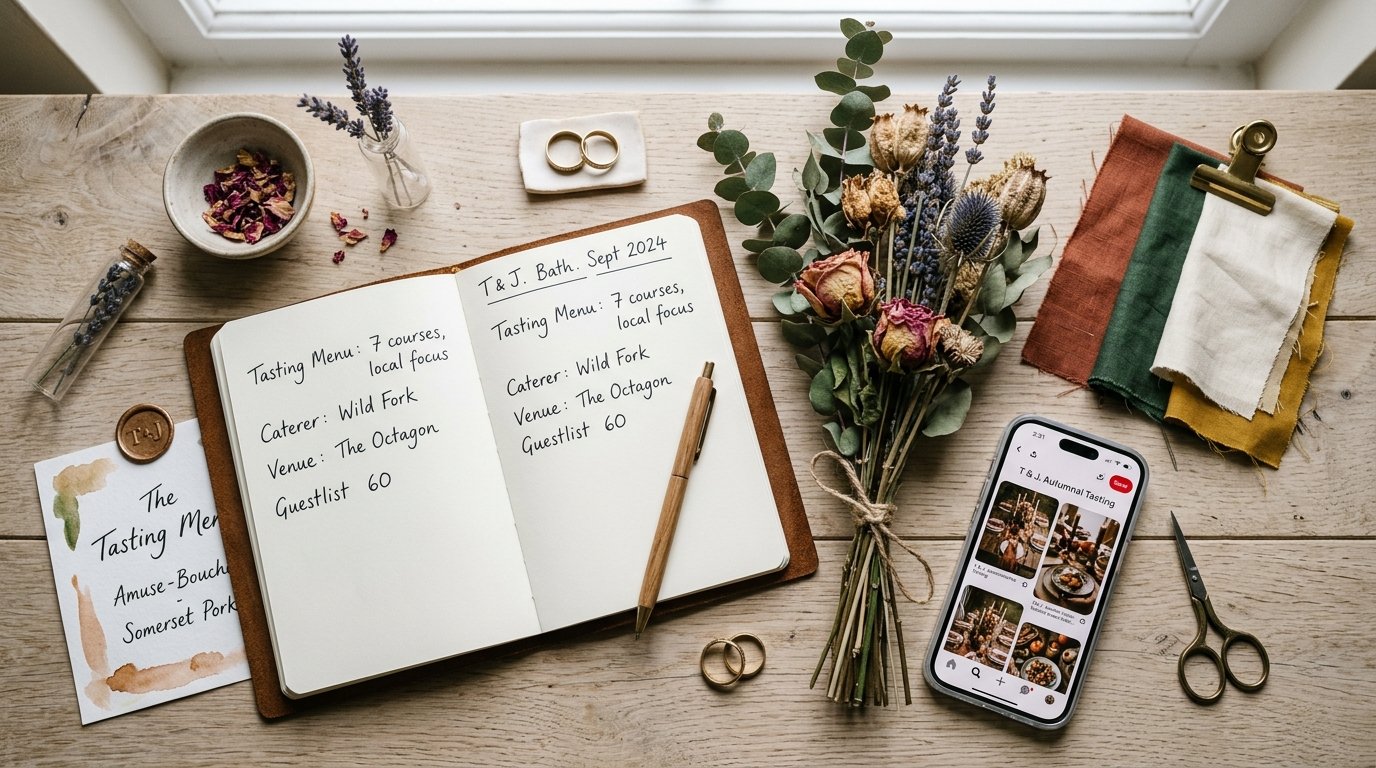
Tom (38) and James (35) hosted a tasting-menu reception in Bath in September 2024, with 38 guests at a private dining room within a Grade II-listed Georgian house.
“We both work in hospitality — I’m a sommelier, James is a food writer. The idea of a standard wedding breakfast felt wrong. We knew we wanted the meal to be the thing people remembered.”
They hired a private chef who had worked at three Michelin-starred restaurants and designed a 10-course menu around British seasonal ingredients from the Bath farmers market. Wine pairing was curated by Tom. Total catering cost: £6,200 for 38 guests (£163 per head including Tom’s own wine selections at cost).
“Three of our guests, who’d been to hundreds of weddings between them, told us it was the best wedding meal they’d ever had. One guest said she’d been to Noma and it was better than that. I think she was being generous — but the point stands. People genuinely talked about the food.”
They held speeches during a drinks reception on the terrace before guests entered the dining room. “It worked perfectly. Speeches were done, everyone was relaxed, we sat down and the courses just flowed for three hours. Nobody wanted it to end.”
Who this format suits
A tasting-menu wedding reception suits couples who:
- Love food and want their catering to reflect that
- Have a guest list of 30-60 (larger groups lose the intimacy)
- Are comfortable with a venue that isn’t a traditional wedding venue
- Don’t need a big dance floor as the centrepiece of the evening (though dancing can happen after the meal)
- Are willing to move speeches to pre or post-dinner
It does not suit couples who:
- Have large guest lists (70+) as a non-negotiable
- Have a high proportion of guests with dietary restrictions (the format is technically possible with many restrictions, but becomes very complex)
- Want the dance floor as the main event from early in the reception
- Have a tight budget where per-head costs need to stay under £80
For the right couple, the tasting-menu format produces a reception that is genuinely different from every other wedding they have attended. That distinctiveness is increasingly the point.
Related reading
- Wedding Catering Cost Per Head UK: What You’ll Actually Pay
- Wedding Catering: Sit-Down vs Buffet vs Street Food
- Multi-Day Weddings: 3-Day Wedding Weekends Explained
- Welcome Parties Bigger Than Receptions: The 2026 Trend
- Micro-Wedding Venues UK: The Best for 20-50 Guests
Frequently asked questions
What is a tasting-menu wedding reception?
A tasting-menu wedding reception replaces the traditional three-course seated meal with a sequence of 8-12 small courses, each paired with a complementary drink. The meal runs for three to four hours. The format emphasises the food as entertainment — each course is described by the chef or a front-of-house team member, creating a progressive experience rather than a static meal. It works best for couples who love food and want the dining experience to be the centrepiece of the reception.
How much does a tasting-menu wedding cost per head?
A private tasting-menu wedding for 40 guests costs approximately £95-£180 per head for an 8-course menu with wine pairing, from specialist UK wedding caterers as of May 2026. A traditional three-course wedding meal with wine costs £85-£140 per head. The tasting menu is marginally more expensive per head but the overall price difference on a 40-guest wedding is £400-£1,600 — less than most couples expect.
How many guests can you have at a tasting-menu wedding?
30-60 guests is the practical range for a tasting-menu format. Under 30 begins to feel like a private dinner party (which some couples want — that is valid). Over 60 requires multiple kitchen teams running in parallel, which introduces timing challenges and cost increases that start to erode the value of the format. The 40-50 guest range is the sweet spot for quality delivery and intimacy.
When do speeches happen at a tasting-menu wedding?
Speeches happen either before the meal begins — during the drinks reception — or after the final course. They do not interrupt service. A tasting-menu format relies on the rhythm and timing of sequential courses; stopping for speeches mid-service disrupts the experience for guests and creates significant logistics challenges for the kitchen. Most tasting-menu wedding caterers will specify this in their contracts.
What venues work for a tasting-menu wedding reception?
Any venue with either an experienced in-house kitchen or a dry-hire policy that allows external caterers. The kitchen specifications matter: a tasting-menu service requires more preparation space and precision cooking than a standard wedding. Private dining rooms at restaurants, exclusive-hire restaurant spaces, country houses with professional kitchens, and arts spaces with dry-hire kitchen facilities all work well. Purpose-built wedding venues often have catering arrangements that don't accommodate the tasting-menu format.
Do all guests need to eat the same menu at a tasting-menu wedding?
Largely yes — the tasting menu is served as a sequence to the whole table. Dietary requirements are accommodated by skilled caterers with parallel preparations for vegetarian, vegan, gluten-free, and allergy guests. However, if more than 15-20% of your guest list has significant dietary restrictions, the tasting-menu format becomes complex. A good caterer will discuss this with you honestly at the initial meeting.
Is a tasting-menu wedding formal or informal?
It can be either. The food is more formal and elaborate than a traditional wedding, but the atmosphere can be as relaxed as the couple wants. Some tasting-menu weddings are fully formal — table service, no music during courses, white-glove presentation. Others are informal — courses brought out by the chef personally, conversation across tables, background music throughout. The format adapts to the couple's preference; the food itself is always the point.