Restaurant Weddings: Great Food, No Fuss
Key Takeaways
- Restaurant weddings cost £50-£150 per head all-in, making them one of the best-value options for small weddings
- Private dining rooms suit 20-40 guests; a full restaurant buyout handles 60-100 and gives you the run of the place
- The food is the centrepiece — you get a professional kitchen, experienced chefs, and a menu built around your preferences
- You trade dance floors and late licences for exceptional food, existing ambiance, and zero venue styling stress
- Many restaurants will host weddings but do not actively advertise it — the best approach is to ask directly
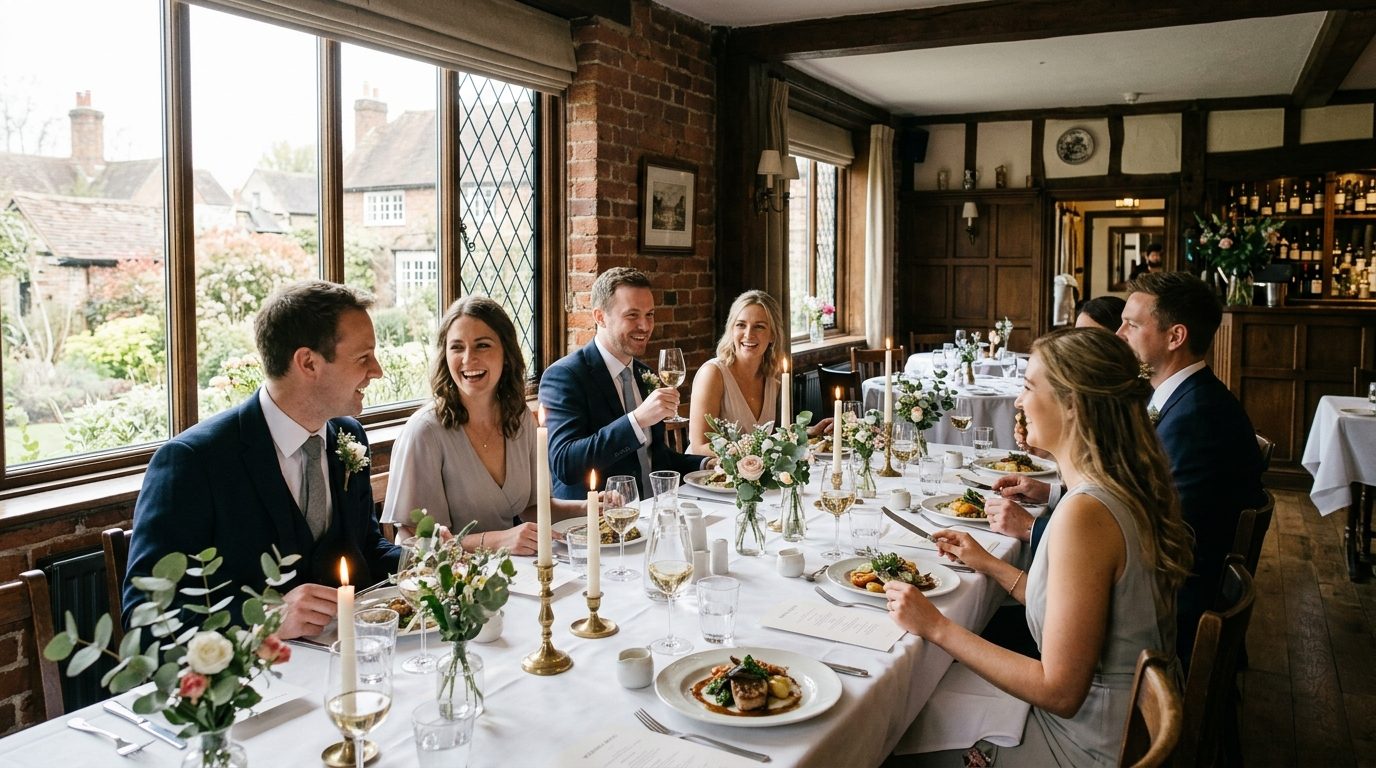
Not every couple wants a grand venue, a DJ, and a first dance in front of 150 people. Some want brilliant food, their favourite people around one table, and a meal they will remember for decades.
A restaurant wedding delivers exactly that. The kitchen is professional. The staff know what they are doing. The room already looks good. You walk in, sit down, eat something extraordinary, and go home happy. This guide covers how to make it happen, what it costs, and what you give up compared to a traditional venue.
Why restaurants work for weddings
A restaurant gives you four things that most wedding venues struggle to match:
-
The food is genuinely excellent. A restaurant lives or dies by its kitchen. The chef has refined the menu over years. The ingredients are sourced daily. The plating is precise. A hotel function room with a catering team serving 200 covers cannot compete with a 40-cover restaurant on food quality.
-
The staff are experienced. Restaurant front-of-house teams serve dozens of covers every night. They know how to pace courses, manage wine, handle dietary requirements, and read a room. You do not need a wedding coordinator — the restaurant manager does the job.
-
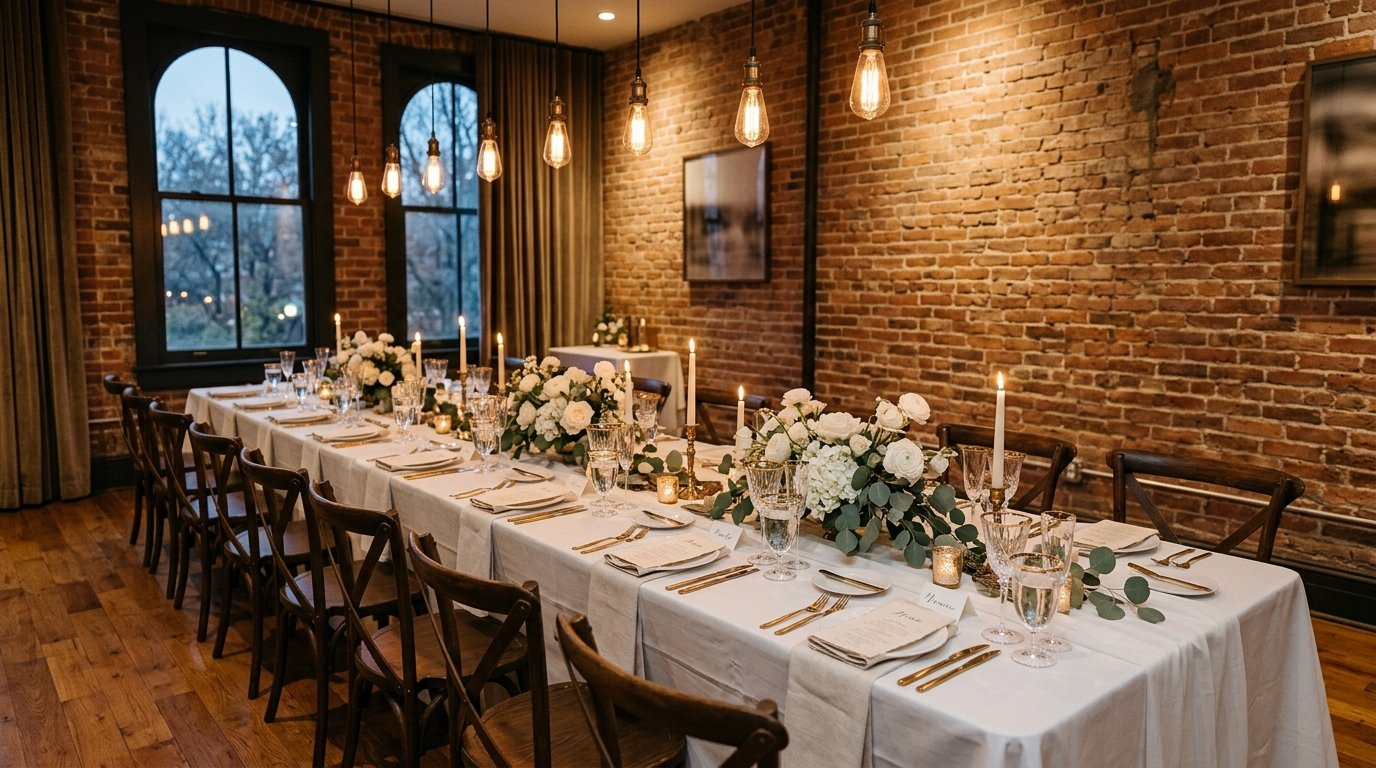
The ambiance already exists. Lighting, furniture, music, decor — a good restaurant has already spent thousands getting these right. You do not need to hire chair covers, table runners, or centrepieces. The room looks exactly as it should.
-
The price is transparent. A set menu at £85 per head for 30 guests = £2,550 for the food. Add drinks and you have a complete bill. No hidden charges for corkage, room hire, cake cutting, or “venue dressing” that traditional venues love to add.
Private dining room vs full buyout
There are two ways to host a wedding at a restaurant:
| Option | Capacity | Cost | What you get |
|---|---|---|---|
| Private dining room | 12-40 guests | Menu + drinks (room often free with min spend) | Dedicated space, separate entrance, your own service team |
| Full buyout | 40-100 guests | Min spend £3,000-£15,000 | Entire restaurant for your exclusive use |
Private dining rooms
Most mid-range and upscale restaurants have a private room. Some charge hire fees (£200-£1,000); many waive the fee if your food and drink spend meets a minimum (typically £1,500-£3,000).
What to check:
- Is the room genuinely private, or just screened off from the main dining area?
- Does it have its own toilet, or do guests share with the main restaurant?
- Can you control the music?
- Is there space for speeches — can everyone see and hear the speaker?
Full buyouts
A buyout means the restaurant closes to the public and opens exclusively for your event. This gives you the run of the place — more space, more flexibility, and the feeling of having your own restaurant for the night.
Buyouts work on a minimum spend basis. The restaurant calculates what it would earn on a normal service and quotes that as your minimum. Weekday and lunchtime buyouts are significantly cheaper than Saturday evenings.
| Day | Typical minimum spend |
|---|---|
| Monday-Thursday evening | £3,000-£6,000 |
| Friday evening | £5,000-£8,000 |
| Saturday evening | £8,000-£15,000 |
| Sunday lunch | £3,000-£5,000 |
What the meal looks like
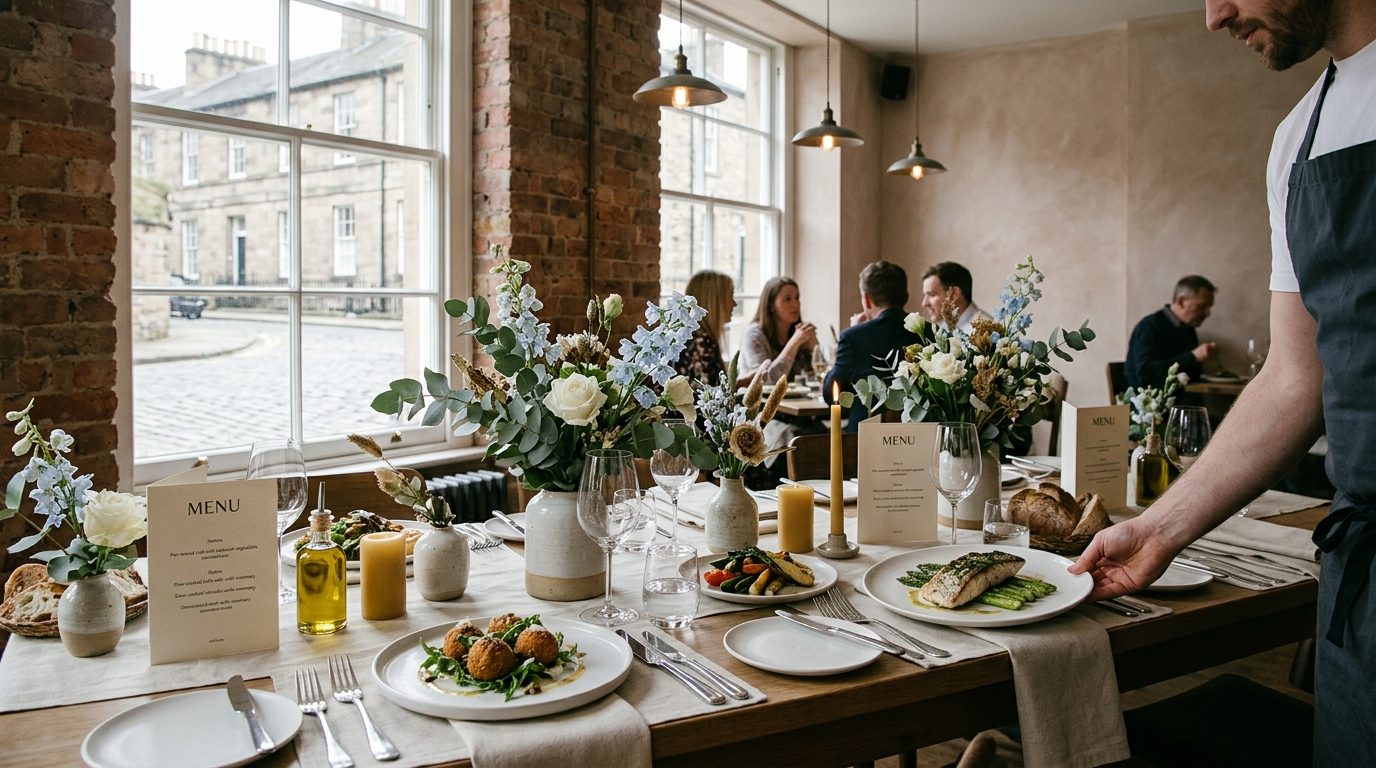
The meal is the centrepiece of a restaurant wedding. It replaces the entertainment, the dancing, and the disco — the food is the event.
Menu options
| Format | Per head | Best for |
|---|---|---|
| Three-course set menu | £50-£80 | Classic format, easy to manage |
| Four-course with cheese | £65-£100 | Leisurely pace, foodie couples |
| Tasting menu (5-7 courses) | £90-£150 | Fine dining experience, smaller groups |
| Family-style sharing | £55-£85 | Informal, social, larger groups |
Pre-orders simplify everything. Send the menu to guests 4-6 weeks ahead and collect choices. This lets the kitchen prep efficiently and means no delays on the day.
Dietary needs. Restaurants handle dietary requirements better than most wedding caterers. They do it every day. Flag allergies and preferences when you book, then confirm final numbers two weeks before.
Wine and drinks
Three approaches:
- Set drinks package: Prosecco on arrival, house wine with dinner, toast fizz. £25-£40 per head.
- Open bar tab: Set a budget (£1,000-£3,000) and let guests order what they like until it runs out.
- Cash bar: Guests buy their own drinks. Saves money but feels less generous.
Corkage: Some restaurants allow you to bring your own wine and charge corkage (£10-£25 per bottle). This can save 30-50% on wine costs if you buy well.
Costs breakdown
Here is what a restaurant wedding costs for 30 and 60 guests:
| Item | 30 guests | 60 guests |
|---|---|---|
| Three-course meal (£80/head) | £2,400 | £4,800 |
| Drinks package (£35/head) | £1,050 | £2,100 |
| Private room / buyout | £0-£500 | £0-£5,000 |
| Flowers (table) | £100-£300 | £200-£500 |
| Cake | £150-£350 | £200-£400 |
| Register office ceremony | £57-£200 | £57-£200 |
| Total | £3,757-£4,800 | £7,357-£13,000 |
Compare these figures to the average UK wedding cost and you will see why restaurant weddings appeal to couples who want quality over scale. You spend less overall, but per head you are buying a significantly better meal.
The ceremony question
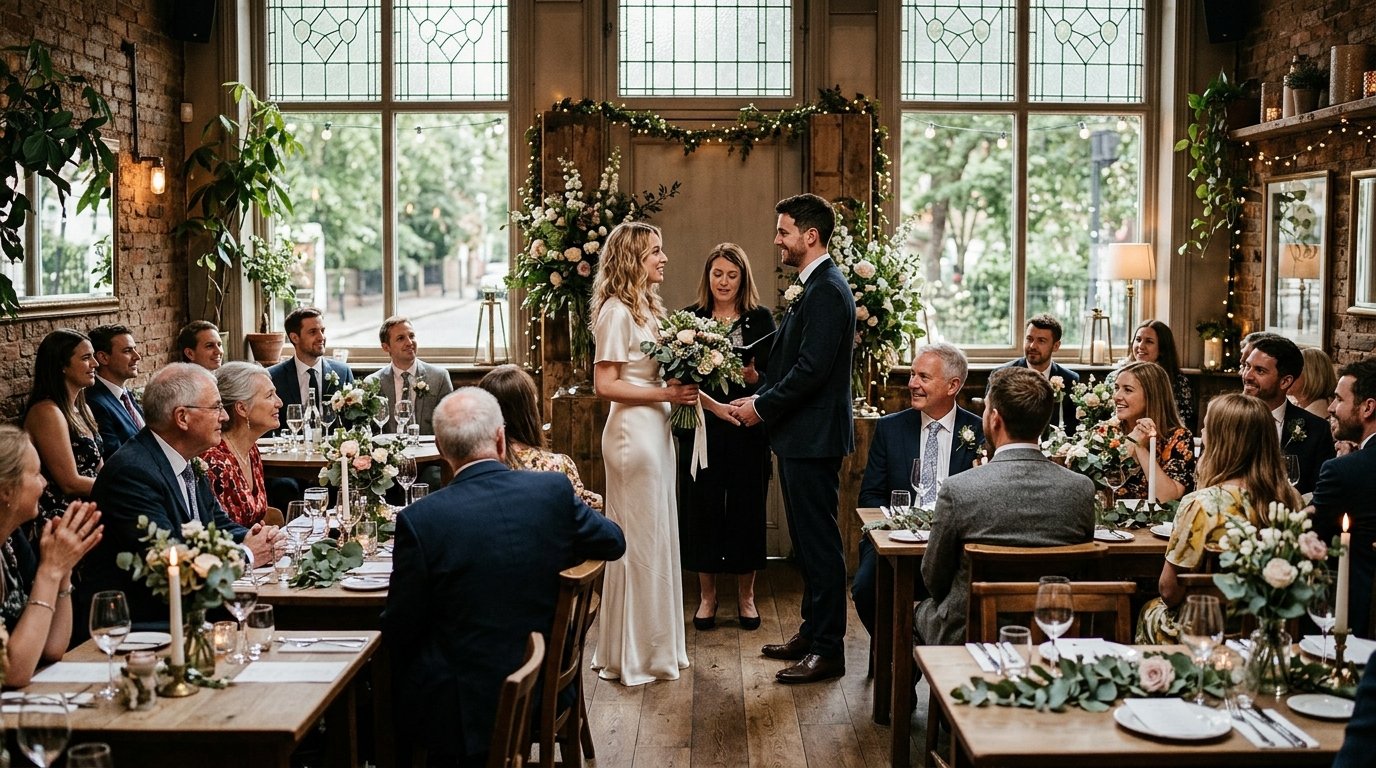
Most restaurants are not licensed for civil ceremonies. Your options:
-
Register office ceremony. Get legally married at the register office (£57-£200), then head to the restaurant for the celebration. This is what most couples do. Book the ceremony 1-2 hours before the restaurant reservation so there is time for photos in between.
-
Licensed restaurant. A handful of restaurants have obtained civil ceremony licences. These tend to be larger venues with a dedicated event space or historic building. Ask the restaurant directly — it is worth checking even if they do not advertise it.
-
Symbolic ceremony at the restaurant. Hire a celebrant (£300-£600) to conduct a non-legal ceremony at the restaurant before the meal. You still need the register office for the legal part, but the symbolic ceremony is the one your guests experience.
What you give up
Restaurant weddings are not for everyone. Be honest about these trade-offs:
No dance floor
Most restaurants cannot offer a dedicated dance floor. The space is designed for dining, not dancing. If a first dance and a full evening of dancing matter to you, a restaurant may not be right.
Workaround: Some restaurants with large private rooms can clear the tables after dinner and set up a small dance area. Others have a bar area that works as an informal dance space. Ask — but do not assume.
Limited late licence
Restaurants typically close at 11pm or midnight. If you want to party until 2am, you will need to move to a bar or club afterwards.
Restricted decoration
You cannot arrive at 8am and spend all day decorating. The restaurant is a working business. You may get 1-2 hours before your event to add personal touches — table numbers, place cards, a few flowers. The rest of the aesthetic is the restaurant’s.
Smaller guest count
If your guest list exceeds 80-100, a restaurant will not work. This is a feature for some couples and a deal-breaker for others. Know your guest count before you start looking.
How to approach a restaurant about hosting a wedding
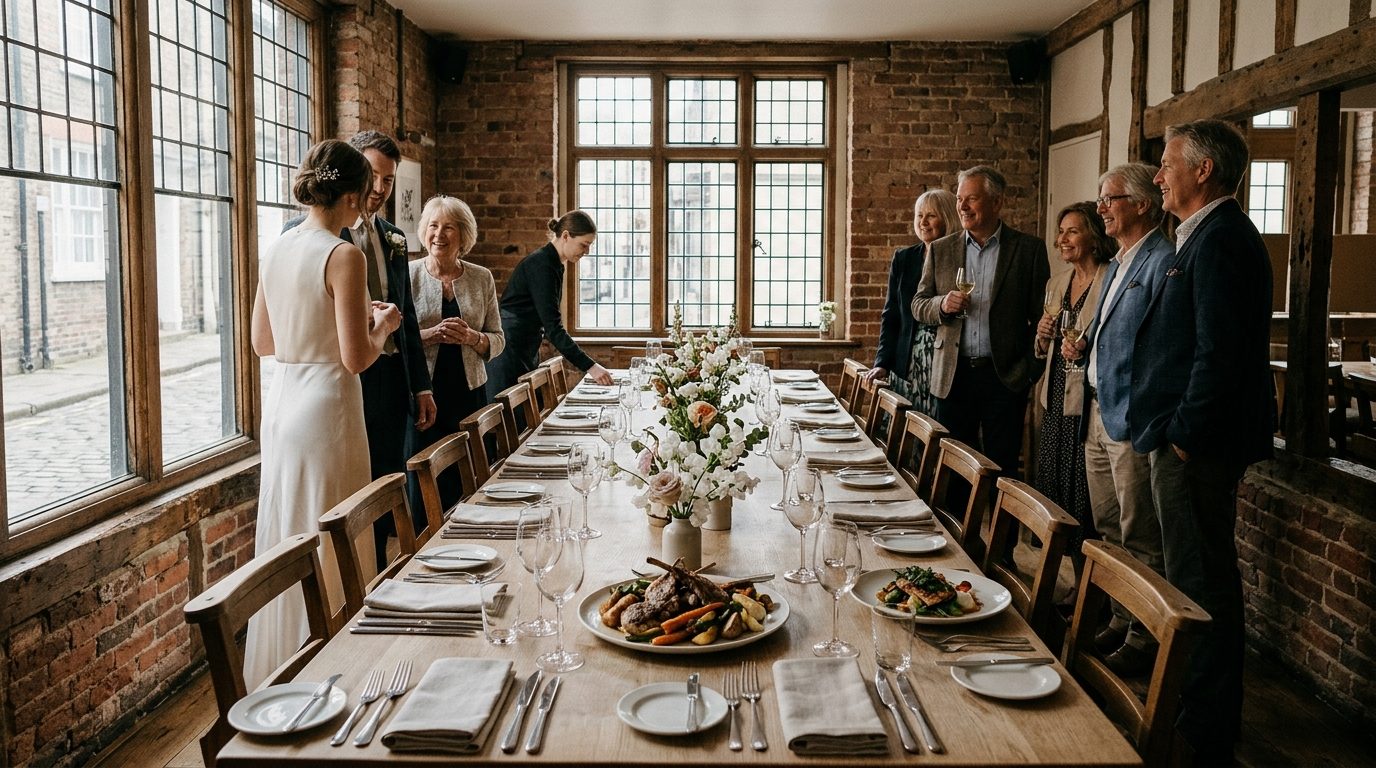
Many excellent restaurants will host weddings but do not advertise the service. Here is how to approach them:
Step 1: Choose the right type of restaurant
Look for:
- A private dining room or mezzanine. Separation from the main dining area is important.
- Capacity that matches your guest count. Do not try to squeeze 50 people into a room designed for 30.
- A restaurant you love. You should already know the food is good. A wedding is not the time to experiment.
- Experienced management. Small owner-run restaurants may not have the infrastructure for a large event. Mid-range restaurants with a professional front-of-house team handle private events more smoothly.
Step 2: Make the approach
- Email the manager, not the bookings line. Explain that you are looking for a private dining experience for your wedding — give the date, guest count, and budget range.
- Use the phrase “private dining event” rather than “wedding.” Some restaurants add a premium the moment they hear “wedding.” A private dining event with speeches and a cake is functionally identical.
- Ask about minimum spend, not hire fee. Most restaurants prefer to guarantee revenue rather than charge for room hire.
- Request a tasting. Any restaurant worth booking will offer a tasting for the couple (sometimes complimentary, sometimes at menu price). This is your chance to finalise the menu and meet the chef.
Step 3: Confirm the details
Before signing anything, clarify:
- Is the space genuinely private (walls and a door, not a curtain)?
- What time can you access the room for setup?
- What is the latest you can stay?
- Can you bring your own cake, and is there a corkage/cutting fee?
- Can you play your own music, and at what volume?
- Is there space for speeches where everyone can see?
- What is the cancellation policy?
- Are gratuities included or expected on top?
Who restaurant weddings suit
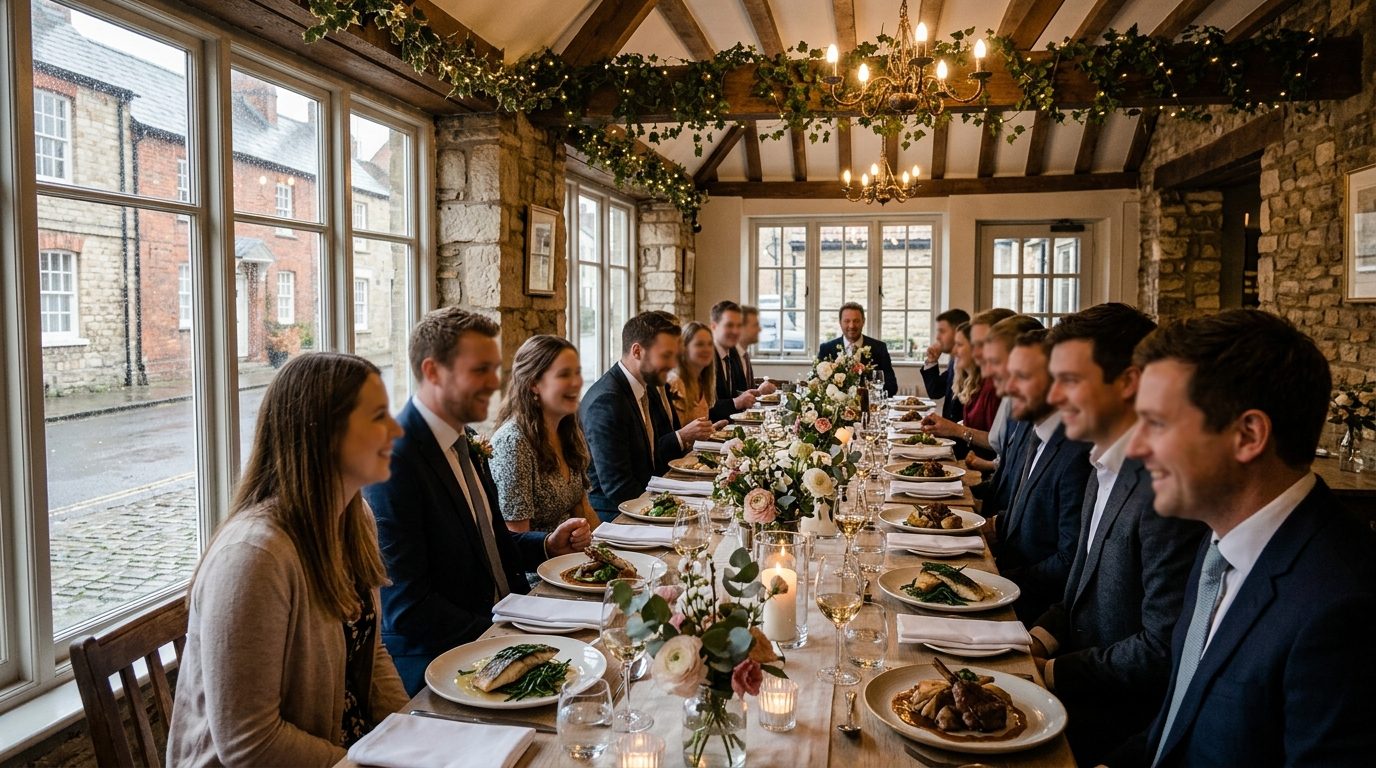
Restaurant weddings are ideal for:
- Foodie couples who care more about what they eat than where they dance.
- Small weddings of 20-80 guests where intimacy matters.
- City weddings where a central restaurant is easier to reach than a rural venue.
- Second marriages or older couples who want a celebration without the full production.
- Couples who hate planning. A restaurant handles the food, drink, service, and setting. You handle the guest list and the flowers.
- Tight budgets. A budget-friendly wedding at a good restaurant beats a cheap wedding at an expensive venue every time.
They are less suited to:
- Large guest lists (100+).
- Couples who want a dance floor and late-night party.
- DIY decorators who want to transform a space.
- Ceremonies and receptions in the same location (unless the restaurant is licensed).
The morning-after option
One underrated advantage of a restaurant wedding: you can book the same restaurant for a next-day brunch. Invite the wedding guests for a relaxed late breakfast the following morning. It extends the celebration, gives everyone a chance to catch up properly, and costs £15-£25 per head for a good brunch.
Making it personal
A restaurant provides the setting and the food. The personal touches are up to you. Keep them simple:
- Place cards with a handwritten note for each guest.
- A single stem in a bud vase at each setting (the restaurant handles the rest of the table styling).
- A speech — the acoustics in a private dining room are perfect for speeches without a microphone.
- A playlist — create one on Spotify and ask the restaurant to play it at low volume during dinner.
- A cake — bring your own. Most restaurants charge £1-£2 per slice for cutting and plating.
The food is the main event. Let it be.
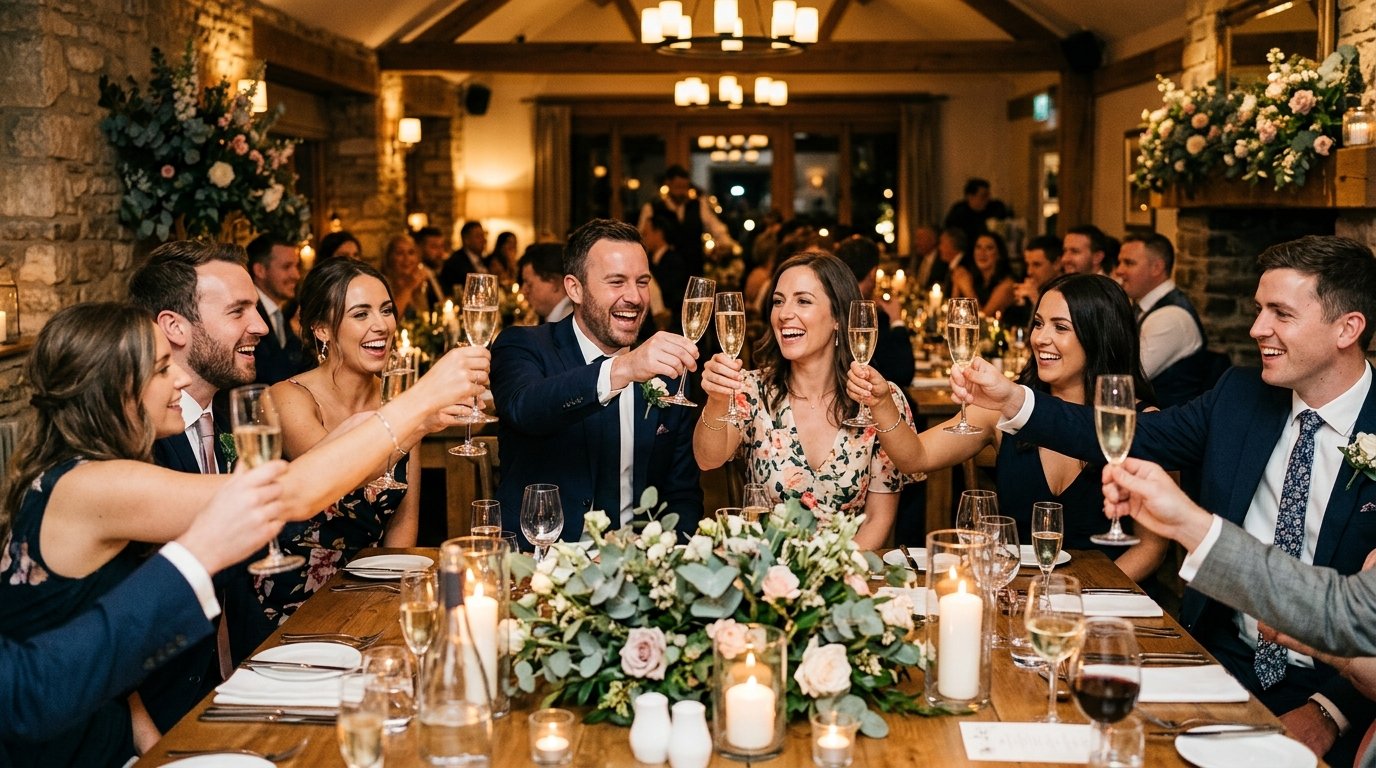
Looking for more ways to keep costs down? Read our guide to budget wedding ideas, or explore seasonal wedding timing for the best deals on dates.
Frequently asked questions
Can you have a wedding reception at a restaurant?
Yes, many restaurants host wedding receptions. Some have dedicated private dining rooms. Others offer full buyouts where you hire the entire restaurant for the day or evening. Not all restaurants advertise wedding packages, so contact the manager directly to ask. Restaurants with separate rooms, flexible layouts, and experience with private events are the best candidates.
How much does a restaurant wedding cost per head?
Restaurant weddings cost £50-£150 per head including food and drink. A three-course set menu with a drinks package sits around £70-£100 per head. Tasting menus run £90-£150. Private dining room hire adds £0-£1,000 (often waived if you meet a minimum spend). Full buyouts require a minimum spend of £3,000-£15,000 depending on the restaurant.
How many guests can a restaurant wedding hold?
Most private dining rooms hold 20-40 seated guests. A full restaurant buyout typically accommodates 60-100, depending on the venue. Some larger restaurants or those with multiple rooms can manage 100-120. Restaurant weddings work best for intimate celebrations — if you need 150+ guests, a traditional venue is more practical.
Can you get married in a restaurant legally?
Only if the restaurant holds a civil ceremony licence. Most do not. The standard approach is to have the legal ceremony at a register office (£57-£200) earlier in the day, then move to the restaurant for the reception and celebration meal. A few restaurants with suitable rooms have obtained ceremony licences — ask directly.
What are the downsides of a restaurant wedding?
Limited space for dancing — most restaurants cannot offer a dance floor. Late licences are rare (many close at 11pm or midnight). Decoration time is restricted because the restaurant serves other guests before your event. Guest capacity is smaller than traditional venues. And you have less control over the aesthetic — the restaurant comes as it is.