Your Dog at Your Wedding: How to Make It Work
Key Takeaways
- Pet-friendly means different things at different venues — some allow dogs for the ceremony only, others welcome them all day
- A professional dog handler or trusted friend should be assigned solely to your dog from arrival to departure
- Outdoor venues are the easiest option for dogs — fewer noise concerns, natural toilet breaks, more space to roam
- Guest allergies must be flagged on your RSVP — even one anaphylactic guest changes the logistics completely
- Budget £150-400 for a professional pet handler or dog sitter for the day
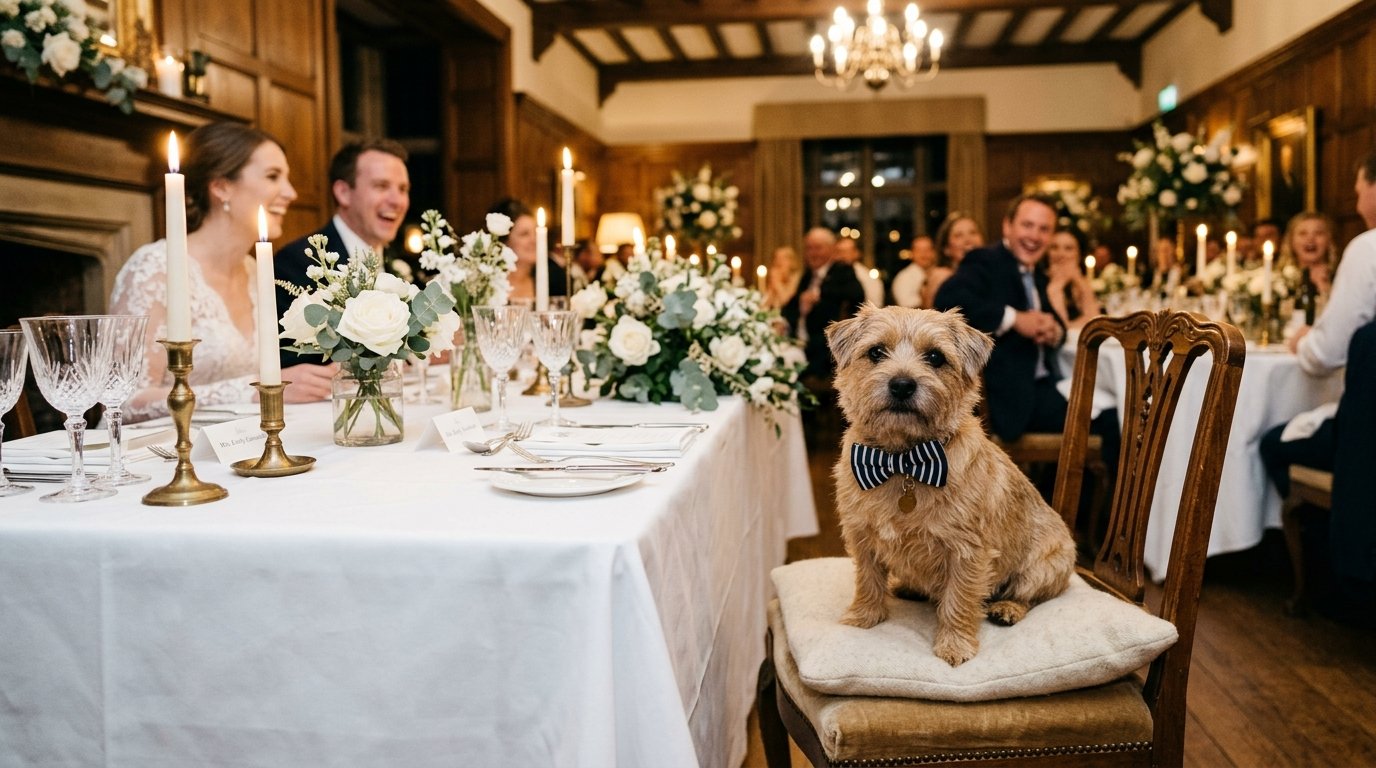
The idea of your dog walking you down the aisle, sitting beside you at the top table, or photobombing your couple portraits is irresistible. But the reality of having a dog at a wedding requires proper planning. Without it, you end up with a stressed animal, a distracted bride or groom, and a photographer trying to get a shot while a spaniel eats confetti.
This guide covers the practicalities: what pet-friendly actually means at UK venues, who looks after your dog during the parts they cannot attend, how to manage guest allergies, and how to get those incredible photos without the chaos.
What does pet-friendly actually mean?
“Pet-friendly” is not a standard term. It means something different at every venue, and the gap between what you imagine and what they allow can be significant.
| Level | What the venue allows | Common at |
|---|---|---|
| Ceremony only | Dog present for the ceremony, then must leave the building | Hotels, licensed indoor venues |
| Ceremony + photos | Dog stays for ceremony and 30-60 minutes of outdoor photos | Country houses, barns |
| Outdoor areas only | Dog welcome in gardens and grounds, not inside | Stately homes, estates |
| Full day | Dog welcome everywhere including the reception room | Barns, farms, rustic venues |
| Overnight | Dog can stay in on-site accommodation | Cottages, boutique hotels |
The questions to ask:
- Can my dog be present during the ceremony?
- Is the dog allowed in the reception room during dinner?
- Is there a quiet room where the dog can rest?
- Is there a secure outdoor area for toilet breaks?
- Do you have any breed or size restrictions?
- Have you hosted a wedding with dogs before?
Venues that have done it before will give specific, practical answers. Venues that have not will give vague, nervous ones. That tells you everything.
Why outdoor venues are the easiest option
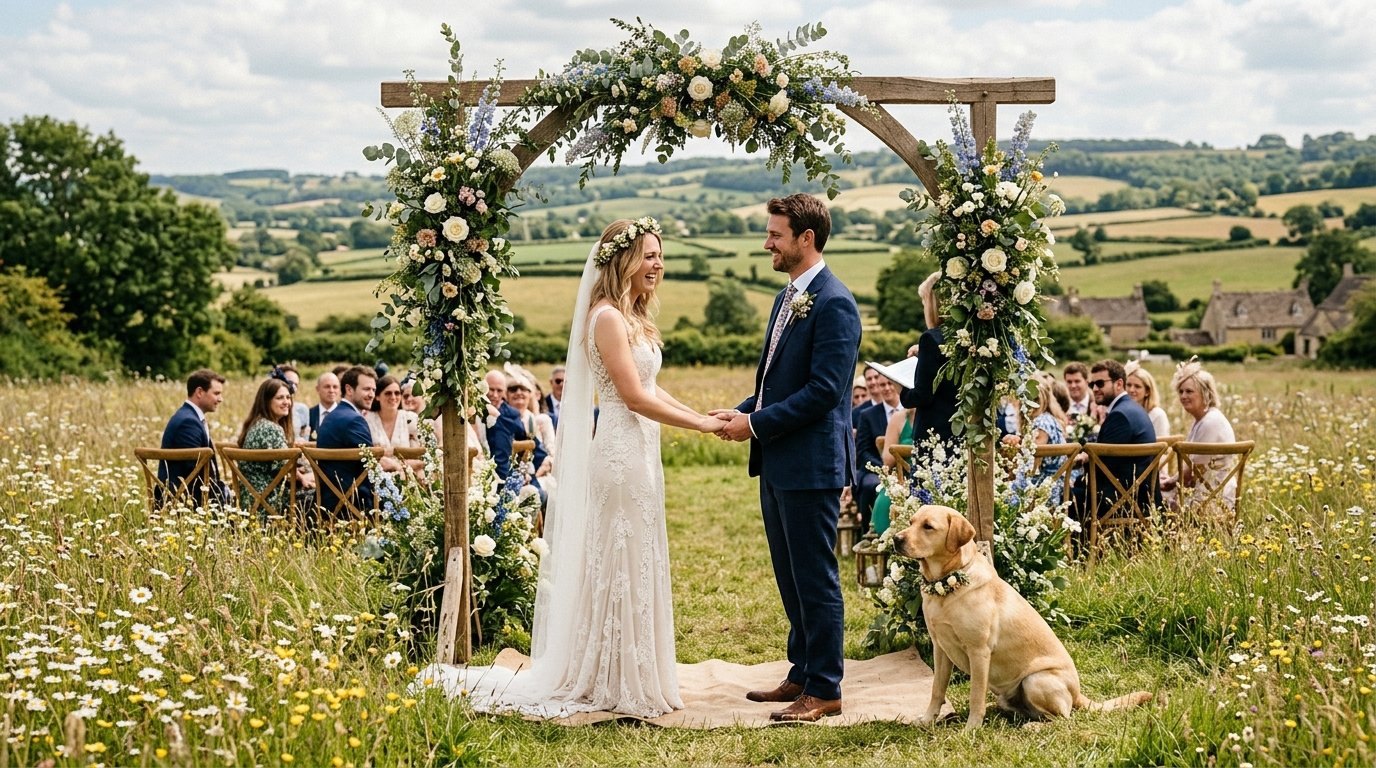
Outdoor ceremonies solve most of the logistical problems with dogs at weddings. There is no echo from barking in a stone room. Toilet breaks happen naturally on grass. Allergic guests can sit upwind. The dog has space to move without knocking over table centrepieces.
Venue types that work well for dogs:
- Barns and farms — rural setting, outdoor space, relaxed atmosphere, often already dog-friendly for resident farm dogs
- Country estates with licensed outdoor areas — gardens, courtyards and terraces with legal ceremony approval
- Marquee weddings — your own land or a hired field, complete flexibility over dog policy
- Tipi and festival venues — relaxed, outdoor-focused, dogs are part of the vibe
- Pub gardens — smaller weddings where dogs are already welcome
For more on choosing between venue types, read our guide to how to choose a wedding venue.
The dog handler: your most important booking
You cannot look after your own dog on your wedding day. You are getting married. You have a schedule, a photographer following you, and 100 people who want your attention. Your dog needs someone whose only job is looking after them.
Options:
| Handler Type | Cost | Best For |
|---|---|---|
| Professional wedding dog handler | £150-400/day | Couples who want the dog involved in ceremony and photos |
| Dog sitter (collect after photos) | £30-60 | Couples who want the dog for the ceremony only |
| Trusted friend or family member | Free (gift/thank you) | Calm dogs who know the person well |
| Doggy daycare (drop off before reception) | £25-45/day | Couples who want the dog gone by dinner |
A professional wedding dog handler is a real service. They arrive at your home or venue, dress your dog in their wedding outfit, walk them down the aisle, hold them during the ceremony, manage them for photos, and then either stay for the reception or take the dog home. They bring treats, water, waste bags and a calm energy that keeps your dog relaxed.
If you use a friend, make sure they understand this is a real job. They cannot drink, dance, or get distracted. They are the dog’s person for the entire day.
Getting the photos right
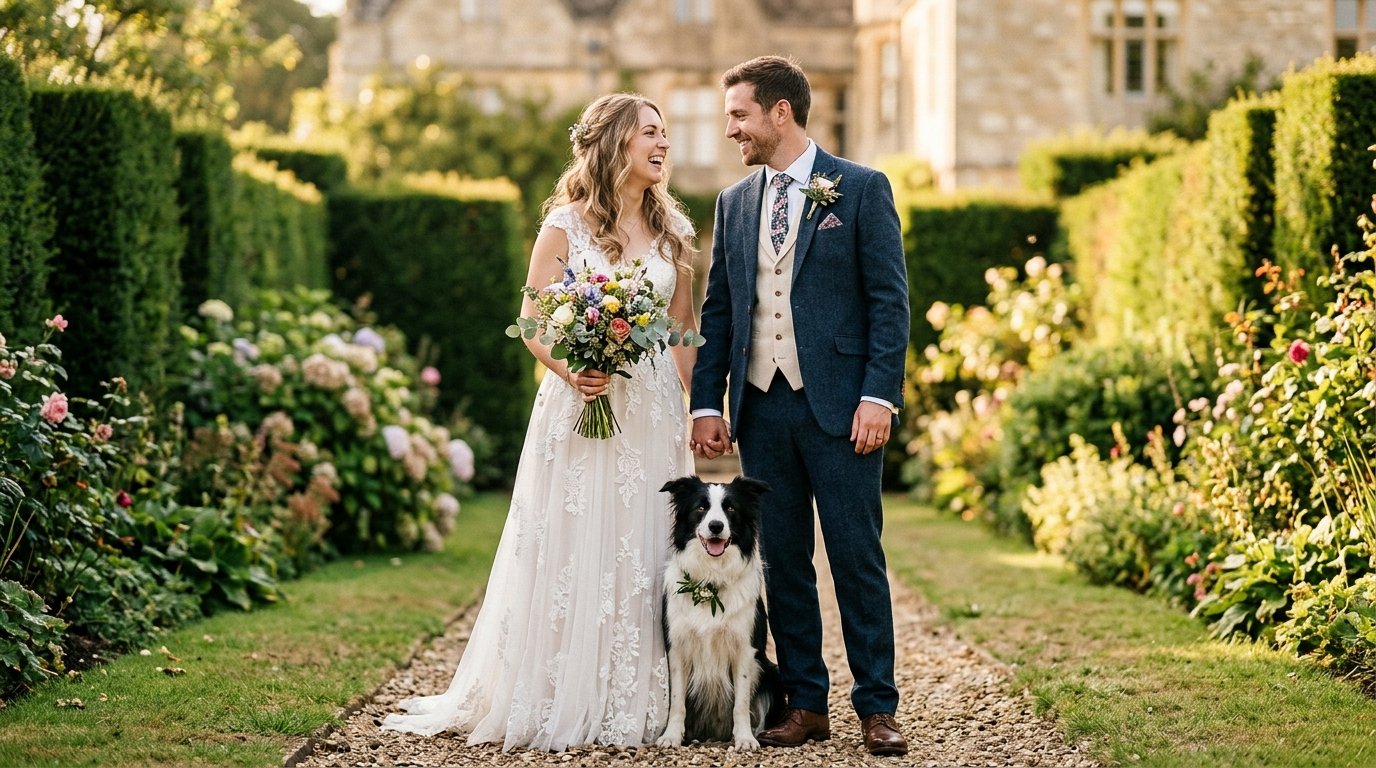
The photos are the main reason most couples want their dog at the wedding. But great dog photos require planning, not luck.
Tell your photographer in advance. Not all wedding photographers are comfortable with animals. Some love it and have techniques for getting dogs to look at the camera. Others find it stressful and will rush through the pet shots. Ask to see examples of their previous work with dogs at weddings.
Schedule dog photos early. Dogs are calmest when they first arrive. After two hours of excitement, strangers, and new smells, they are tired, distracted and harder to photograph. Book the dog shots immediately after the ceremony, before the group photos.
Bring the right props:
- High-value treats (something they go mad for, not their everyday biscuit)
- A squeaky toy to get their attention from behind the camera
- A lint roller for dog hair on the dress
- A spare lead that matches the aesthetic (leather, ribbon, or floral)
Realistic expectations. You will not get a perfectly posed photo of your dog looking straight at the camera while you gaze into each other’s eyes. You will get a brilliant, chaotic, joyful photo of your dog licking your face while your partner laughs. That is better.
The top table question
Having your dog at the ceremony is one thing. Having them at the wedding breakfast is another. The reception is louder, longer and involves food at nose height for most dogs.
Can work: Small, calm dogs who are used to restaurants and busy environments. Dogs who will settle on a bed under the table. Dogs with a dedicated handler sitting beside them.
Probably will not work: Excitable dogs, food-obsessed dogs, dogs who bark at strangers, puppies, dogs who have never been in a busy indoor environment.
If your dog stays for dinner, plan these details:
- A bed or blanket under or beside the top table (bring their own, familiar one)
- Water bowl — tucked away where guests will not kick it
- Their own food — served before or after the speeches, not during
- An exit plan — if the dog gets stressed, the handler takes them out immediately, no fuss
- No chocolate on the tables — wedding favours with chocolate are a genuine hazard for dogs
For couples planning their wedding budget, the dog handler is a line item worth including from the start.
Managing guest allergies
This is the part most couples underestimate. Dog allergies affect around 10-20% of the UK population. In a wedding of 100 guests, that could mean 10-20 people with some level of reaction.
Steps to take:
- Add an allergy question to your RSVP. “Please let us know if you have any pet allergies” — simple, non-judgmental, gives you the data early.
- Severe allergies change everything. If a close family member has anaphylaxis triggered by dogs, the safest option is keeping the dog outdoors only and ensuring the indoor space is thoroughly cleaned before guests enter.
- Mild allergies are manageable. Seat affected guests away from the dog. Keep the dog out of the ceremony room if it is small and enclosed. Have the venue clean chair covers between ceremony and reception.
- Inform the venue. They may need to adjust cleaning schedules, provide alternative seating, or designate dog-free zones.
Read our guide on questions to ask your wedding venue — pet policies should be on your list.
Protecting the dress (and the suit)
Dog hair, muddy paws, and enthusiastic jumping are real risks to a white wedding dress. This is not a reason to exclude your dog. It is a reason to plan the contact points.
Practical solutions:
- Paw wipe station — baby wipes and a towel at the venue entrance, used by the handler before any indoor time
- Dog meets dress after photos, not before — get the formal portraits done first, then let the dog get close
- Apron or cover-up — a bridal cover-up or pashmina for the candid dog moments, removed for formal shots
- Groom goes first — if the dog is muddy, let the groom have the cuddle photos while the bride stays clean
- Lint roller — pack three, give one to the handler, one to the best man, one to the maid of honour
The ring bearer dog
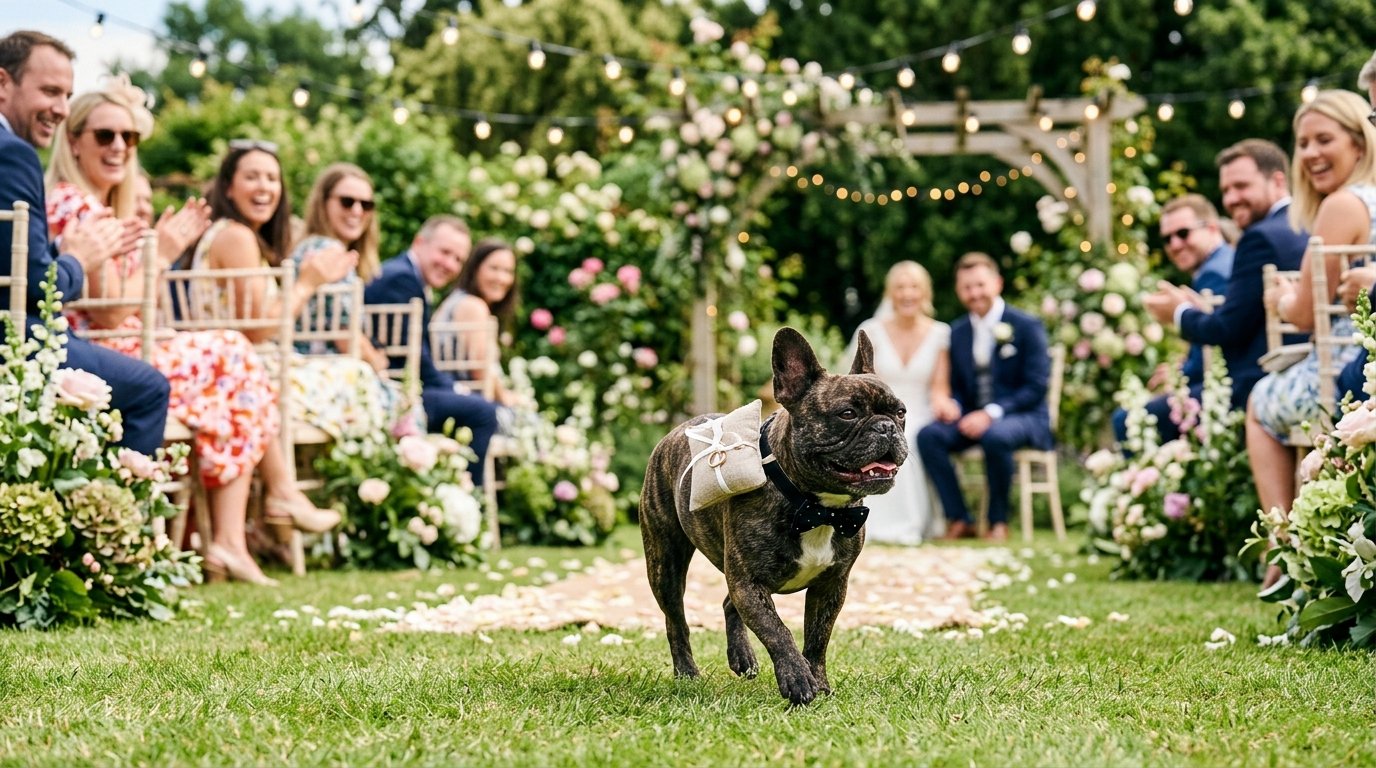
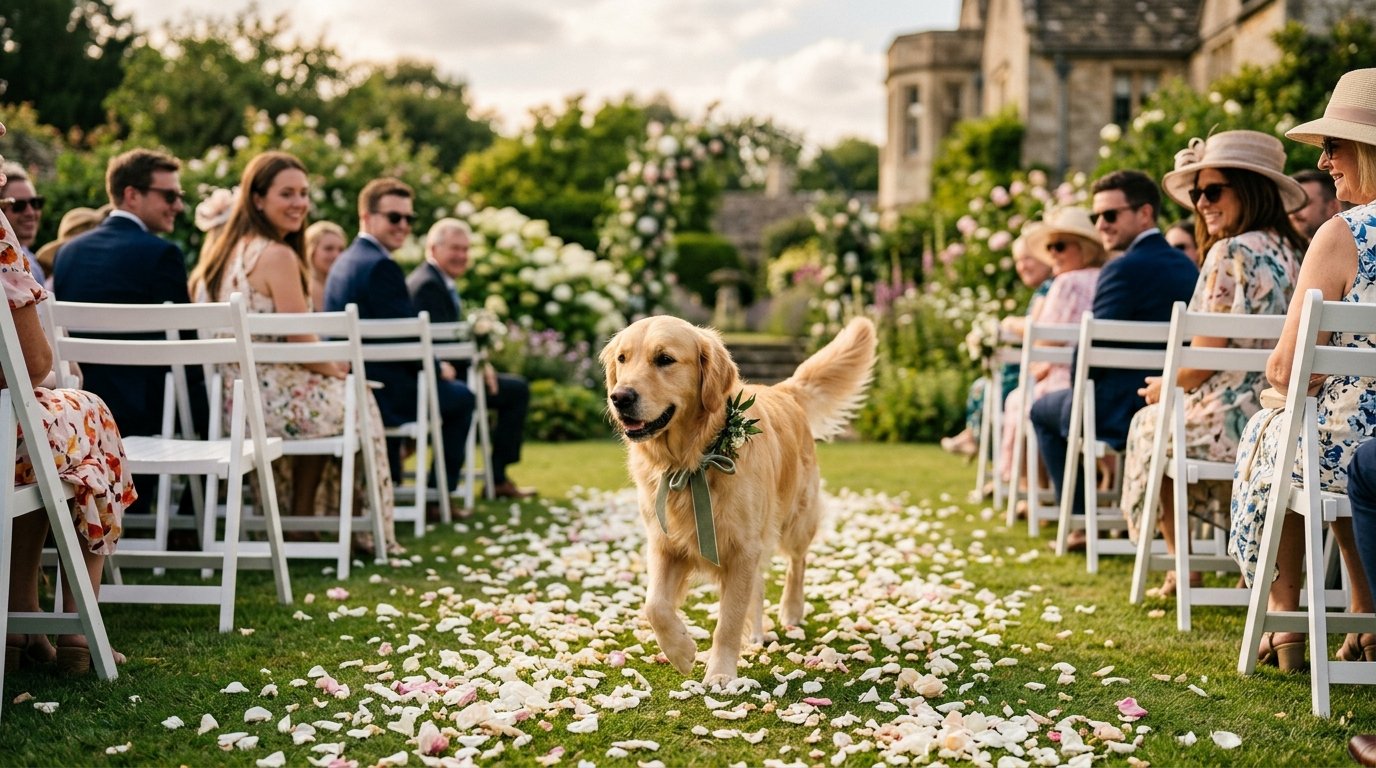
Dogs carrying wedding rings down the aisle is a social media dream and an insurance nightmare. But it can work with the right preparation.
How to do it safely:
- Fake rings for the walk. Attach costume rings to the pillow. The best man carries the real rings in his pocket. No risk, same photo.
- Practice the walk. Your dog needs to walk from point A to point B on cue, in front of strangers, in a new environment. Practice at the venue at least twice.
- Use the handler. The handler walks the dog down the aisle on a lead, with the ring pillow attached to the collar or harness. The dog does not carry the pillow in its mouth.
- Keep it short. The walk down the aisle should take 30-60 seconds. Then the handler takes the dog to the side.
If your dog is not reliable off-lead, do not attempt an off-lead aisle walk on your wedding day. The rehearsal is not the place to discover your dog will run to the nearest guest with a handbag full of treats.
When to say no
Not every dog belongs at a wedding. This is not a judgment on you or your dog. It is a practical assessment of whether the day will be enjoyable for everyone, including the dog.
Your dog should probably stay home if:
- They are aggressive or unpredictable around strangers
- They bark constantly in new environments
- They have severe separation anxiety (being passed between handlers will make it worse)
- They are elderly or unwell and the journey and noise would cause distress
- The venue is entirely indoors with no outdoor space
- Several close family members have severe allergies
A dog who spends the day stressed, overheated, or frightened is not having a good time. And a couple who spends their wedding worrying about the dog is not having a good time either.
If your dog stays home, consider these alternatives:
- A dog photo at the ceremony entrance — a framed portrait on an easel with a sign saying “We wanted to be here too”
- Dog-themed place cards or table names — breeds as table names, paw print motifs
- A pre-wedding photo session — a proper shoot with your dog in your wedding outfits before the day itself
Setting up the dog’s space at the venue
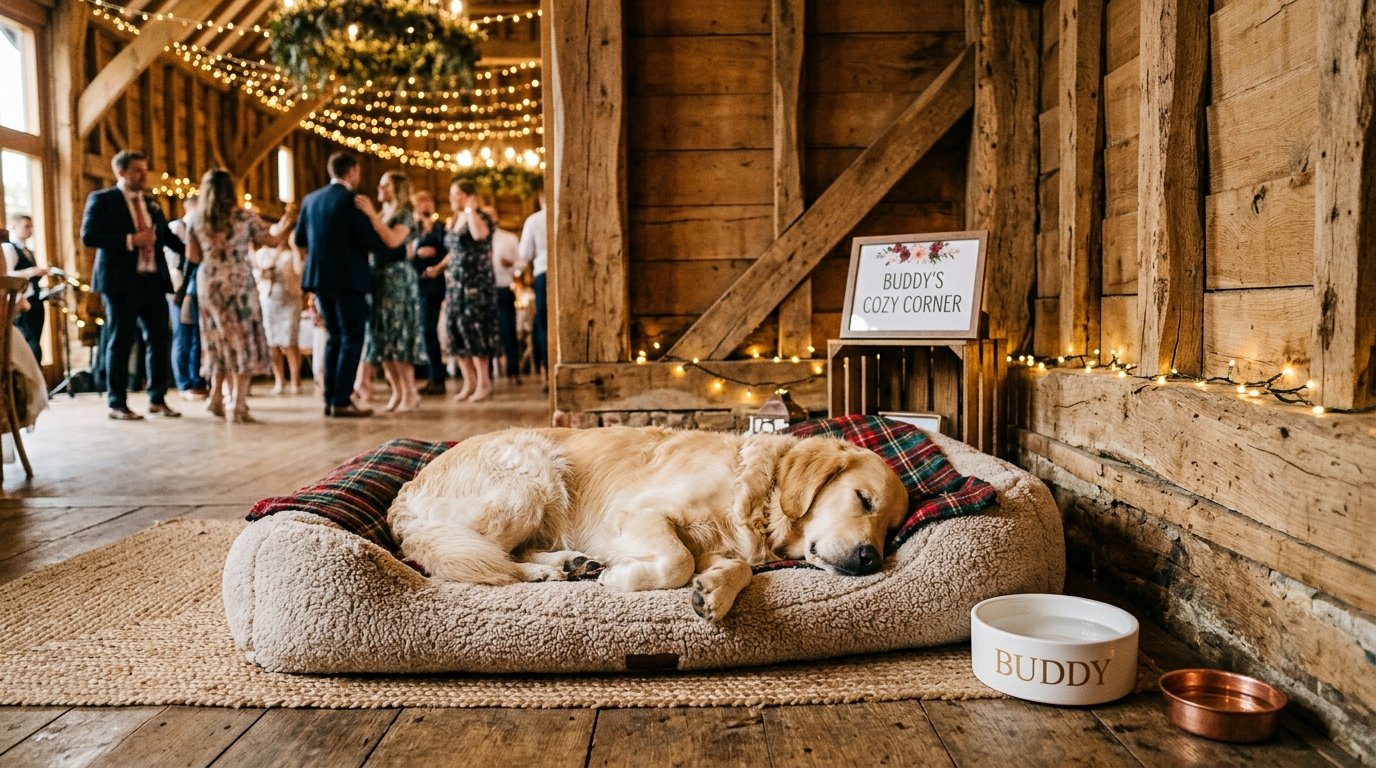
If your dog is staying for any part of the reception, they need their own space. This is not optional. A stressed dog with no retreat will become a problem.
What to bring:
- Their own bed (familiar smell reduces anxiety)
- Water bowl and treats
- A chew or Kong to keep them occupied during speeches
- A spare lead
- Waste bags
- Any medication they need
- A towel for drying off if it rains
Where to set up:
- A quiet corner of the reception room, away from speakers and the dance floor
- A separate room at the venue (some have snugs, libraries or boot rooms)
- A crate if your dog is crate-trained and feels safe in one
- Under the top table if the dog is small and calm
Ask the venue about their pet facilities when you visit. Some venues that regularly host dogs have dedicated dog areas with water stations, towels and treat jars. Others expect you to bring everything yourself.
Venue insurance and liability
Standard wedding insurance does not cover pets. If your dog damages the venue, bites a guest or causes an allergic reaction, you are personally liable.
Check these policies before the wedding:
| Policy | What it covers |
|---|---|
| Pet insurance (third-party liability) | Damage or injury your dog causes to others — not all policies include this |
| Home contents insurance | May cover third-party liability from your pet — check the small print |
| Venue’s own insurance | The venue may require you to sign a pet damage waiver or pay an additional deposit |
| Wedding insurance | Does NOT cover pet-related incidents |
Some venues charge a refundable pet deposit of £100-300 to cover potential damage. This is standard and reasonable.
Planning timeline for a pet-friendly wedding
| When | What to do |
|---|---|
| 12+ months before | Check venue pet policy before booking |
| 9 months | Book a professional dog handler if using one |
| 6 months | Tell your photographer about the dog |
| 3 months | Add allergy question to RSVPs |
| 2 months | Trial visit to the venue with your dog |
| 1 month | Confirm handler details, practice the aisle walk |
| 1 week | Pack the dog kit (bed, bowls, treats, lead, lint rollers) |
| On the day | Handler collects dog, you focus on getting married |
For a complete planning overview, see our wedding checklist and wedding day timeline.
What it actually costs
Adding a dog to your wedding is not free. Here is what the extras add up to:
| Item | Cost |
|---|---|
| Professional dog handler (full day) | £150-400 |
| Dog outfit (bow tie, collar, bandana) | £15-50 |
| Dog-specific photographer add-on | £0-150 |
| Venue pet deposit (refundable) | £100-300 |
| Dog grooming (pre-wedding) | £30-80 |
| Dog transport (if handler collects) | Included or £20-50 |
| Total | £295-1,030 |
For couples working to a tight budget, our budget wedding ideas guide covers where to save across every category.
Frequently asked questions
Can I bring my dog to my wedding?
Yes, if the venue allows it. Around 30-40% of UK wedding venues accept dogs on site, though policies vary widely. Some allow dogs for outdoor ceremonies only. Others welcome them for the full day including the reception. Always check the specific venue policy before booking, and ask whether they have hosted weddings with dogs before.
How much does a wedding dog handler cost?
A professional wedding dog handler costs £150-400 for a full day in the UK. This typically covers collecting your dog, keeping them calm during the ceremony, managing them for photos, and taking them home or to a sitter when the evening party starts. Prices vary by location and the number of dogs.
What do I do with my dog during the wedding reception?
Most dogs are happiest at the ceremony and photos, then handed off before the reception. Loud music, dancing, and 100+ guests in a confined space can stress even calm dogs. Options include a dog sitter collecting them after photos, a quiet room at the venue with their bed, or a trusted guest taking them home.
Will my wedding insurance cover my dog?
Standard wedding insurance does not cover pets. If your dog damages venue property, injures a guest, or causes an allergic reaction, you would need to claim on your personal pet insurance or home contents policy. Check both policies before the day and consider whether your pet insurance covers third-party liability.
How do I handle guest allergies to dogs at my wedding?
Ask about allergies on your RSVP cards. If any guest has a severe allergy, keep the dog outdoors only and ensure the indoor reception space is dog-free. For mild allergies, seat affected guests away from where the dog will be. Inform the venue so they can clean ceremony chairs before the reception if needed.
What breeds are best for weddings?
Calm, well-socialised dogs of any breed do well at weddings. Labradors, golden retrievers, cavalier King Charles spaniels and greyhounds are naturally relaxed around crowds. The key factor is temperament, not breed. If your dog is anxious around strangers, loud noise or new environments, a wedding is not the right setting for them.
Should I do a trial run with my dog at the venue?
Yes. Visit the venue with your dog at least once before the wedding day. Walk the ceremony route, let them explore the grounds, and see how they react to the space. This is especially important for indoor ceremonies where echoing rooms or slippery floors might unsettle them.