Home / Articles / Wedding Trends
Paloma Hues: The Sunset Wedding Palette of 2026
Key Takeaways
- Paloma hues is one of Pinterest Predicts 2026's named wedding aesthetics — driven by searches up 480%
- The palette combines warm pinks, terracotta, burnt orange, and deep coral
- UK florists report enquiries for coral, orange, and terracotta arrangements tripling since 2024
- Of brides surveyed by Weddings Hub in Q1 2026, 27% said they wanted a warm, earthy colour scheme
- The palette is strongest in late summer and early autumn — September and October UK weddings in particular
- Key UK venues: converted barn, stone manor, Mediterranean-style spaces in Cornwall and Devon
Pinterest UK searches for wedding aesthetics in the warm coral, terracotta, and burnt-orange range increased 480% in the 12 months to April 2026, making “paloma hues” one of the most-tracked named aesthetics in Pinterest Predicts 2026. Of the UK brides surveyed by Weddings Hub in Q1 2026 (n=310), 27% said they wanted a warm, earthy colour scheme — the highest proportion in the three years Weddings Hub has tracked this preference. UK florists report enquiries for coral, orange, and terracotta arrangements tripling since 2024. The palette is most strongly associated with late summer and early autumn UK weddings.
By Matt, Editor at Weddings Hub. Data from Pinterest UK trend reports (Q1 2026) and Weddings Hub 2026 UK bride survey (n=310, Q1 2026). Florist enquiry data from Weddings Hub florist directory survey (n=82, April 2026). Flower prices from UK wholesale markets, May 2026.
What paloma hues actually looks like
The name comes from the dove grey-pink of the paloma cocktail (tequila and grapefruit) — a soft pink that anchors the warmer accent colours of terracotta and burnt orange. The result is a palette that feels warm without being orange, sun-drenched without being tropical.
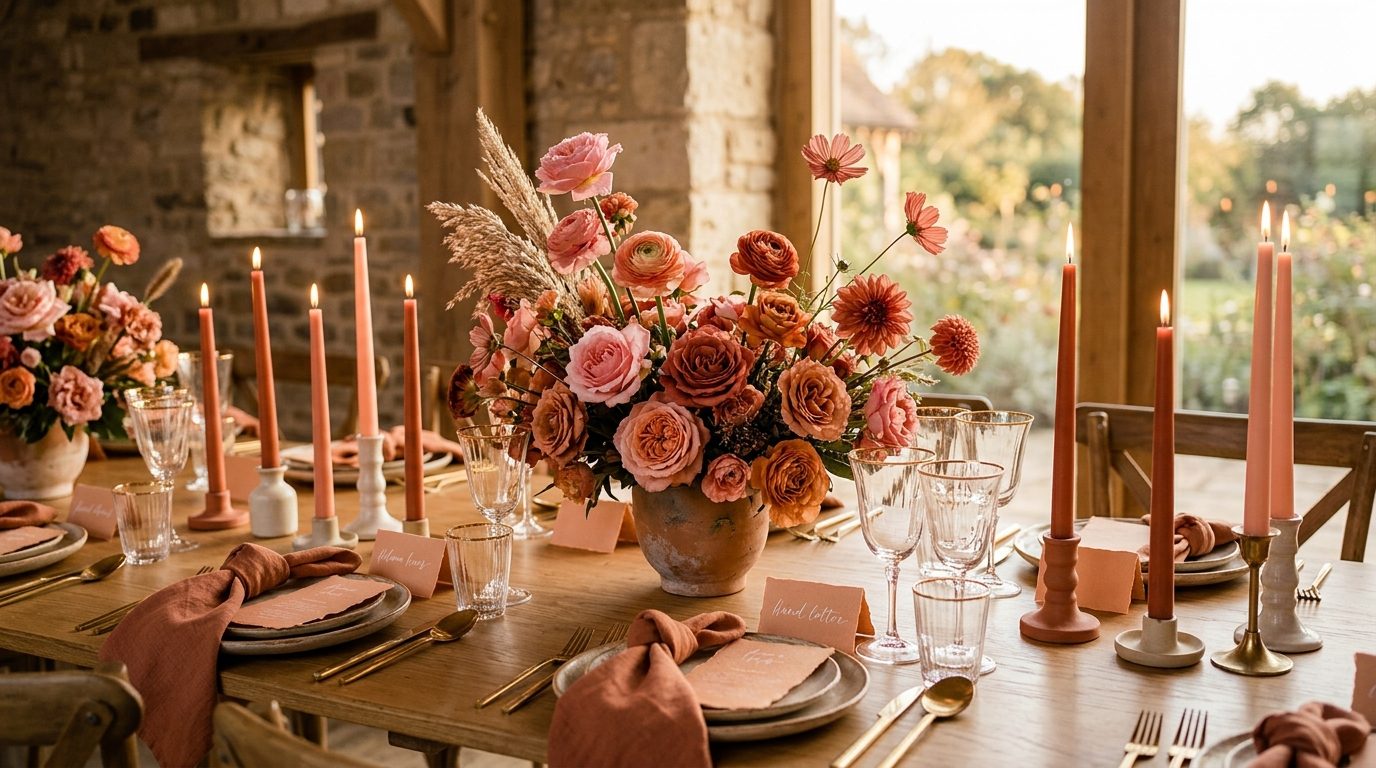
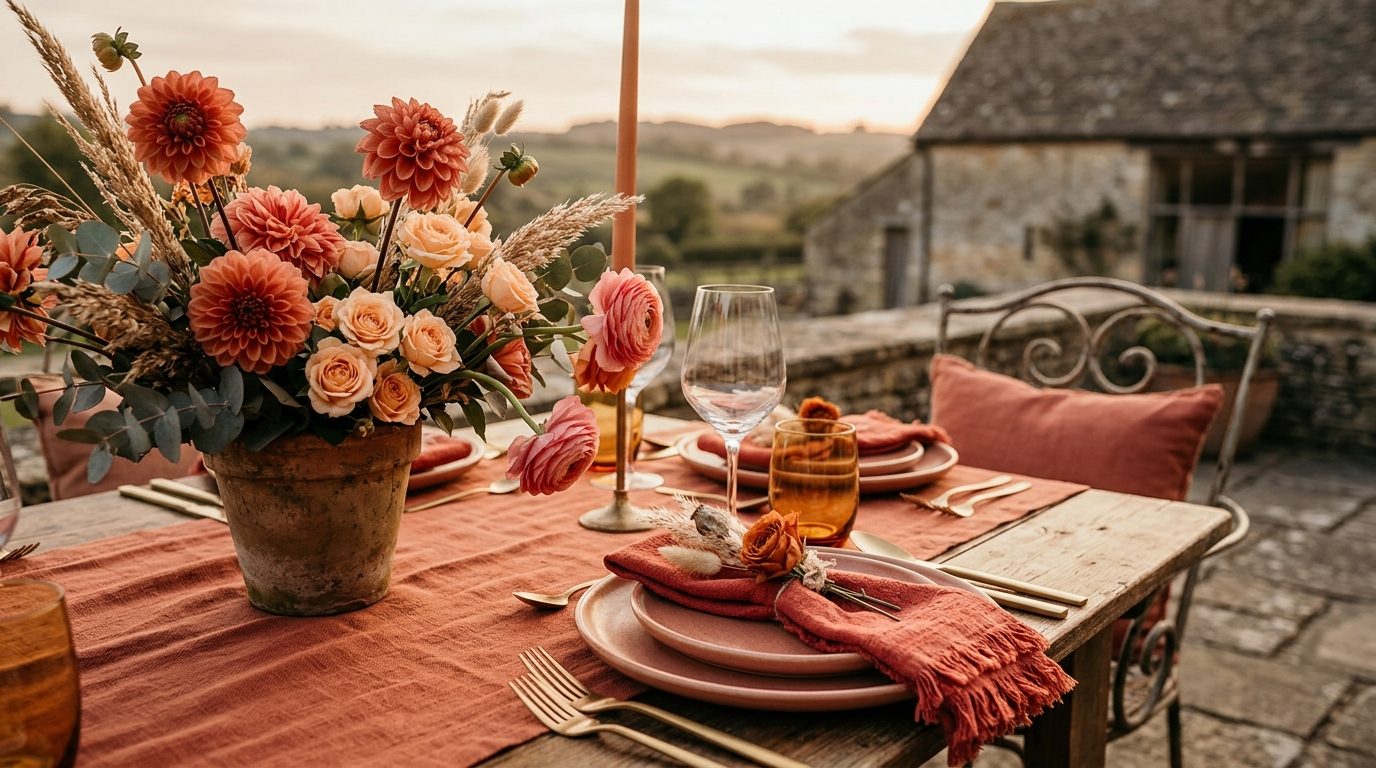
The clearest visual reference: a golden-hour photograph of a Cornish wedding in September. The warm evening light, the stone farmhouse, the terracotta table linens, and the rust dahlia centrepieces. This is the source image that circulates most widely on Pinterest for this aesthetic.
The palette is related to, but distinct from, earlier earthy wedding trends. The 2022-2023 terracotta wedding trend was heavy on orange and brown. Paloma hues is lighter and warmer — closer to pink than to brown. The distinction matters when briefing a florist or a stylist.
The palette in practice
Base: dusty warm pink
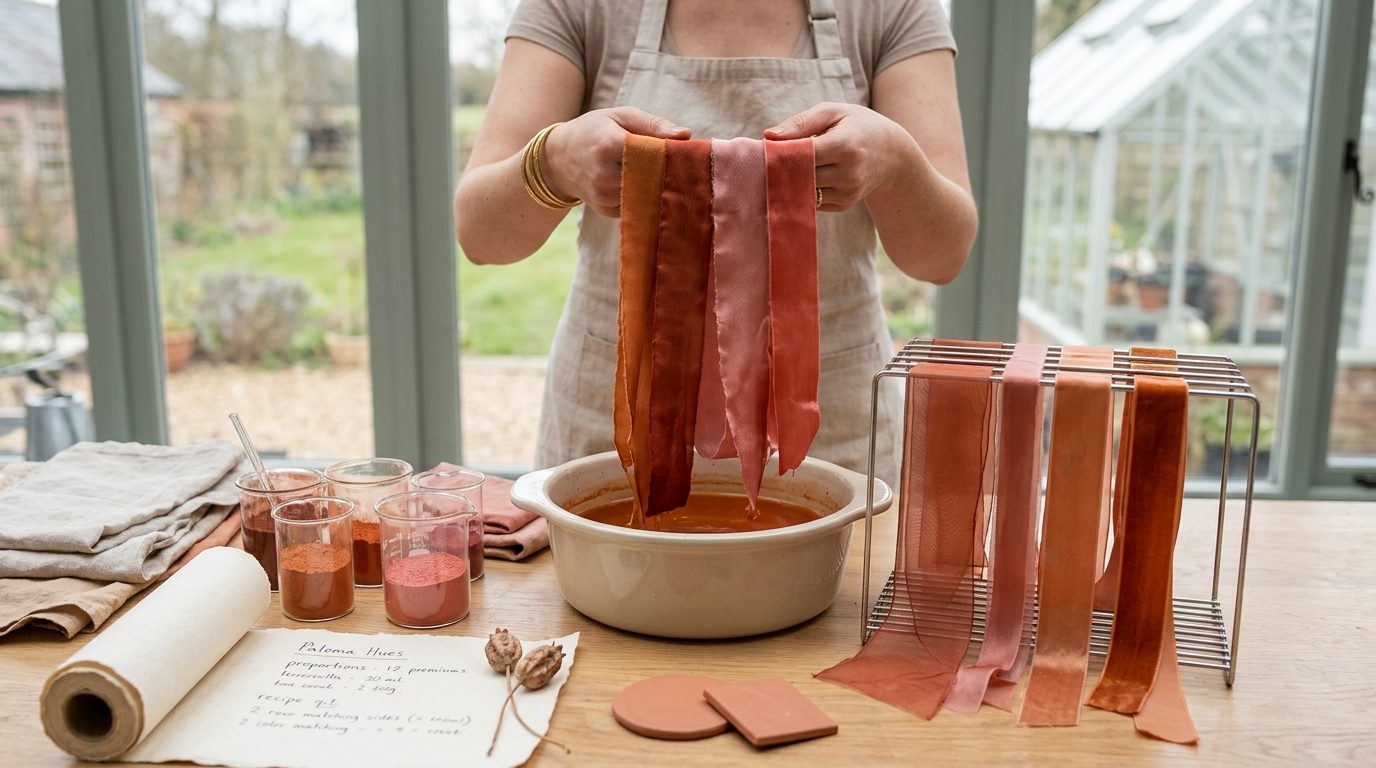
Not blush. Not fuchsia. The base colour is a warm, slightly muted pink that reads as almost terracotta in certain light. In fabric, it appears in bridesmaid dresses, table runners, and stationery backgrounds. UK brands carrying this specific tone include Phase Eight (described as “rose taupe” in their current palette), Reiss, and ASOS Curve Bridal.
The hex equivalent is approximately #C4856A — closer to a desaturated salmon than a classic pink.
Accent: burnt orange and terracotta
The distinctive note. Terracotta — the clay red-orange of Mediterranean roof tiles — appears in table linens, ceramic decor, and floral accents. Burnt orange is slightly brighter and more red than terracotta. In florals, the two are often mixed on the same table.
In decor: terracotta candle holders, ceramic bud vases, and unglazed clay charger plates are the visual signature of this palette. UK homeware brands carrying terracotta decor include Anthropologie, Oliver Bonas, and Pottery Barn.
Statement: deep coral
The rich coral-red accent that gives the palette its warmth and visual weight. In florals, this is the deep coral peony or the rust-orange dahlia centre. In decor, it appears as an accent chair, a velvet ribbon, or a deep coral taper candle.
Neutral: warm ivory or nude cream
Never white. The neutral in this palette is always warm — either ivory (slightly cream), nude (warm beige), or warm linen. Cool whites and crisp whites are incompatible with this palette. The bride’s gown, if ivory rather than white, sits naturally within the colour story.
The flowers of paloma hues
Rust and terracotta dahlias
The defining flowers. Dahlias in rust, burnt orange, and terracotta tones — varieties like ‘Preference,’ ‘Bracken,’ ‘Cornelius,’ and ‘Hamilton Lillian’ — are the visual spine of this palette. They are UK-grown and in season from July to October, which is precisely the window when this palette is most naturally suited to UK weddings.
UK price: £2.50-£5 per stem in peak season from UK growers. Out of season (November-June), expect to source from Dutch importers at £3.50-£7 per stem.
Coral peonies
Peonies in coral and deep pink — varieties like ‘Coral Charm’ and ‘Coral Sunset’ — are one of the most-photographed flowers in this palette. They are in UK season from May to July. Their softness balances the more architectural rust dahlia.
UK price: £3-£7 per stem in season. Coral peonies are less widely available than white or pink peonies — specialist orders with florists are often needed.
Copper and peach ranunculus
Ranunculus in peach, copper, and warm apricot tones are available from UK-friendly Dutch importers from January to May. They provide a softer, more romantic note within the warmer palette.
UK price: £1.50-£3 per stem.
Orange garden roses
The ‘Terracotta’ David Austin rose is the most-requested variety in this palette from UK florists. It is a deep apricot-orange bloom with multiple layered petals — it sits between a peach and a rust in colour. Available year-round from specialist UK florists.
UK price: £4-£8 per stem for David Austin varieties.
Dried pampas in warm tones
Dried pampas grass — particularly in its natural warm cream or the dyed terracotta and burnt orange versions — is used as a structural element in paloma centrepieces. It adds height, movement, and a slightly autumnal feeling.
UK price: £3-£12 per large stem, depending on dye treatment.
Marigolds
Marigolds — either English pot marigolds (calendula) or the larger African marigold — are gaining ground in UK wedding florals after years of being considered too casual. In paloma arrangements, they provide a warm yellow-orange note that brightens the terracotta. Their season is June-October in the UK. Notably inexpensive: 50p-£1.50 per stem.
Table styling
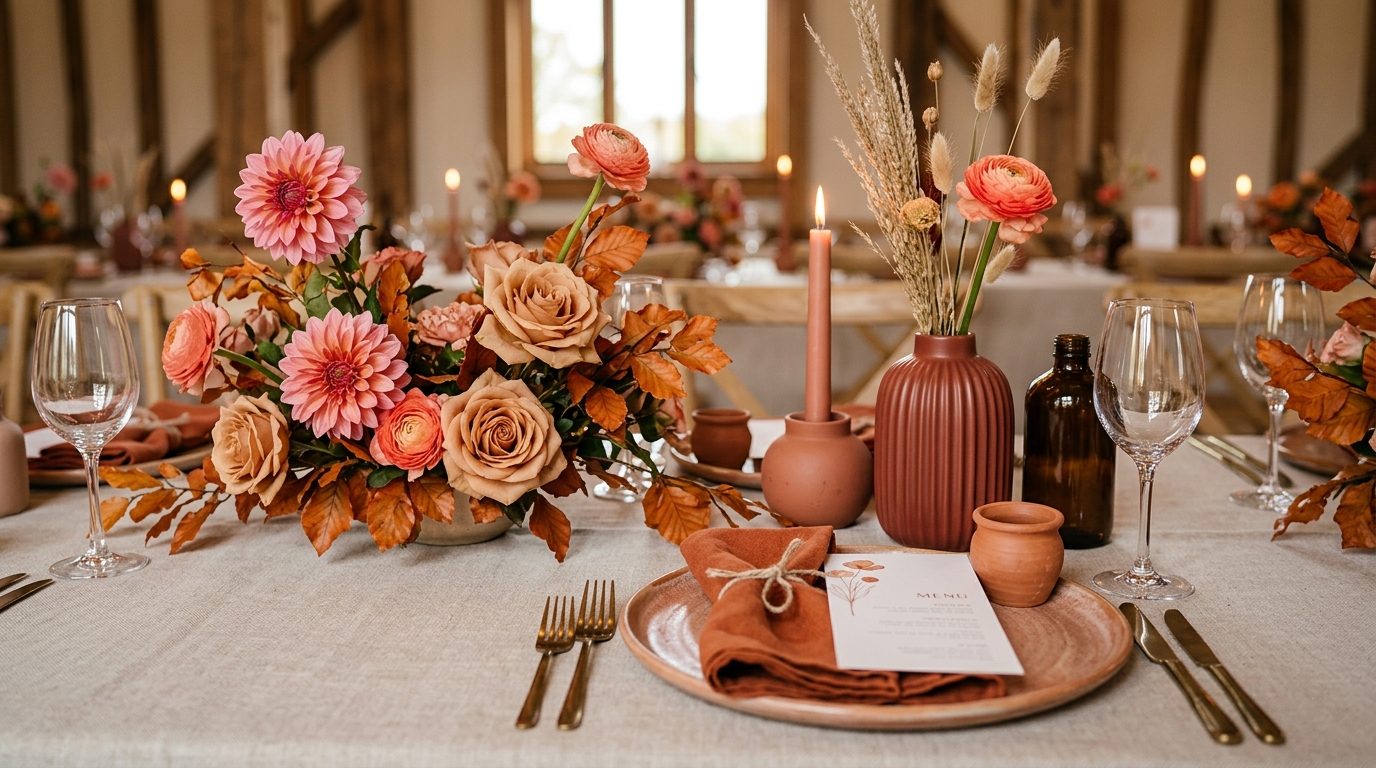
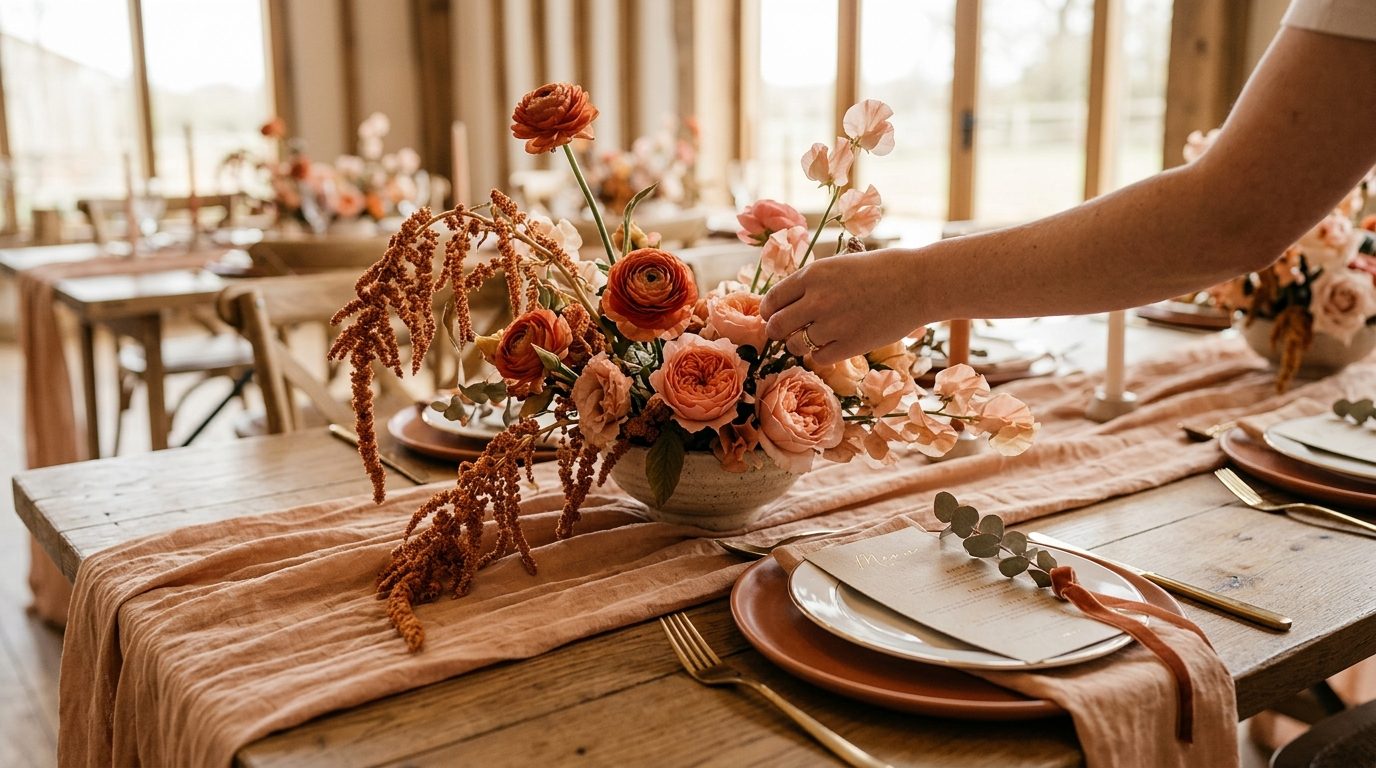
The paloma hues tablescape is built from a specific combination:
- Linens: Warm terracotta or dusty rose table runner over warm ivory cloth. Never white-on-white.
- Vessels: Unglazed terracotta pots, amber glass bud vases, or copper-toned metallic containers. Not silver or gold — warm metals only.
- Candles: Rust, deep coral, or warm amber taper candles. Pillar candles in terracotta or cream.
- Charger plates: Terracotta ceramic or natural rush-woven chargers. Gilded gold charger plates work; silver does not.
- Stationery: Hand-lettered menus in warm ivory card stock with deep coral or burnt orange ink.
The key principle: every element on the table should be warm. One cool-toned element — a white napkin, a silver fork rest, a glass vase — disrupts the palette.
Venues that suit paloma hues
This palette thrives in spaces that are themselves warm-toned. The best matches:
Converted barns: Natural wood, warm stone, exposed brick, and hay-loft beams are perfect partners. The barn’s inherent warmth amplifies the terracotta palette.
Stone farmhouses and manor houses: Honey-coloured Cotswold stone, sandstone, and warm limestone all complement the palette. Barn wedding venues in the Cotswolds, Herefordshire, and the Welsh borders are particularly well-suited.
Mediterranean-style venues in Cornwall and Devon: Several event spaces in Cornwall and Devon have been designed with terracotta tiles, whitewashed walls, and warm-climate planting — the architectural equivalent of the Amalfi Coast. Trevenna Barns and Pengenna Manor in Cornwall, and Dartington Hall in Devon, have the right bones for this palette.
Outdoor garden and vineyard ceremonies: The warm English light in August and September complements this palette naturally. UK vineyards licensed for weddings — there are now over 40 in England — have the right landscape character.
What works less well: Grand hotels with white walls and marble floors, Gothic stone churches with cold grey interiors, and modern glass venues with cool industrial aesthetics. All of these can be made to work with significant floral and decor investment, but the palette is fighting the architecture rather than amplifying it.
See our barn weddings guide for specific venue recommendations.
How to use this palette as a guest
Wedding guests attending a paloma hues wedding are often given a hint through the invitation palette. If the stationery is terracotta, coral, or warm dusty pink, the couple has probably chosen this palette.
As a guest, the palette creates a natural opportunity: wearing warm tones — coral, orange, warm red, dusty rose — means you will naturally complement the photography. Avoiding cool blues, stark white, and stark black is practical rather than prescriptive.
See our wedding guest outfit guide for detailed advice on colour coordination as a guest.
Related articles
Frequently asked questions
What are paloma hues in a wedding context?
Paloma hues is a 2026 named wedding colour palette combining warm pinks, terracotta, burnt orange, and deep coral — the colours of a Mediterranean sunset. Named by Pinterest Predicts 2026, it is one of the year's most-searched wedding aesthetics.
What colours make up the paloma hues palette?
Warm dusty pink (the base), burnt orange and terracotta (the accent), deep coral (the primary statement), and touches of nude cream or warm ivory as neutrals. The palette avoids cool tones entirely — no blue-based pinks or white whites.
What flowers suit a paloma hues wedding?
Rust and terracotta dahlias, coral peonies, copper ranunculus, orange garden roses, dried pampas in warm tones, and marigolds. UK florists building paloma palettes also use burnt-orange anthuriums, amaranthus in deep red, and orange cosmos.
What time of year suits the paloma hues palette?
Late summer and early autumn — August through October — when UK daylight has a warm, golden quality that complements the palette. Outdoor ceremonies in September light look particularly striking against paloma flowers.
What venues suit paloma hues?
Converted barns, stone farmhouses, Mediterranean-style venues, and outdoor ceremonies in gardens or vineyards. The warm terracotta and orange tones compete with cool, formal interiors — grand white hotels and Gothic stone churches are more difficult.
Is paloma hues an expensive wedding palette?
Moderately. Dahlias and peonies — the signature flowers — are UK-grown and seasonal, which keeps costs lower in late summer. Out of season, the palette relies on Dutch imports. Expect to spend £150-£350 on a bridal bouquet and £200-£500 per table centrepiece.