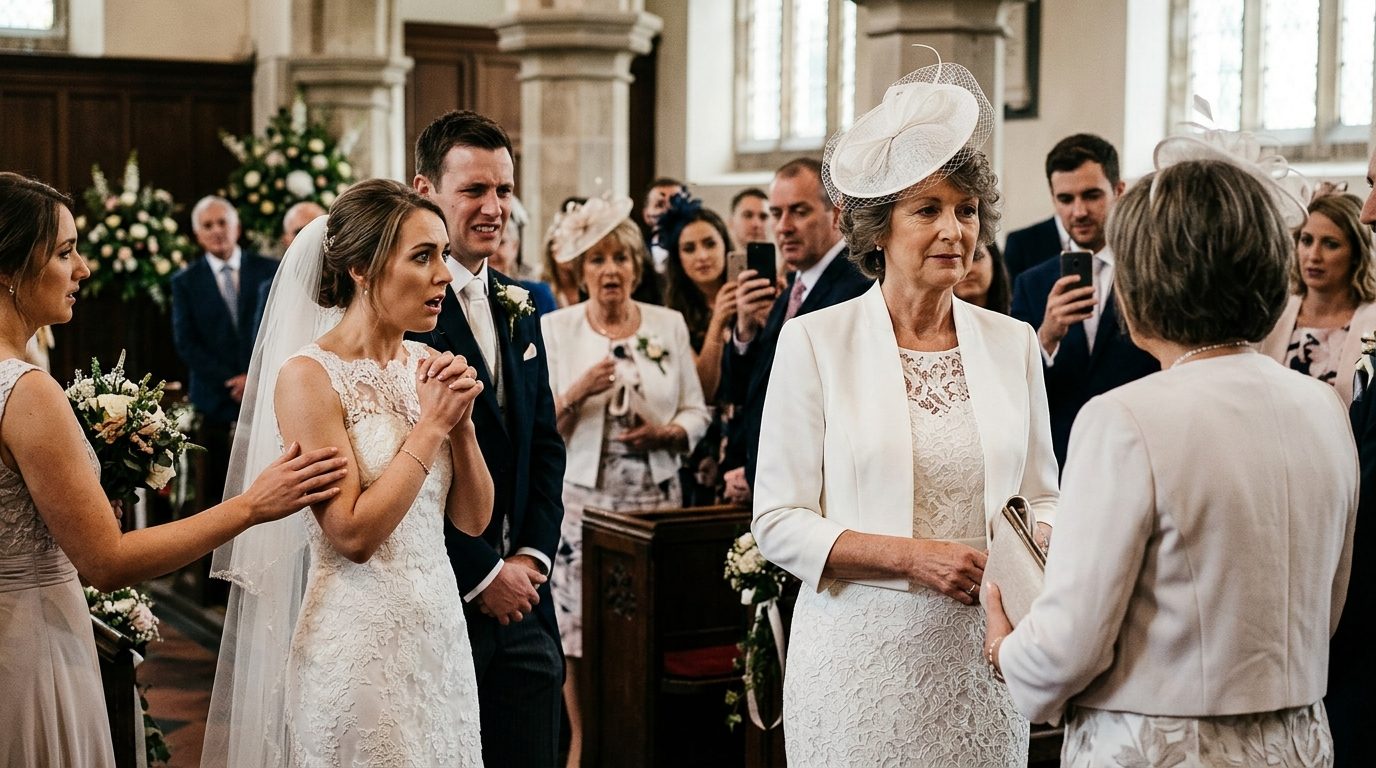
My Mother-in-Law Wore White to My Wedding
Key Takeaways
- Wearing white to a wedding as a guest is widely considered rude in the UK — the convention exists to make the bride stand out
- Most couples who faced this situation said the bigger mistake was not addressing the dress before the wedding
- Asking a guest to change on the day creates a scene; prevention is always better than intervention
- The most effective response on the day is usually to say nothing and let the photos tell the story
- A deliberate choice of white by a mother-in-law is rarely about the dress — the conflict it represents usually predates the wedding
Why the white dress rule exists
The convention that wedding guests should not wear white dates to the mid-19th century, when white became the standard bridal colour following Queen Victoria’s 1840 wedding. Before that, brides wore their best dress regardless of colour. The convention serves a practical function: it ensures the bride is visually distinct in photographs and in the room.
The convention is well-known. It appears in every mainstream wedding etiquette guide. It is explicitly taught in most UK secondary school PSHE materials that cover social occasions. It features in the onboarding conversation at most UK dress hire services. It is not obscure.
A guest who wears white to a UK wedding in 2026 therefore falls into one of three categories:
Genuinely unaware. This is most plausible for very elderly guests, guests from cultures where white is a normal wedding guest colour, or guests who found a dress they loved and simply did not connect the colour to the convention. It happens.
Indifferent. The guest knows the convention but considers it unimportant or does not apply it to their choice. This is not malicious but it is inconsiderate.
Deliberate. The guest is aware of the convention and chooses to ignore it as an act of defiance, competition or control. This category is real but smaller than Reddit threads suggest. Most white-wearing guests are in the first two categories, not this one.
Real accounts from UK couples
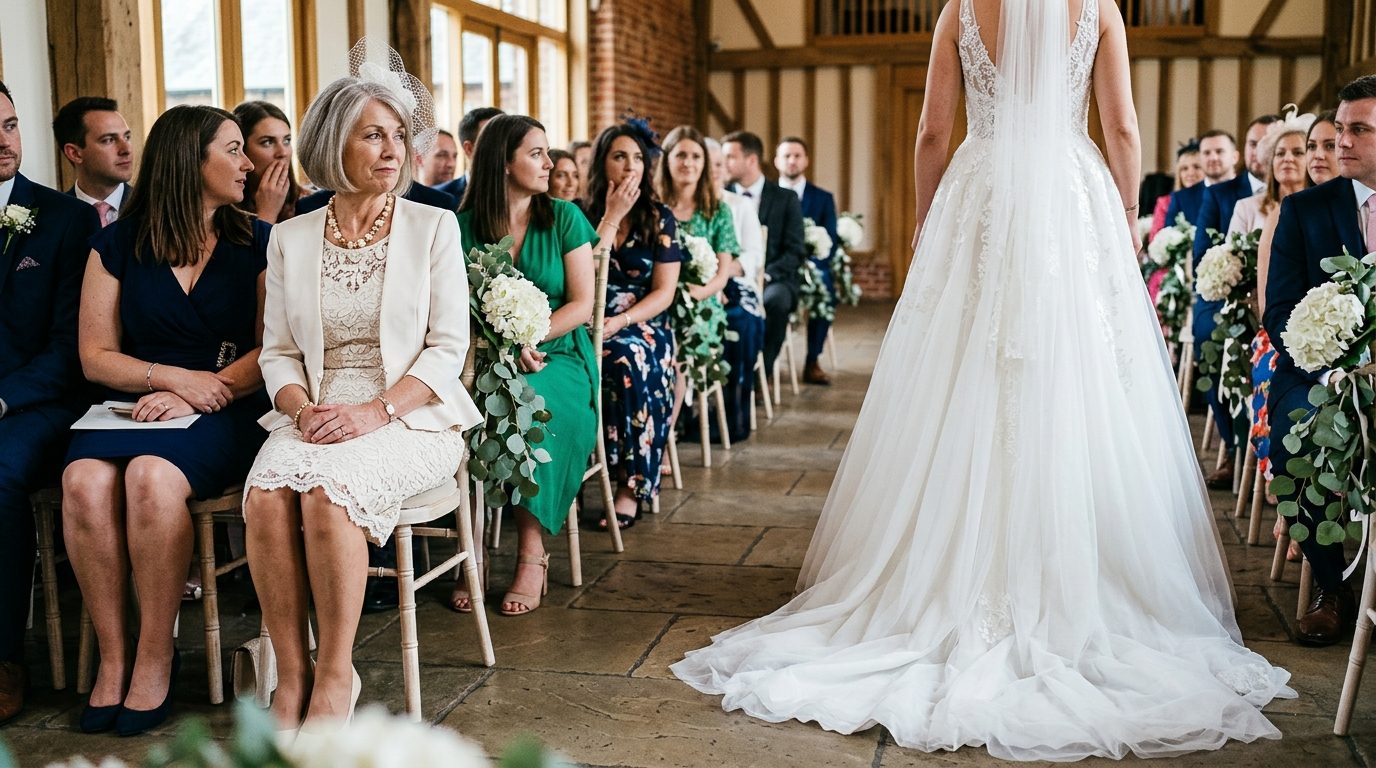
Account 1. “My mother-in-law wore a cream lace dress to our ceremony. She said afterwards she had not realised cream counted as white. We had not mentioned it to her beforehand because my husband was embarrassed to bring it up. In hindsight, one five-minute conversation would have prevented a month of awkward family text messages.”
Account 2. “My partner’s mother wore white deliberately. We know this because she told a mutual friend she wanted ‘to look like the other bride.’ We said nothing on the day. In the photos you can see she is standing slightly apart from the family group, having pushed herself into a position next to me. It is very obvious in retrospect what she was doing. We addressed it after the wedding. It was the beginning of a longer conversation about boundaries.”
Account 3. “An aunt of my husband wore a white trouser suit. She is in her seventies and from India, where white is not the reserved colour. She was mortified when someone mentioned it. She had no idea. We absolutely did not raise it. Everyone loved her.”
These three accounts illustrate the full range. The lesson in all three cases: the quality of the relationship before the wedding determines how the white dress reads.
What the MIL-wore-white pattern actually signals
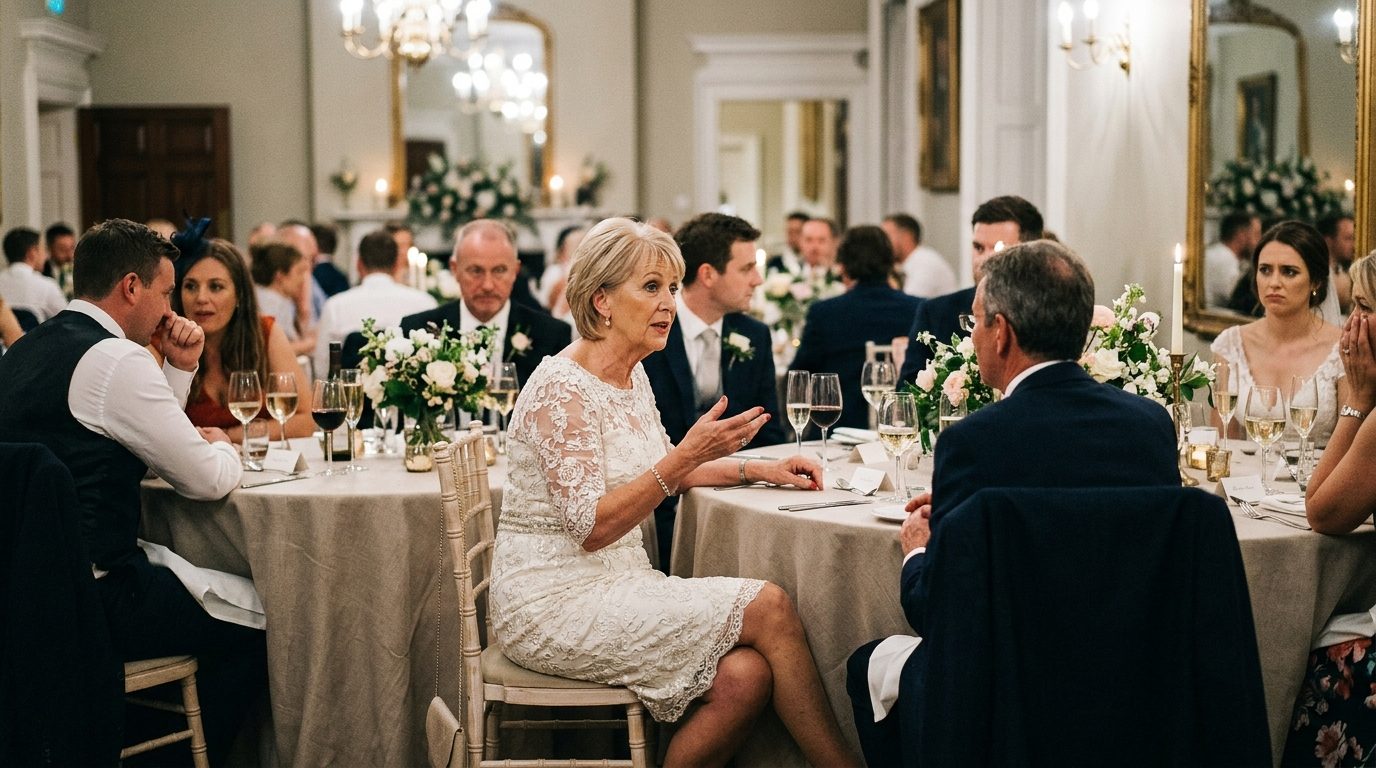
The version that gets the most social media attention — the deliberate, boundary-pushing choice — is the most emotionally charged but not the most common. When it is deliberate, the white dress is rarely the actual issue.
UK wedding planners who have observed this situation consistently note the same dynamic: the white dress is the most recent episode in a longer pattern of the mother-in-law struggling with loss of centrality. Her son or daughter is transferring primary loyalty to a new partner. The wedding is the formal ceremony of that transfer. Some parents accept this gracefully. Some push back, and the dress is a form of push-back.
The couples who handle this best are those who identified the pattern early and had explicit conversations about expectations before the wedding day arrived. The couples who handle it worst are those who hoped the situation would resolve itself without direct communication.
How to prevent it: the pre-wedding conversation
The most effective prevention is a direct conversation, held by the right person, at the right time.
The right person: your partner, not you. If it is his mother, he should have the conversation. A daughter-in-law raising dress expectations with a mother-in-law carries a different dynamic — it can read as controlling — than a son saying “Mum, I wanted to mention before the wedding that we’re asking guests to avoid white and ivory.”
The right time: at least three months before the wedding, or when she mentions shopping for an outfit.
The wording: “We just wanted to mention, since you’ll be shopping soon — we’re asking guests to avoid white, ivory and cream. We know it sounds obvious but we’ve heard it catches people out.” This is non-accusatory and treats her as a reasonable person.
What if she objects? A reasonable person says “of course, no problem.” If she pushes back — “surely I can wear what I like” — that tells you something useful about what the rest of the planning process will look like.
A wedding website note is a useful supplement: “We ask guests to avoid white, ivory and cream out of tradition.” This sets the expectation publicly and makes any deviation more clearly intentional.
If it has already happened: what to do on the day
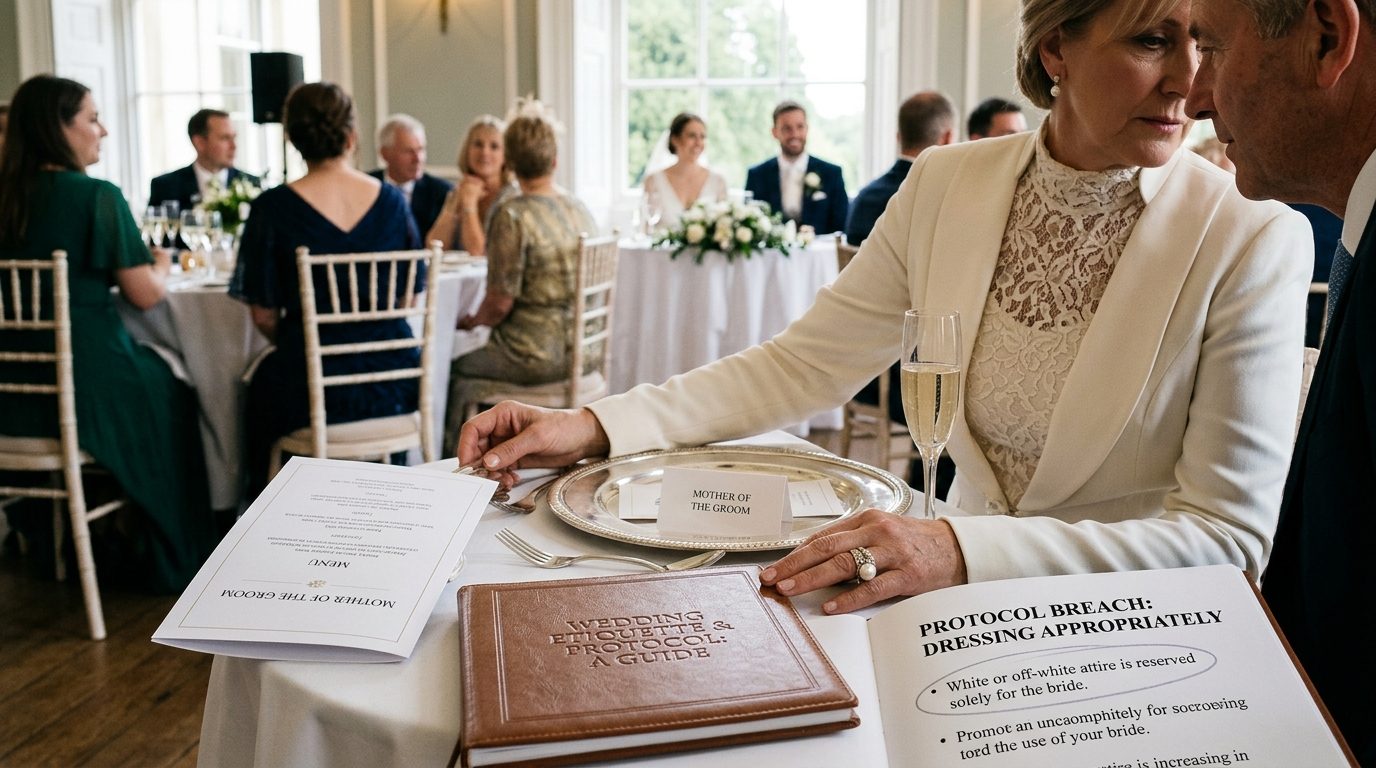
Your options on the day are limited. Asking someone to change requires either: (a) having a change of clothes available for them, which you almost certainly do not (b) sending them home, which ends the relationship in that moment (c) asking them to cover up or remove the offending item, which rarely works gracefully
In almost every account from UK couples who have faced this, the response they recommend in hindsight is: say nothing, and let the photographs speak for themselves later.
The exception is if the dress is so similar to the bride’s that a photograph could be genuinely confusing. In that one scenario, a quiet word — “I know this is awkward, but your dress is almost exactly like mine and I’m worried about the photos” — is defensible. It requires significant tact and is still likely to cause tension.
In the vast majority of cases: note it, feel however you feel about it, and raise it after the wedding if the relationship warrants it.
Handling it after the wedding
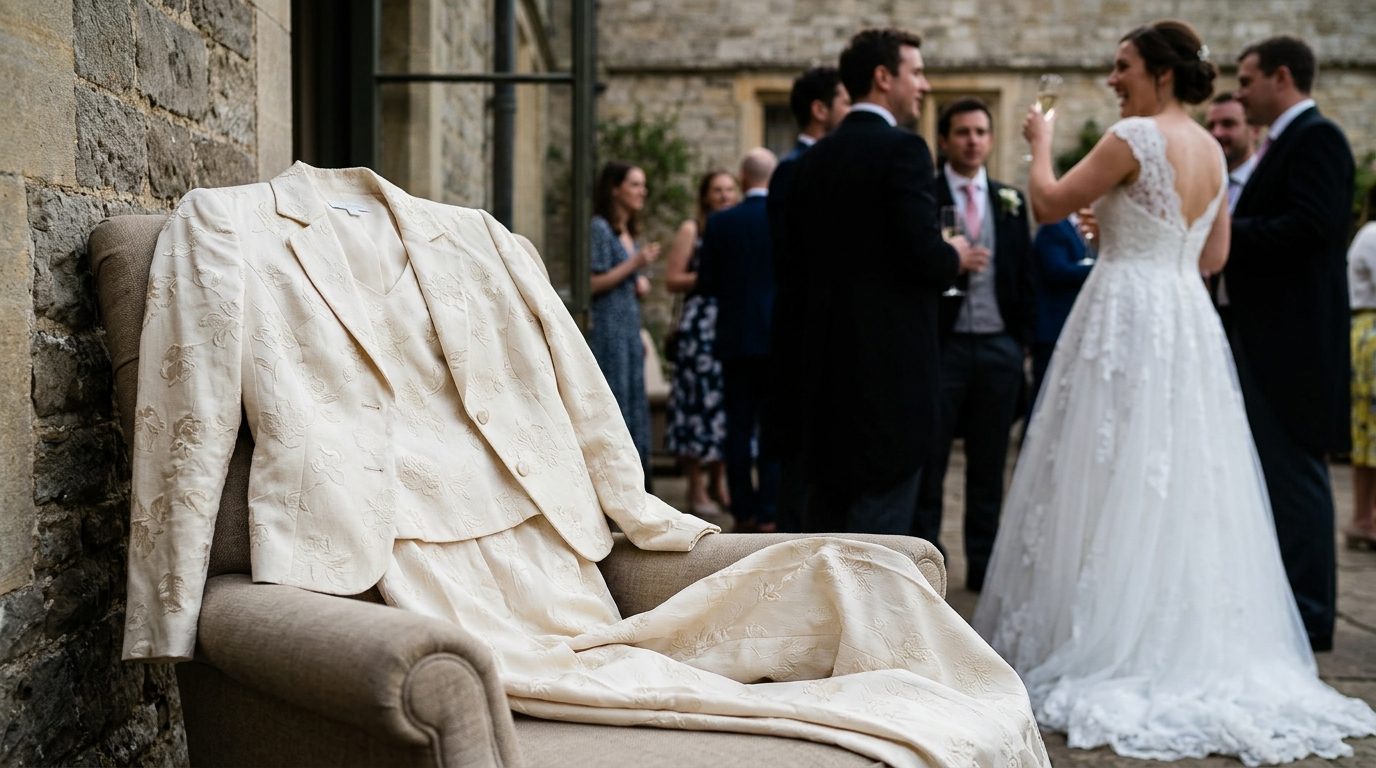
If the choice was deliberate and you want to address it, the post-wedding conversation should be direct and brief. “I noticed you wore white to the wedding. I want to be honest that it hurt me. I’d like to understand why that happened.”
Depending on her response, you will get one of three answers: genuine remorse (the relationship recovers), defensiveness (you have more information about where the relationship stands), or an admission of intent (you make a decision about how to proceed).
Do not expect an apology if the choice was deliberate. People who make deliberate choices of this kind rarely regret them honestly. What you gain from the conversation is clarity about the relationship.
For handling other difficult wedding guest dynamics, our wedding planning timeline covers when to have these conversations relative to other pre-wedding milestones. Our guide on uninviting wedding guests is also relevant for cases where the pattern of behaviour makes attendance itself inadvisable.
The deeper question
The question “my mother-in-law wore white to my wedding” is really several questions at once. It is a question about the dress. But it is also a question about the relationship, about where your partner stands, and about what kind of pattern you are going to allow to continue.
The white dress — whether it was accidental, indifferent or deliberate — is a data point about where you stand with each other. The correct response to it begins with being honest about what the data tells you.
Frequently asked questions
Is it rude to wear white to a UK wedding as a guest?
Yes, in most circumstances. The convention is that only the bride wears white, ivory or cream.
What should you do if your mother-in-law wears white to your wedding?
On the day, most couples find the best response is to say nothing. Raising it publicly creates a scene that occupies the day. Address it after the wedding if the relationship matters enough to discuss it honestly.
Can you tell a guest not to wear white to your wedding?
Yes. Including a note on your wedding website — 'please avoid white, ivory and cream, which are reserved for the bride' — is now standard practice and causes no offence. Addressing a specific person requires a direct private conversation.
What if the mother-in-law's white outfit was an accident?
Genuinely accidental choices happen. Older guests and guests from cultures where white is not the reserved colour for brides sometimes do not make the connection. If the relationship is good and there is no pattern of boundary-pushing, the charitable interpretation is usually the correct one.
Should I ask the mother-in-law to change on the day?
Rarely, if ever. Asking someone to change on the wedding day creates a confrontation that becomes the story of the day. The only exception is if the guest is wearing a dress so similar to the bride's that photographs will be genuinely confusing.
How do you prevent a mother-in-law wearing white to the wedding?
The most effective prevention is a pre-wedding conversation. Tell her directly — or ask your partner to — that you are hoping guests will avoid white, ivory and cream. Most people, told this directly, will comply. A note on the wedding website sets the expectation for everyone.
Does wearing white to a wedding ruin the photos?
Rarely to the extent couples fear. A guest in white in a group shot is visible but not dominant. In formal portrait shoots, the photographer places guests strategically. The photographs are not ruined, though the choice remains a conversation point for years after.