Is It Tacky to Ask for Money as a Wedding Gift? UK
Key Takeaways
- 68% of UK wedding guests say they prefer giving cash or a contribution to a honeymoon fund over a physical gift list
- The average UK wedding cash gift in 2026 is £75 per guest — £120 for close family members
- Wording matters: 'contribution to our honeymoon' reads better than 'we only want cash'
- A hybrid approach — small gift list plus optional cash fund — satisfies all guest demographics
- Never ask for cash in the wedding invitation itself; use the wedding website or a separate information card
- Gift list platforms Prezola and Zola UK both offer experience-contribution options that feel less transactional than a plain cash request
Has the etiquette changed?
Yes — significantly. As recently as 2015, asking directly for cash gifts at a UK wedding was considered mildly gauche. The assumption was that guests would use a John Lewis or Debenhams list, buy the couple something physical, and show up with wrapped gifts.
That model has fragmented for three reasons.
First, most couples marrying in 2026 already live together and have furnished their home. The traditional “help them set up house” rationale for a gift list no longer applies. A third set of towels or another set of wine glasses creates storage problems, not excitement.
Second, the honeymoon fund model has normalised cash gifting by adding a layer of narrative. When a guest contributes £75 to “dinner at a vineyard in Tuscany”, it feels different from handing over £75 in a card. The contribution has a story attached.
The etiquette rules that still apply
Asking for cash gifts is now acceptable. The rules about how to ask still matter.
Never in the invitation. This is the one firm rule that has not changed. Writing “cash gifts only” or “we have set up a honeymoon fund at [link]” inside the wedding invitation card itself is still considered tactless by most etiquette authorities and by the majority of guests over 50. The invitation is an announcement of a celebration, not a gift solicitation.
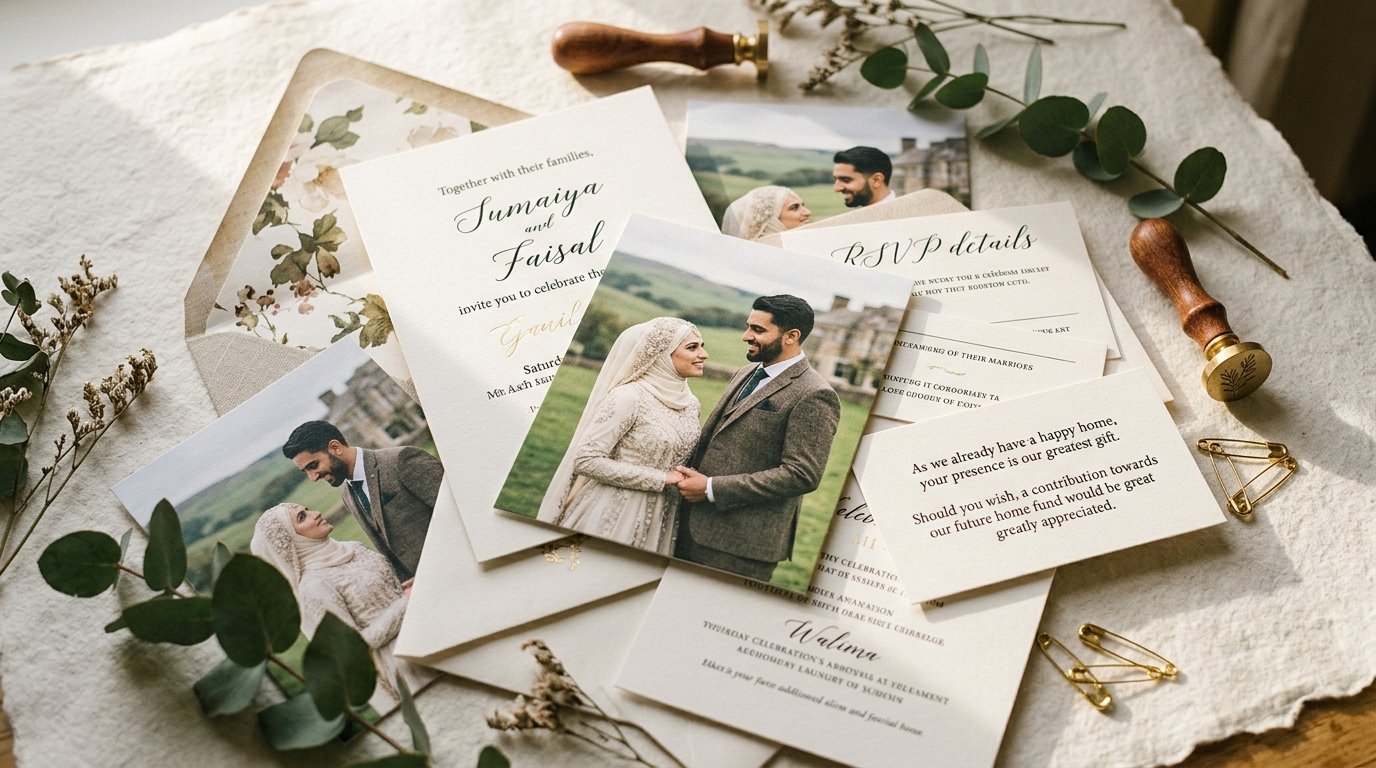
Use a separate information card. A small card inserted with the invitation — covering parking, accommodation, the schedule and any gift preferences — is the appropriate vehicle. One sentence is enough: “If you would like to give a gift, a contribution to our honeymoon fund would be gratefully received. Our fund is at [website].”
Your wedding website is the primary channel. Most couples now direct guests to a wedding website for all practical information, including gift preferences. A section headed “Gifts” with a brief, warm note and a link to the fund is standard practice and causes no offence.
Make it optional. The phrase “if you would like to” is doing a lot of work in every gift request. It acknowledges that a gift is not obligatory and gives guests a graceful out. Never imply a gift is expected.
How to word a cash gift request
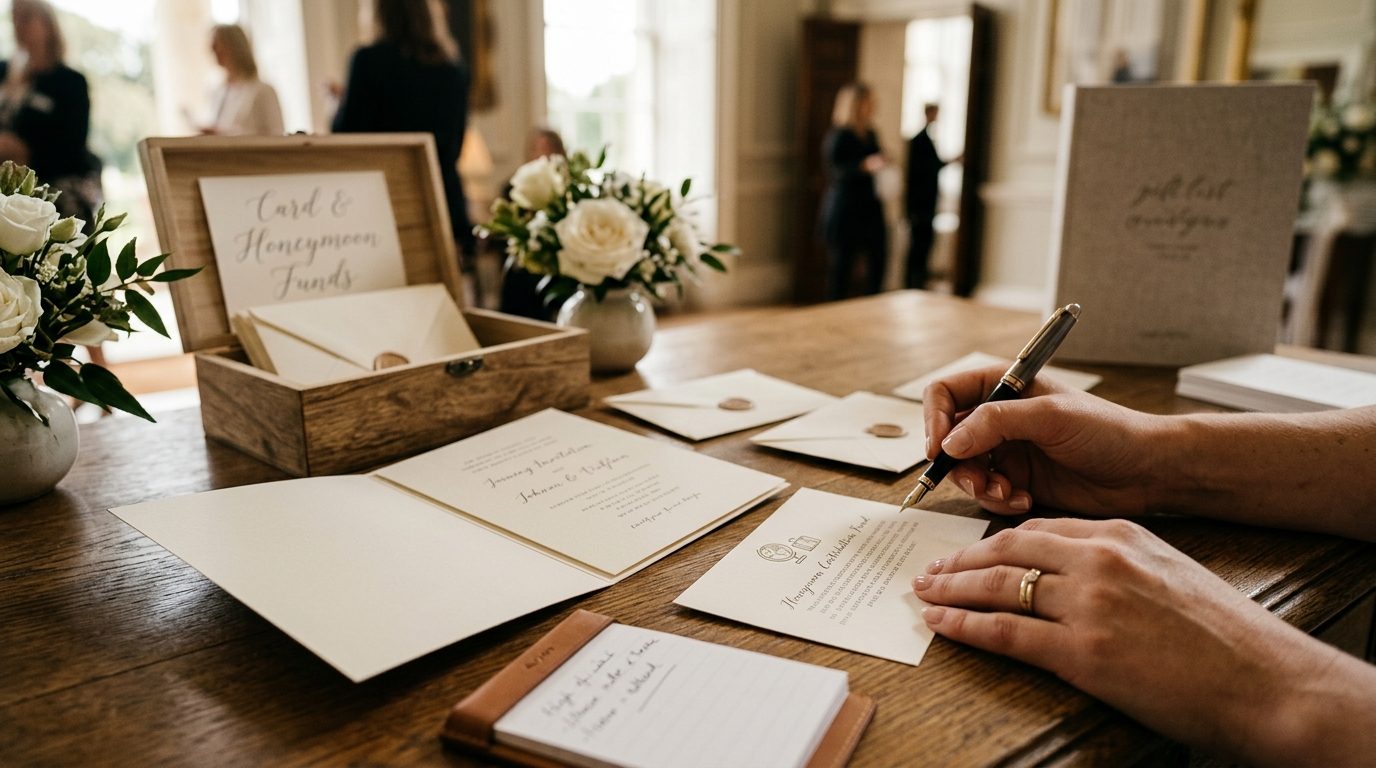
The key distinction is between a request that sounds grabby and one that sounds grateful. Here are examples across the spectrum.
Too blunt:
“We have everything we need, so we’d prefer cash.”
Better:
“We have everything we need for our home. If you’d like to give a gift, a contribution to our honeymoon would mean a great deal to us.”
With a specific framing:
“We are saving for a week in Japan and would love for any gifts to go towards the trip. Our fund is at [link] — or if you prefer to bring something on the day, please don’t feel any pressure.”
For a house deposit:
“We’re saving for our first home together. If you’d like to contribute to that, our house deposit fund is at [link]. But truly — your presence on the day is the gift.”
The last addition — “your presence is the gift” — is a cliche, but it functions as social lubricant. It signals that the couple is not primarily transactional.
Honeymoon fund platforms: what they cost and how they work
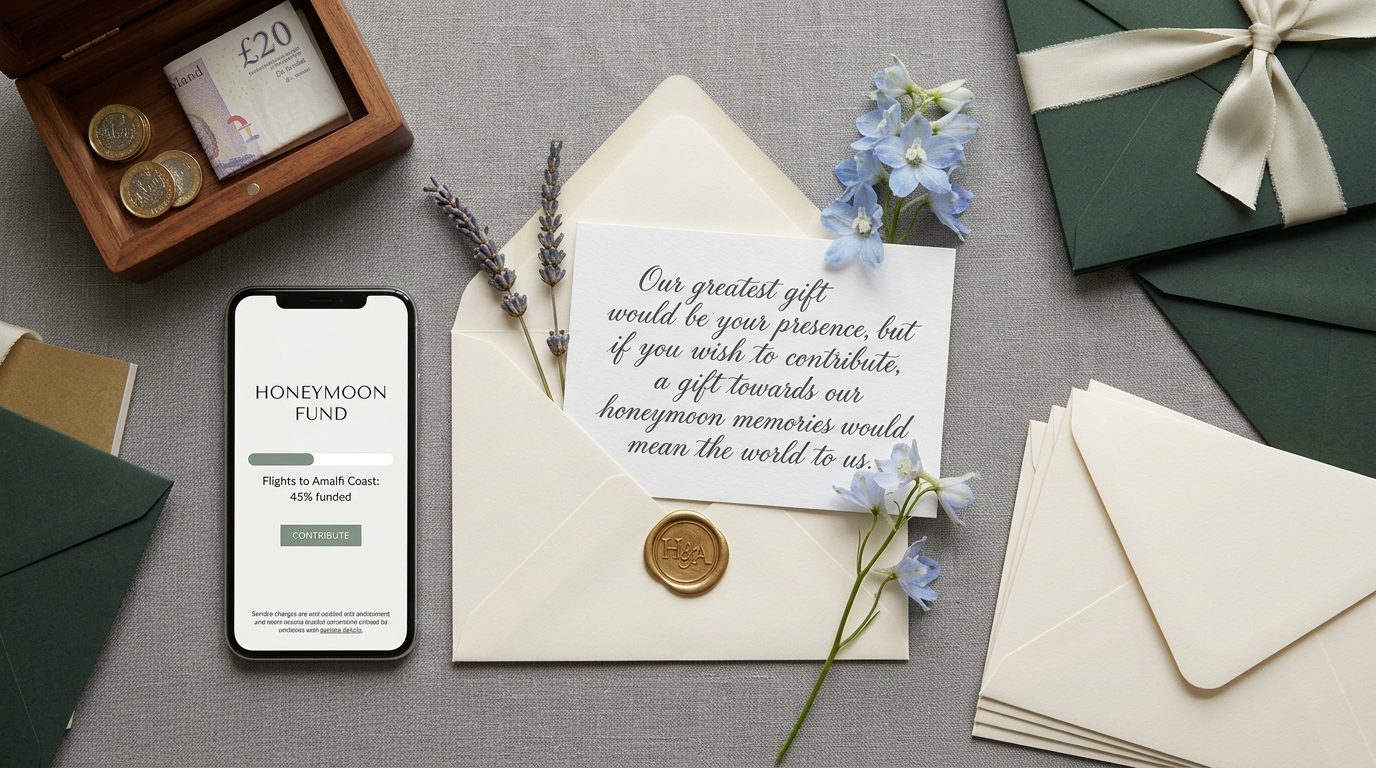
Several platforms allow couples to set up named contribution lists rather than a simple bank transfer.
| Platform | Cost to couple | How it works | UK-specific? |
|---|---|---|---|
| Prezola | Free (commission on physical gifts) | Cash pot + physical gift list in one | Yes |
| Zankyou | Free basic; 3.5% fee on cash gifts | Honeymoon experiences named individually | Yes |
| Hitchd | Free; 2.5% fee on cash | Experience-based fund (named “activities”) | No, but UK-compatible |
| Zola UK | Free; 2.5% on cash | Experience + product hybrid list | US-origin, UK payments |
| Direct bank transfer | Free | Simple, no narrative; some guests prefer it | N/A |
The platform fee is worth paying for guests who want a story attached to their contribution. A guest who gives £60 towards “a wine-tasting evening in Lisbon” will feel better about their gift than one who does a bank transfer to an anonymous account.
Prezola is the most common UK platform. It offers a hybrid model: physical gifts and cash contributions in a single list, which is useful for covering both demographics.
How to handle different guest demographics
The practical challenge with a cash request is the 38% of older guests who still prefer a physical gift. This group is often comprised of grandparents, aunts and uncles, and close family friends who find online payment confusing or impersonal.
The hybrid approach handles this. Set up a small Prezola list with 6–8 physical gift options at various price points (£20–£200) alongside a cash contribution section. Guests who want to pick something physical can. Guests who prefer a transfer can do that too.
For guests who ask in person what you would like, a brief and direct response is fine: “We’re putting everything towards our honeymoon, but truly, don’t feel obliged.” If they press for specifics, give them the platform link.
A couple who married at Oulton Hall in Yorkshire in March 2026 took this approach. They set up a Prezola list with 10 physical items and a Japan honeymoon fund. Sixty per cent of guests used the cash fund, 30% chose a physical gift, and 10% gave cards with cash or cheques directly. The couple reported that the hybrid approach eliminated all awkward conversations about gift preferences.
What about a house deposit fund?
Asking for contributions to a house deposit or home savings fund is now standard at roughly 22% of UK weddings, according to Prezola’s 2025 annual data. The etiquette is identical to a honeymoon fund request — optional, warmly worded, kept off the invitation card.
One note: some guests find a house deposit request slightly more transactional than a honeymoon fund, because it lacks the narrative element (the adventure, the experiences). If your choice is between the two and you want the warmer reception, a honeymoon fund or experience-based request typically performs better.
See our wedding gift etiquette guide for the full breakdown of UK norms around giving, receiving and thank-you notes.
Frequently asked questions
Is it tacky to ask for cash instead of wedding gifts in the UK?
No, not in 2026. How you ask matters far more than the fact of asking.
What is the polite way to ask for money as a wedding gift?
Frame it as a contribution rather than a request. 'We have everything we need for our home, so if you'd like to give a gift, a contribution to our honeymoon would mean the world' is warm and leaves the choice to the guest.
How much cash do UK guests typically give at a wedding?
The average UK cash wedding gift is approximately £75 per person in 2026, based on data from Prezola and Hitched. Close family members typically give £100–£150. Couples attending together often give £100–£200 jointly.
Should you put your gift registry or cash request in the wedding invitation?
No. Traditional UK etiquette holds that mentioning gifts in the invitation itself is impolite — it implies the couple cares more about presents than the guest's presence. Use a separate information card inserted with the invitation, or direct guests to your wedding website.
What is a honeymoon fund and how does it work?
A honeymoon fund is a platform — Prezola, Zankyou, Hitchd or similar — where guests can contribute specific amounts to named honeymoon experiences (a restaurant, a night in a villa, a boat trip). It feels more personal than a blank cash transfer and gives guests something to attach their contribution to.
Is a gift list or a cash fund better for a UK wedding?
It depends on your guest profile. Older relatives typically prefer a physical gift list; friends and younger family prefer cash or a honeymoon fund. A hybrid approach — a small gift list on Prezola with an optional cash contribution section — satisfies both demographics.
Can you ask for cash for a house deposit as a wedding gift?
Yes, and it is increasingly common. Around 22% of UK couples in 2025 asked guests to contribute towards a house deposit or home fund. The etiquette is the same: frame it warmly, keep the ask off the invitation card, and make it optional.