Home / Articles / Wedding Trends
Bridal Fascinators Are Replacing Veils in 2026
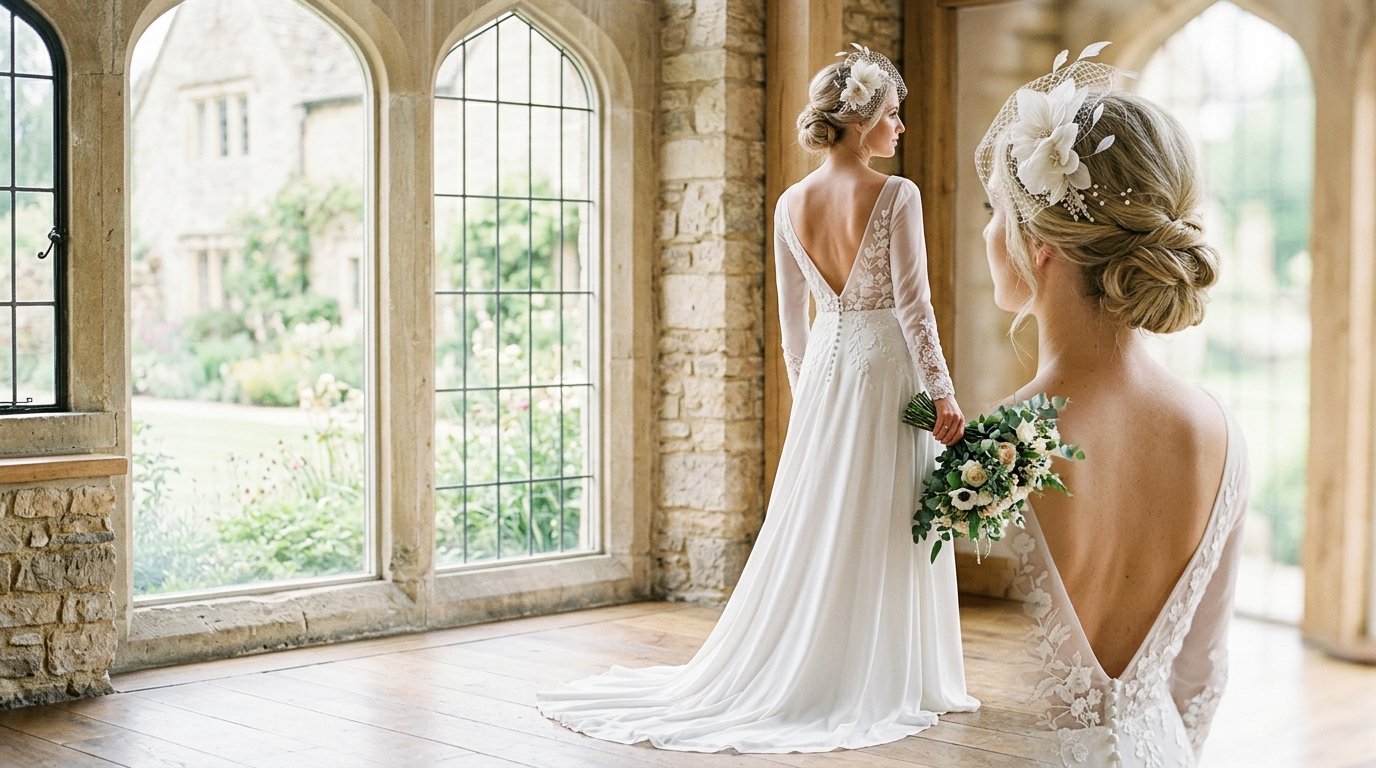
Key Takeaways
- Pinterest UK searches for bridal fascinators rose 480% year-on-year in April 2026
- UK milliners report bridal bookings running 3-4x the 2024 rate for 2026 wedding season
- Five fascinator styles suit different gown shapes: feather, sculptural, floral, cage veil, pearl-embellished
- Budget range: £25 (ASOS) to £3,000+ (Philip Treacy); most brides spend £150–£600
- The shift is driven by modern minimalist gowns that a full veil can overwhelm
- Royal Ascot familiarity has made the statement headpiece feel natural for UK summer weddings
Why the veil is losing ground
The full cathedral or elbow veil has been the default bridal headpiece for generations. In 2026, it is still popular — but its dominance is ending for three clear reasons.
Modern gown shapes work against it. The leading UK bridal silhouettes in 2026 are column and slip dresses, tailored bridal suits, corset-and-skirt separates, and minimalist satin gowns. These shapes are defined by clean lines. A full veil adds length, volume, and visual complexity that can work against rather than with a pared-back gown.
Brides want to wear the headpiece again. A quality fascinator — a sculptural Rachel Trevor-Morgan piece or a silk floral from Jane Taylor — can be worn to a garden party, a christening, or next year’s Royal Ascot. A wedding veil goes in a box. The wearability argument resonates strongly with brides who are thinking about value per wear.
The Royal Ascot normalisation. In the UK context specifically, fascinators have been a fixture at every Ascot enclosure for two decades. Many British women already own a fascinator, know how to wear one, and feel comfortable in one. The psychological shift to wearing one at a wedding is smaller here than it would be in other markets.
The five bridal fascinator styles in 2026
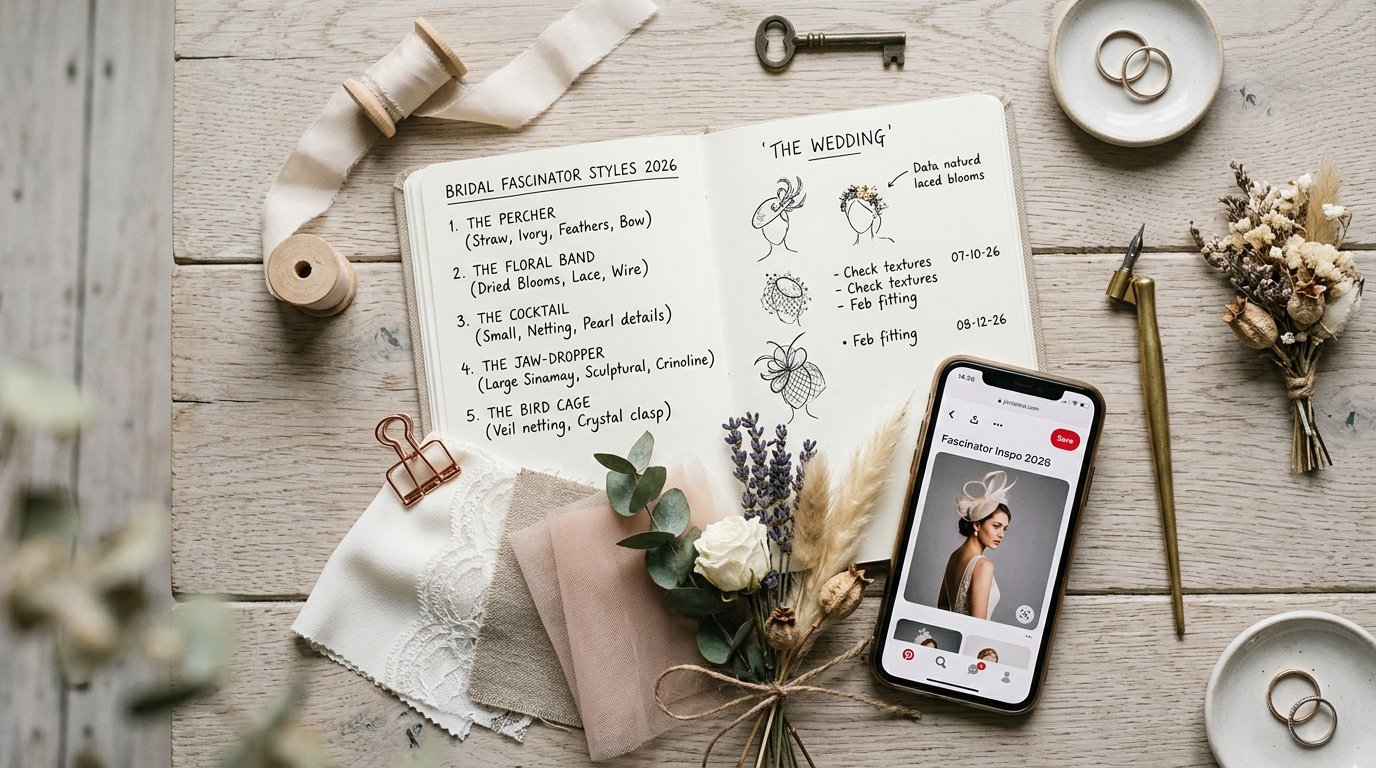
1. Feather fascinator. The most overtly glamorous option. Ostrich, coque, or curled feather arrangements — typically in ivory or blush — sit to the side of the head and have a clear 1920s reference. Works particularly well with column gowns and backless dresses. Statement without being architectural.
2. Sculptural / architectural. The high-fashion choice. Think twisted organza forms, structured petal shapes, or wired designs that extend away from the head. This is the Philip Treacy zone. It requires confidence and a relatively simple gown to avoid competition between the two.
3. Silk or fresh-flower. A floral fascinator — silk blooms, pressed botanicals, or real flowers attached to a hairpiece on the day — sits closer to the head and reads as softer and more romantic. Works across almost every gown style. Particularly strong for garden weddings and outdoor summer ceremonies.
4. Cage veil mini. A small birdcage veil or net attached to a base — often a pill-box shape or a simple comb. This is the midpoint between a fascinator and a traditional veil. It has a strong 1950s reference and works with structured gowns, tea-length dresses, and formal tailored looks.
5. Pearl and crystal-embellished. Beaded or pearl-detailed headpieces on a band or comb base. More minimal in shape but luxurious in material. Very strong for evening receptions and works alongside both traditional and contemporary gowns.
UK millinery: where to buy
The UK millinery market for bridal fascinators spans from accessible high street to bespoke ateliers. Here is the full spectrum.
| Milliner | Location | Price range | Style strength |
|---|---|---|---|
| Rachel Trevor-Morgan | London | £600–£2,500 | Timeless; holds Royal Warrant |
| Philip Treacy | London/Dublin | £800–£3,000+ | Architectural, sculptural |
| Stephen Jones Millinery | London | £500–£2,000 | Fashion-forward, editorial |
| Jane Taylor Millinery | London | £400–£900 | Contemporary floral and feather |
| Piers Atkinson | London | £300–£800 | Modern; strong editorial |
| Suzanne Black | Edinburgh | £350–£700 | Scottish; romantic, natural materials |
| Lock & Co Hatters | London | £150–£600 | Classic; off-the-shelf and bespoke |
| ASOS Bridal | Online | £25–£90 | Budget; good for trials |
| LK Bennett | Nationwide | £65–£175 | High street; polished and reliable |
| Monsoon | Nationwide | £35–£120 | Budget-mid; wide style range |
For bespoke commissions, most established milliners book 3-6 months ahead for summer weddings. If you are planning a 2026 summer wedding and want a bespoke piece from Rachel Trevor-Morgan, Stephen Jones, or Jane Taylor, bookings are largely closed. Contact in September 2026 for 2027 dates.
For off-the-shelf pieces, Lock & Co and LK Bennett both carry reliable bridal-appropriate ranges that require no lead time.
How to match a fascinator to your gown
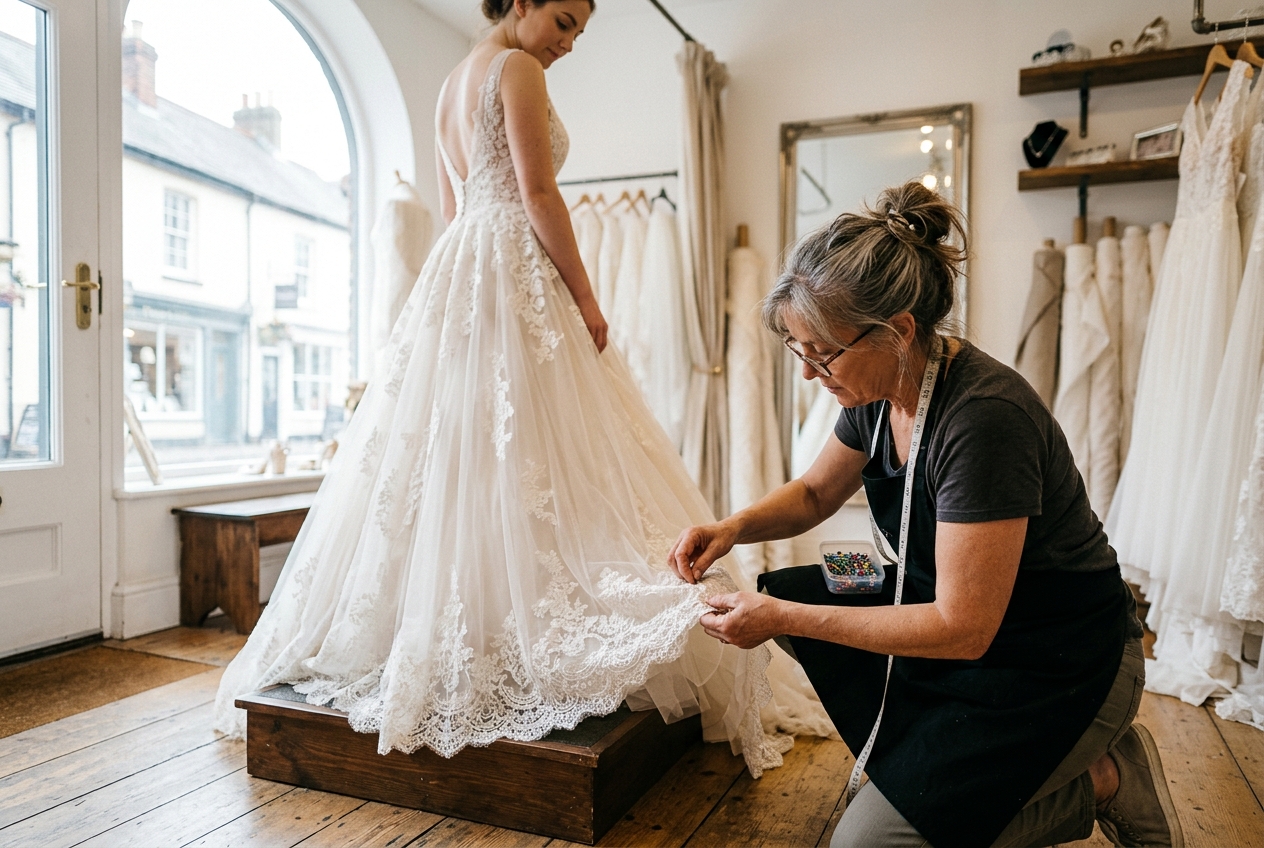
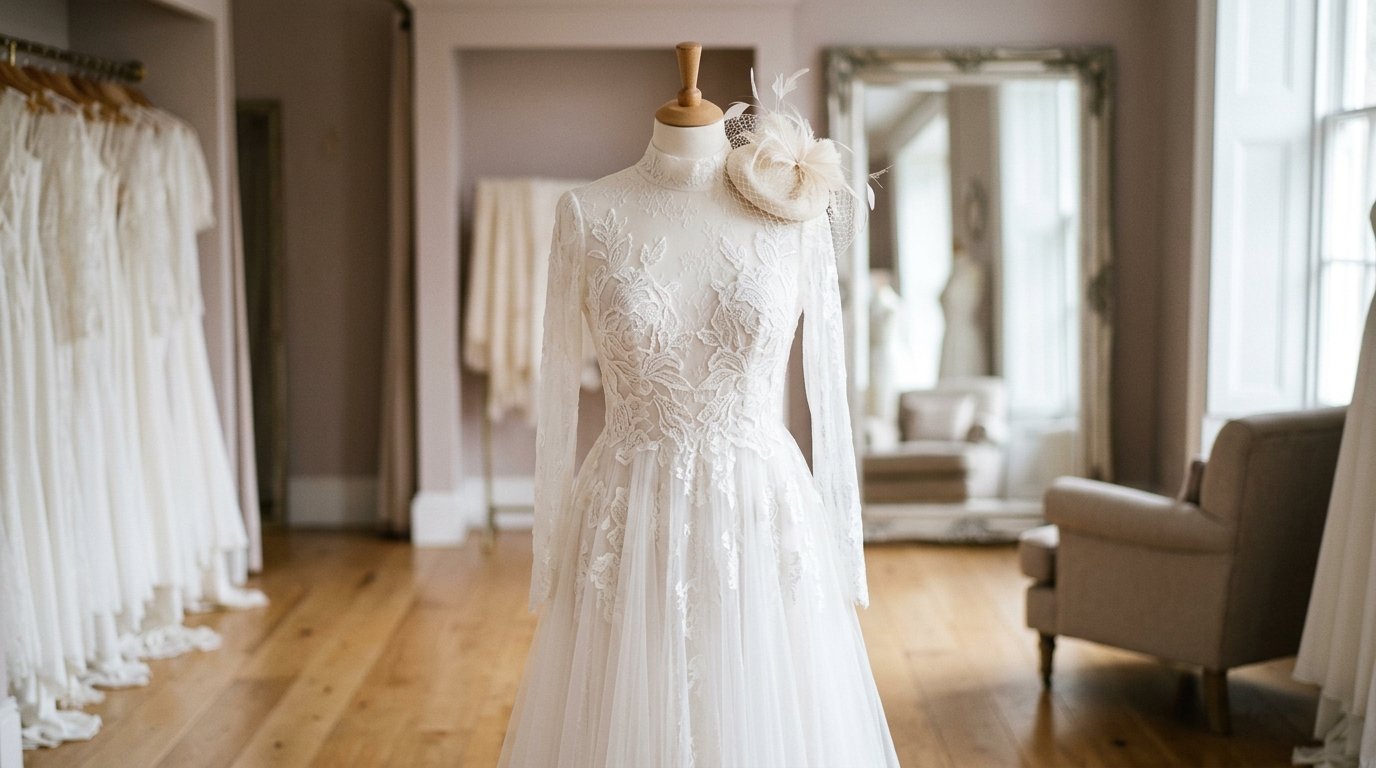
The primary rule is proportion. A large architectural piece with a full ballgown competes; with a column dress it leads. A small birdcage veil on a ballgown disappears. The piece should feel like it belongs to the same design language as the gown.
Column and slip dresses: any fascinator style works. The clean silhouette provides a canvas. Sculptural and feather designs get the most from this base.
A-line and ballgown: go structured or avoid entirely. A large architectural or pearl-embellished piece reads well. A small or fluttery design will look unbalanced.
Bridal separates (corset + skirt or trousers): the cage veil or a clean sculptural piece works best. Silk floral can also work if the corset has botanical detail.
Tea-length or midi dress: the cage veil is the natural partner. Also works with feather if you want more glamour.
Wedding suits and jumpsuits: a clean sculptural or architectural piece. Avoid overtly romantic silk florals — the tailoring requires something with structure.
Colour beyond white
In 2026, bridal fascinators are not limited to ivory and white. The celestial whimsigoth trend and the broader movement toward coloured bridal looks have opened the door for:
- Midnight navy fascinator with ivory gown
- Deep amethyst sculptural piece against an off-white dress
- Champagne or bronze for autumn and winter weddings
- Blush silk flowers for spring and garden ceremonies
- Black birdcage veil for a bride who wants a gothic edge without a dark gown
The coloured-fascinator-with-white-gown combination reads as intentional and styled rather than mismatched, which has helped move it into mainstream bridal.
The Royal Ascot connection: why this trend has legs in the UK
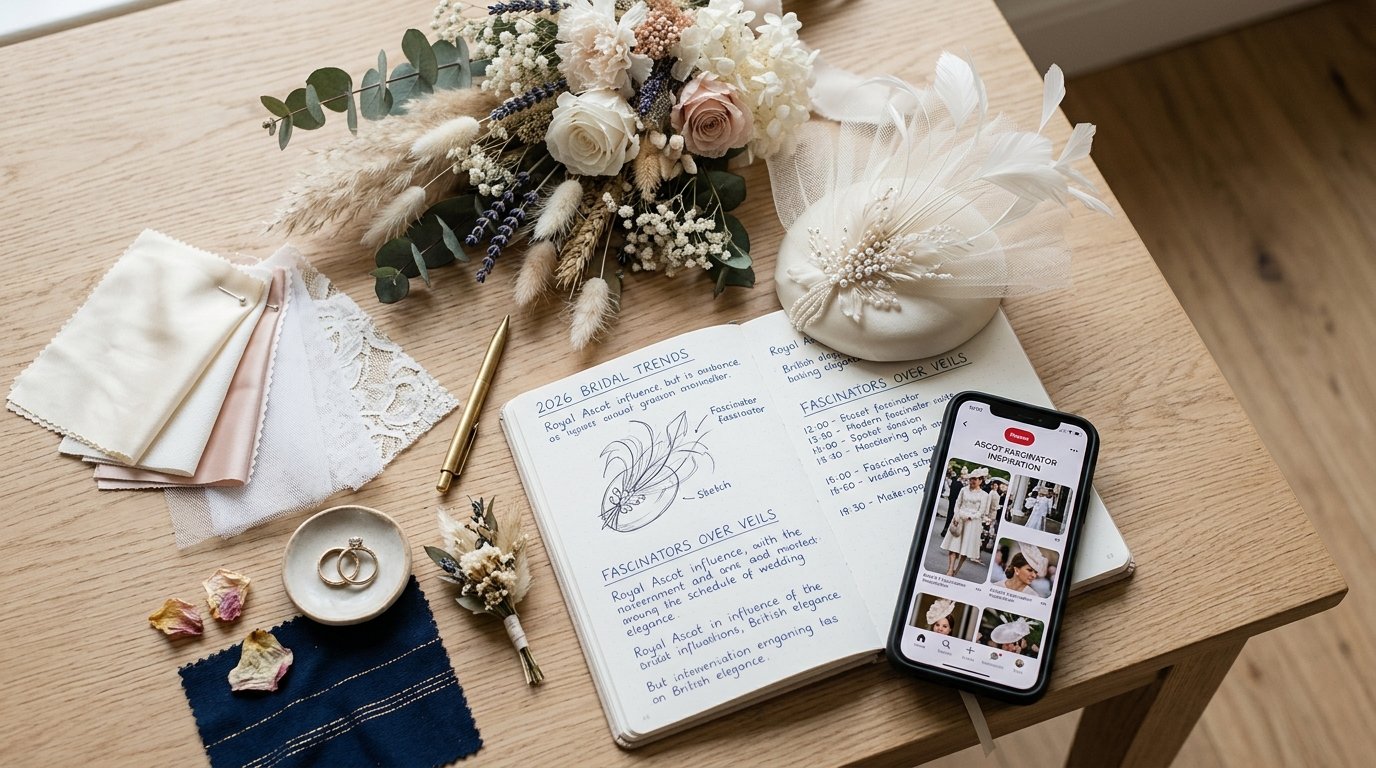
The fascinator has a unique cultural position in the UK that it does not have elsewhere. Royal Ascot’s Royal Enclosure requires a hat or fascinator. The Grandstand Enclosure requires a hat or fascinator. Millions of British women have worn one, been photographed in one, and understand how they work in a formal outdoor summer setting.
That familiarity reduces the psychological barrier to wearing one at a wedding. A British bride who already owns a Suzanne Black fascinator from last summer’s Ascot is a very short step from commissioning a bridal version. The shared cultural context — garden parties, summer events, outdoor celebrations — makes the transfer feel natural.
The June wedding calendar and the Ascot calendar overlap almost entirely. Brides who attend Ascot in the days around their wedding date see the full range of what UK milliners can do. That year-on-year exposure is driving bookings.
What to avoid
A few practical notes from milliners and bridal stylists:
Avoid anything that moves unpredictably. A loosely attached feather arrangement that shifts in wind is a liability in an outdoor ceremony. Ask your milliner specifically about stability in outdoor conditions.
Avoid very small pieces on thick or wavy hair. A tiny comb or clip fascinator can disappear entirely in volume. If your hair is thick or curly, size up.
Do not buy without trying. This is more important for fascinators than for veils. The angle, the placement, and the scale relative to your face shape all matter. Buy from a stockist you can visit, or order two and return one.
Book your hair and fascinator trial at the same appointment. The hairstyle and the headpiece are a single decision. The placement of a fascinator depends entirely on how the hair is dressed.
For more on 2026 bridal accessory trends, see our guide to UK wedding dress styles and our 2026 wedding trends overview.
Frequently asked questions
Are fascinators replacing veils at UK weddings in 2026?
They are growing significantly as an alternative. Pinterest UK searches for bridal fascinators rose 480% year-on-year in April 2026. They are not replacing veils universally, but they are the dominant choice for brides who want a bridal headpiece without the full tradition.
What makes a fascinator 'bridal'?
Bridal fascinators are typically in ivory, white, champagne or blush — matching the gown — and use materials such as silk flowers, feathers, tulle, pearl beading, or sculptural shapes that read as celebratory rather than casual. Size matters: larger designs (14cm+) read as bridal; smaller pins do not.
How much does a bridal fascinator cost in the UK?
Range is wide: £25–£90 for high street (ASOS, LK Bennett), £150–£600 for independent UK milliners, £600–£3,000+ for established names (Rachel Trevor-Morgan, Philip Treacy, Stephen Jones). Most brides spend £150–£400.
Which UK milliners specialise in bridal fascinators?
Rachel Trevor-Morgan (London, from £600), Philip Treacy (from £800), Stephen Jones Millinery (from £500), Jane Taylor Millinery (from £400), Piers Atkinson (from £300), Suzanne Black in Edinburgh (from £350), and Lock & Co Hatters (from £150 off-the-shelf).
What gown styles work best with a fascinator?
Minimalist column and slip gowns, structured tailored suits, tea-length dresses, and contemporary bridal jumpsuits all pair naturally with a fascinator. Full ballgown silhouettes with heavy embellishment can work too but require a more architectural sculptural design.
Is a fascinator appropriate for a church wedding?
Yes. Fascinators are entirely appropriate for church weddings. Many Church of England services welcome them. Some more traditional or High Church ceremonies may expect a full hat; check with the vicar if you are uncertain.
When should you wear your fascinator during the wedding day?
Most brides wear a fascinator for the ceremony and photographs, then remove it for the reception and dancing. Unlike a veil, a fascinator can be pinned back on for the evening if you want to wear it again.