Dry Hire Weddings: Freedom, Costs and Effort
Key Takeaways
- Dry hire means an empty venue — you supply caterer, bar, furniture, lighting, DJ, and often toilets
- The hire fee is low (£1,000-£5,000) but total costs often match or exceed all-inclusive venues
- You need 8-15 separate suppliers, all coordinated by you or a paid wedding planner
- It suits creative couples with time, industry contacts, or professional planning help
- Common dry hire venues: blank-canvas barns, warehouses, village halls, private estates, and outdoor marquee sites
Dry hire venues offer something no hotel or all-inclusive venue can: a blank canvas. You walk into an empty space and turn it into exactly the wedding you want. No house style, no fixed menu, no coordinator telling you where the cake table goes.
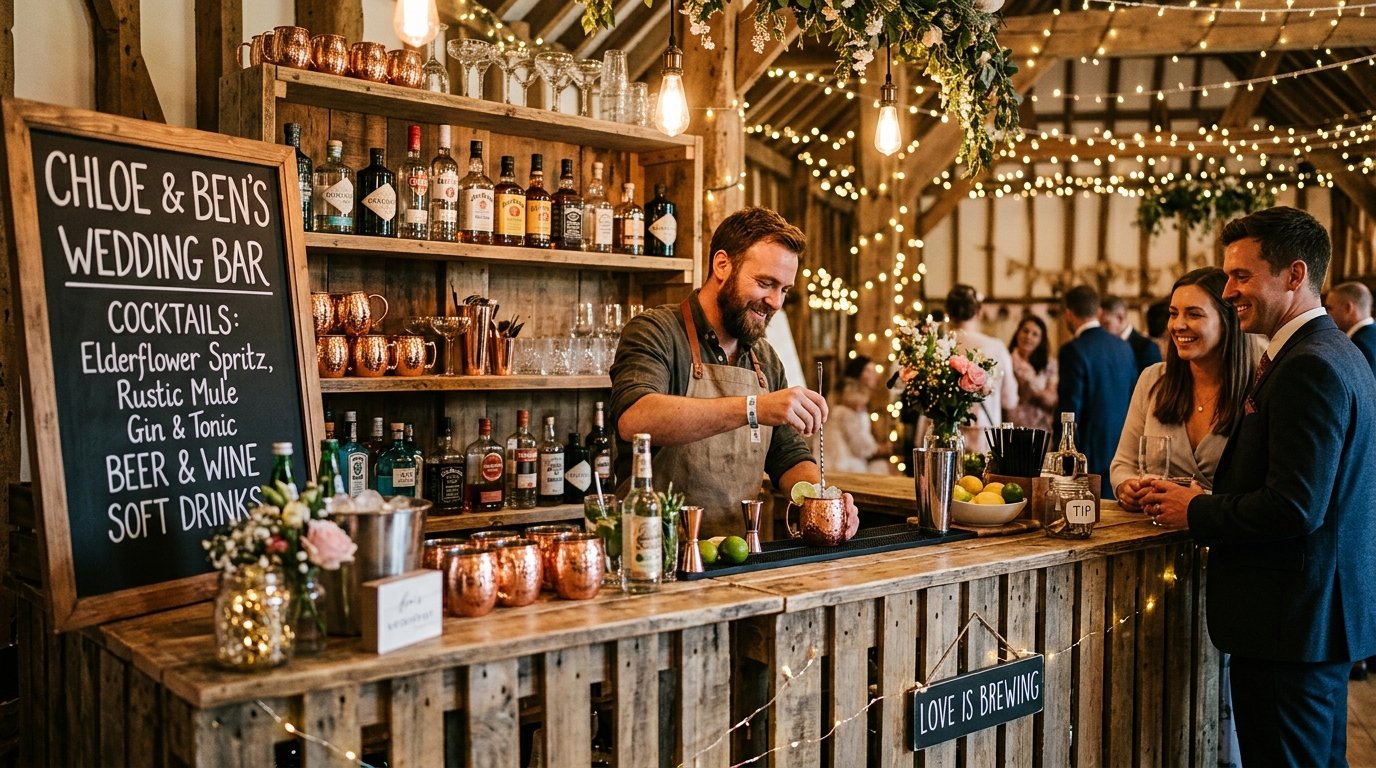
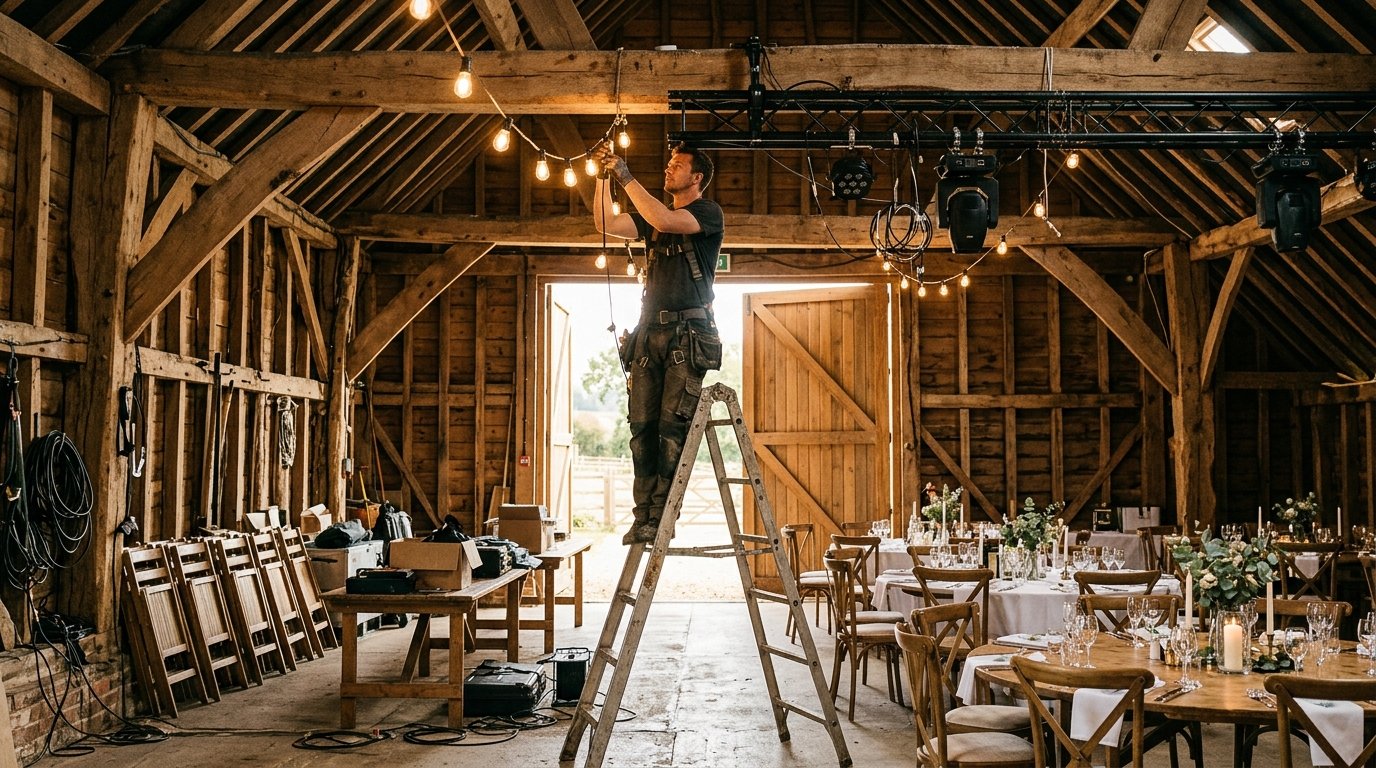
The catch is the word “everything.” Because with dry hire, you supply everything. Caterer. Bar. Tables. Chairs. Cutlery. Glasses. Lighting. Music. Decoration. Toilets. A generator. Waste collection. Someone to coordinate it all on the day.
This guide explains what dry hire actually involves, what it costs once you add everything up, who it genuinely suits, and where most couples underestimate the effort.
What does dry hire mean?
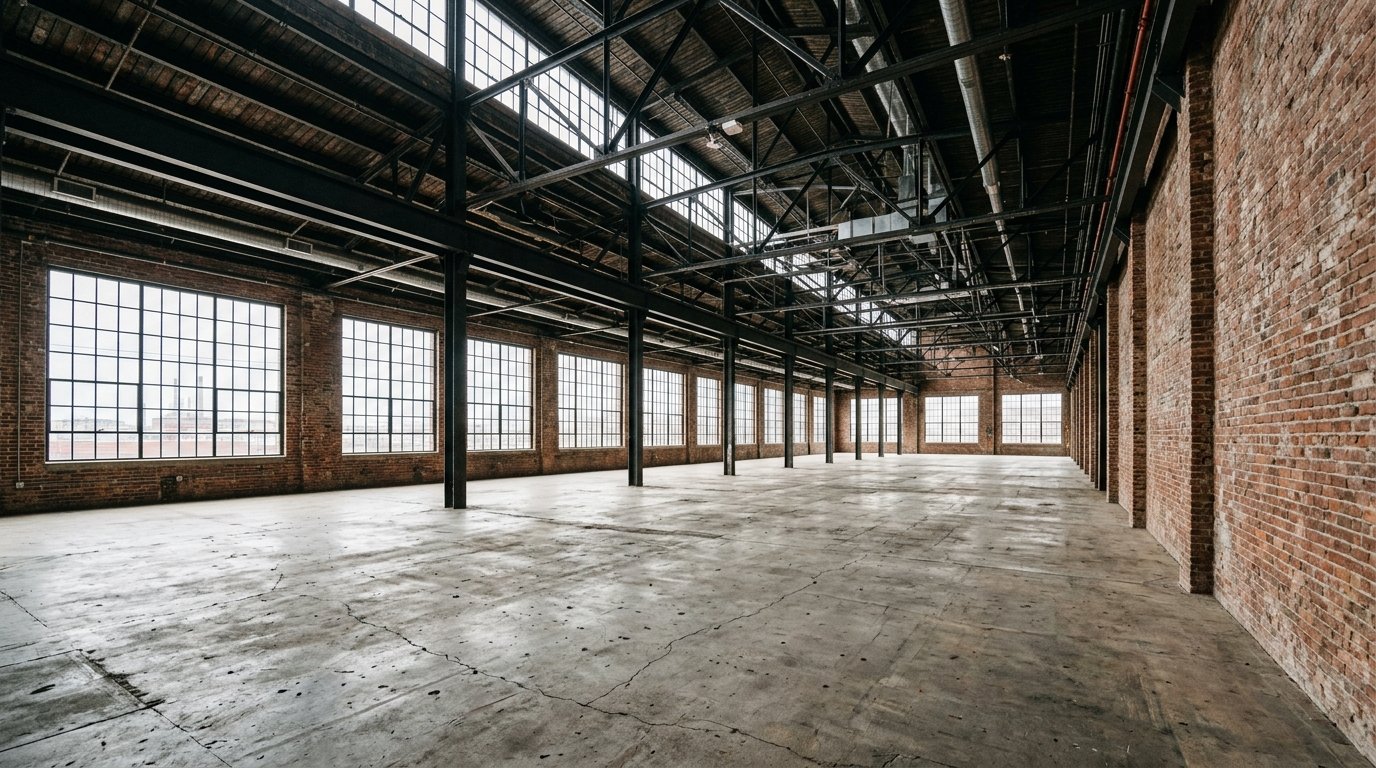
A dry hire venue provides the building and (usually) basic utilities — electricity, running water, and sometimes a commercial kitchen. Everything else is your responsibility.
What you get:
- The venue space
- Electricity and water (check the supply — some rural venues have limited power)
- Possibly a kitchen or prep area
- Parking (sometimes)
- Access for a set number of hours or days
What you do not get:
- Food or drink
- Tables, chairs, or linen
- Glassware, crockery, or cutlery
- Lighting beyond the house lights
- Music or sound equipment
- Decoration
- Staff (bar, waiting, or coordination)
- Toilets (at some rural venues)
The list of things you need to source is long. Here is the full breakdown:
The dry hire supplier checklist
| Supplier | Why You Need Them | Budget Range |
|---|---|---|
| Caterer | Food prep and service | £40-£120 per head |
| Bar service | Staff, glasses, and stock | £1,500-£3,500 |
| Furniture hire | Tables, chairs, sometimes sofas | £1,000-£2,500 |
| Linen hire | Tablecloths, napkins, runners | £200-£600 |
| Crockery and cutlery | Plates, bowls, knives, forks | Often included with caterer |
| Lighting | Festoon, uplighters, fairy lights | £500-£1,500 |
| DJ or band | Evening entertainment | £400-£1,500 |
| Florist | Flowers and table decoration | £500-£2,000 |
| Day-of coordinator | Someone to manage the timeline | £800-£2,000 |
| Generator | If mains power is insufficient | £300-£800 |
| Portable toilets | For outdoor or rural venues | £400-£1,000 |
| Waste collection | Rubbish removal after the event | £100-£300 |
| Parking management | Signs, marshals, overflow field | £100-£400 |
That is 10-13 separate suppliers, each with their own contracts, deposits, delivery times, and requirements.
The true cost of dry hire
The dry hire sales pitch works like this: “Our venue hire is only £2,500.” And it is. But £2,500 buys you an empty room.
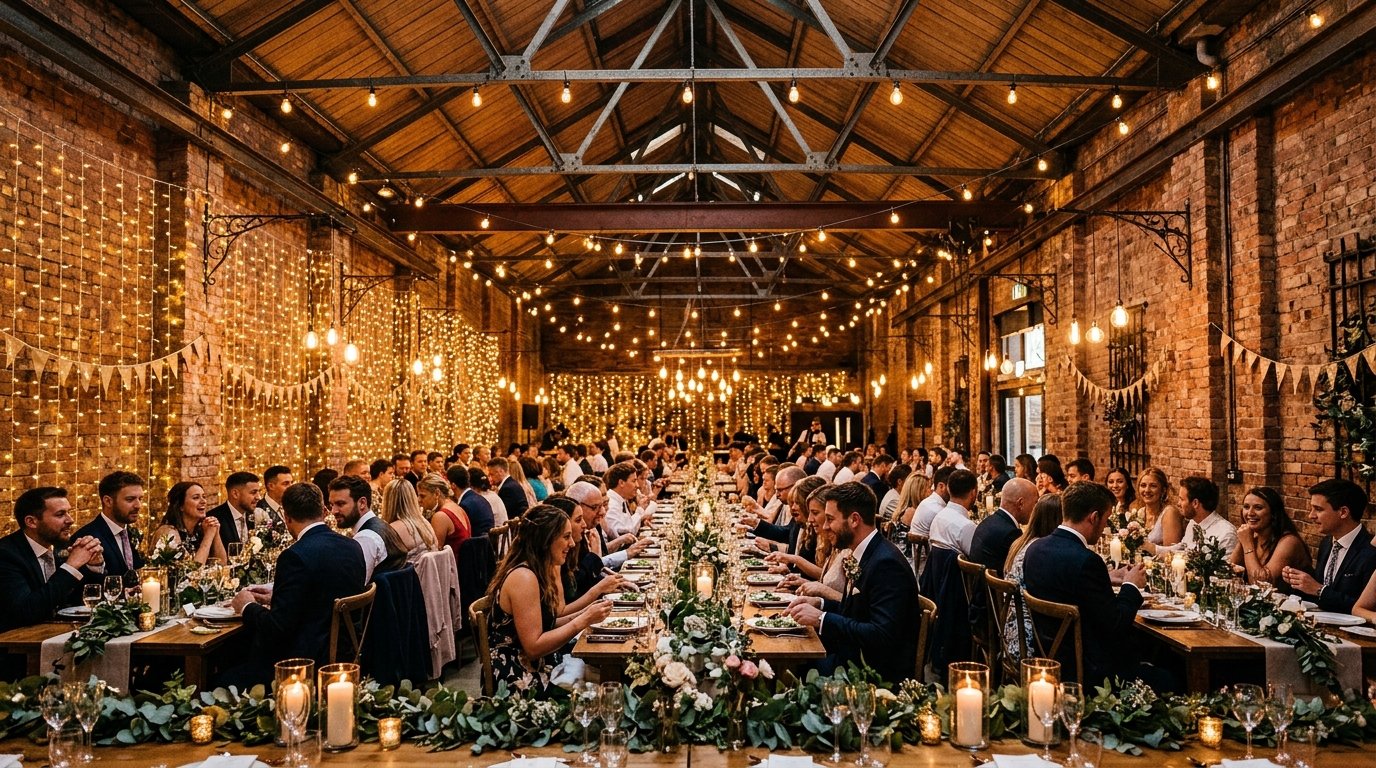
Here is what an 80-guest dry hire wedding actually costs:
| Item | Low Estimate | Mid Estimate | High Estimate |
|---|---|---|---|
| Venue hire | £1,000 | £3,000 | £5,000 |
| Catering (80 guests) | £3,200 | £5,600 | £9,600 |
| Bar service + drinks | £1,500 | £2,500 | £3,500 |
| Furniture hire | £800 | £1,500 | £2,500 |
| Lighting | £400 | £800 | £1,500 |
| DJ | £400 | £700 | £1,200 |
| Flowers and decor | £500 | £1,000 | £2,000 |
| Coordinator | £0 (DIY) | £1,200 | £2,500 |
| Generator | £0 | £400 | £800 |
| Toilets | £0 | £500 | £1,000 |
| Waste and parking | £100 | £300 | £600 |
| Photographer | £1,200 | £1,800 | £3,000 |
| Total | £9,100 | £19,300 | £33,200 |
Compare that to an all-inclusive hotel wedding at £15,000 or check the national average wedding cost. The dry hire venue fee is lower, but the total is often the same or more.
Where the money goes wrong
The most common budget mistake: assuming the venue fee represents the main cost. In reality, the venue hire is 10-20% of the total dry hire budget. Catering and bar service together account for 40-60%.
Couples who set a £10,000 budget based on the venue fee alone regularly spend £18,000-£22,000 once every supplier is booked.
Types of dry hire venue
Blank-canvas barns
The most popular dry hire venue type in the UK. Usually a converted agricultural barn with exposed beams, stone walls, and a rustic feel. Some have commercial kitchens; many do not. Access is typically from the day before the wedding until the morning after.
Strengths: atmospheric, photogenic, often exclusive-use, overnight setup time. Weaknesses: can be cold in winter, limited power supply, may need generator and portable toilets.
Industrial warehouses and urban spaces
Converted factories, railway arches, and warehouse spaces. Popular in cities and creative hubs. The industrial aesthetic (exposed steel, polished concrete, bare bulbs) needs minimal decoration.
Strengths: dramatic architecture, urban locations, good transport links for guests. Weaknesses: acoustics can be echoey, limited natural light, some feel cold and impersonal without significant decoration.
Village halls
The budget dry hire option. Every village in Britain has one. Hire fees range from £200-£800 for a full day. They are basic — parquet floor, strip lighting, a kitchen hatch, and stacking chairs — but that is the point. With the right decoration, they become charming rather than cheap.
Strengths: affordable, local, usually have a kitchen and toilets, familiar to guests. Weaknesses: aesthetic limitations, may have noise restrictions, some feel like a school assembly.
Private estates and country houses
Large properties rented privately, usually exclusive-use for the weekend. The grounds often include space for a marquee, and the house provides accommodation for the wedding party. Hire fees are higher (£3,000-£8,000) but you get the entire property.
Strengths: exclusive, beautiful grounds, overnight accommodation, extended access. Weaknesses: expensive, remote (guest logistics), limited infrastructure.
Outdoor marquee sites
A field, paddock, or garden where you erect a marquee. The ultimate blank canvas — there is literally nothing there until you build it. Requires a marquee company, generator, portable toilets, flooring, lighting, and a caterer with their own mobile kitchen.
Strengths: total creative control, any location, no noise restrictions (usually). Weaknesses: most expensive dry hire option when you add everything, entirely weather-dependent, significant setup time (2-3 days).
The setup: what people underestimate
Time
Dry hire weddings take 1-3 days to set up and half a day to break down. If the venue gives you access from 9am on the wedding day, you do not have enough time. Insist on at least the evening before.
Typical setup timeline:
| When | Task |
|---|---|
| Day before, morning | Furniture delivery and placement |
| Day before, afternoon | Lighting rig, bar setup, table linen |
| Day before, evening | Flowers, place settings, finishing touches |
| Wedding day, morning | Caterer arrives and preps, final checks |
| Day after, morning | Breakdown and collection by all suppliers |
Coordination
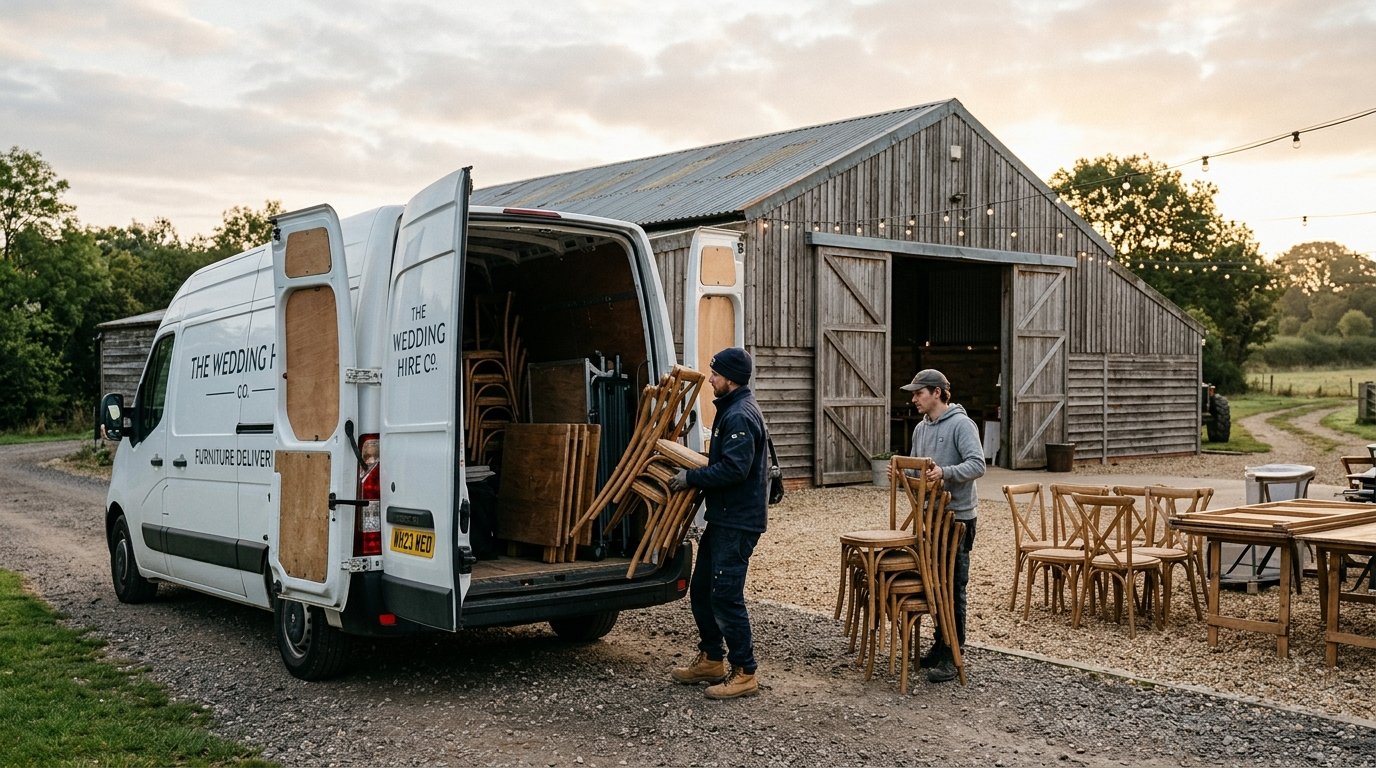
With 10-15 suppliers, someone needs to manage the logistics: delivery times, setup order, access keys, power allocation, and the running order on the day. If you do not hire a coordinator, that person is you — and on your wedding day, it should not be.
A day-of coordinator costs £800-£2,000 and is the single most valuable hire for a dry hire wedding. They manage the suppliers so you do not have to.
Logistics you will forget about
Things that all-inclusive venues handle silently but dry hire couples discover at 11pm:
- Bins. Where does the rubbish go? Who takes it away?
- Ice. Where does the bar get ice? You need more than you think.
- Power distribution. A caterer, a band, and a lighting rig on the same circuit will trip the fuse.
- Parking. No lines, no signs, no attendant. Guests park on the grass and get stuck.
- Cloakroom. Where do 80 guests put their coats and bags?
- Late-night food. If your caterer leaves at 9pm, who serves the midnight pizza?
Who suits dry hire?
Dry hire is for you if:
- You have a clear creative vision and want full control
- You enjoy planning and project management (or find it exciting rather than stressful)
- You have time — dry hire weddings take 50-100 hours more planning than all-inclusive
- You have industry contacts (a caterer friend, a florist in the family, a musician partner)
- You want a venue with no restrictions on suppliers, decoration, or timings
- You are comfortable managing a budget across 15 separate invoices
Dry hire is not for you if:
- You want a stress-free planning process
- You find supplier coordination overwhelming
- You have a tight budget and expect the low venue fee to mean a cheap wedding
- You are getting married in under 6 months (not enough time to book good suppliers)
- Neither of you has project management experience or a planner to help
How to do dry hire well
1. Budget honestly
Start with the total number, not the venue fee. If your total wedding budget is £20,000, the venue hire should be £2,000-£3,000 maximum — leaving £17,000 for everything else.
2. Book the caterer first
The caterer is the most important and most expensive supplier. Book them before the DJ, the florist, or the lighting company. Good caterers are booked 12-18 months ahead for summer dates.
3. Visit the venue with your caterer
Take your caterer to the venue before you commit. They need to assess the kitchen (if there is one), the power supply, access for deliveries, and where to set up. Some venues have kitchens that look functional but lack the equipment a professional caterer needs.
4. Hire a coordinator
This is not optional unless you have a very organised friend or family member willing to work on your wedding day. A coordinator manages the timeline, directs suppliers, solves problems, and lets you enjoy the day.
5. Check the infrastructure
Before signing:
- Power supply: How many amps? Is there three-phase power? (Caterers and bands may need it)
- Water: Mains or limited supply? Is there hot water?
- Kitchen: Commercial grade or domestic? Does it have ovens, hobs, and enough fridge space?
- Toilets: On-site or needed? How many? (Rule of thumb: 1 toilet per 30 guests)
- Access: When can suppliers deliver? When must everything be removed?
- Neighbours: Are there noise restrictions or curfew times?
6. Create a master timeline
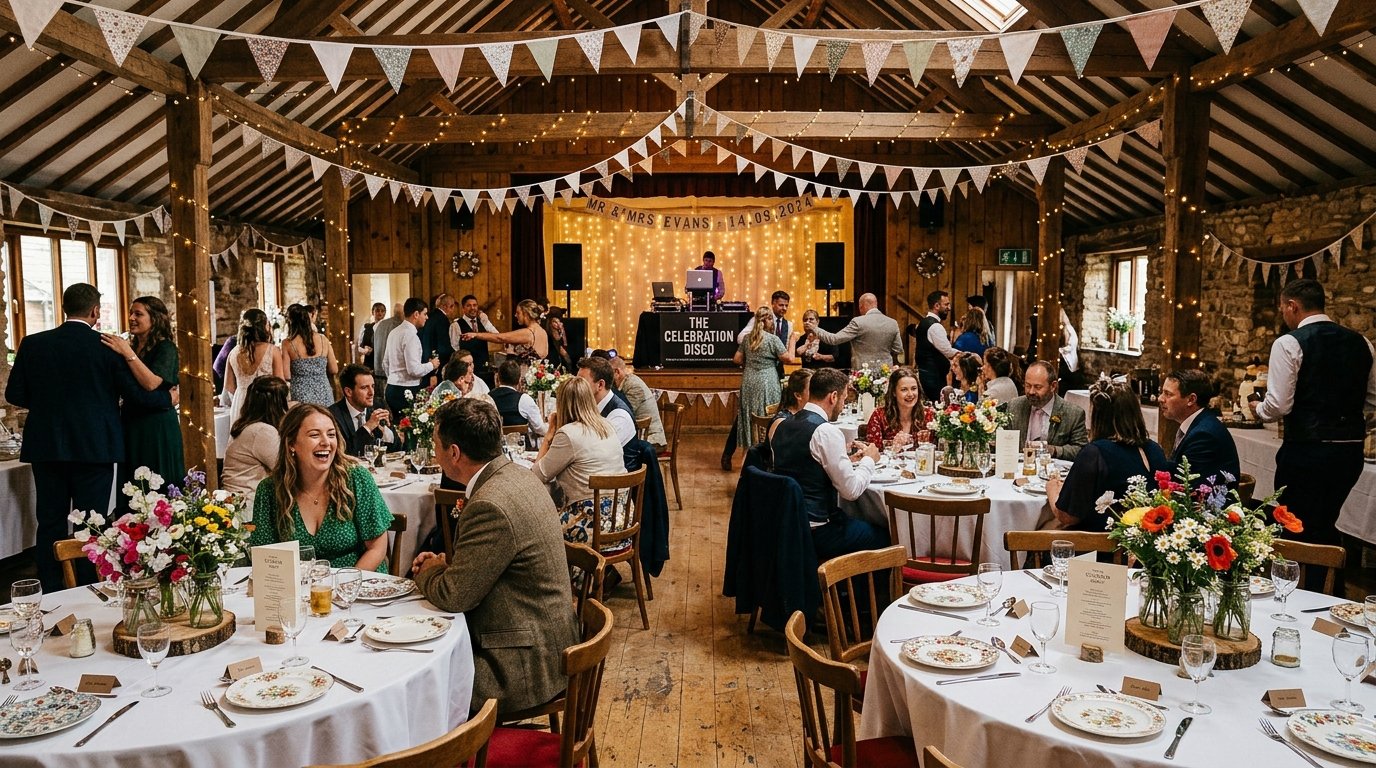
Every supplier needs to know when they arrive, where they set up, and when they leave. A shared document (Google Sheet or similar) with all delivery times, contact numbers, and responsibilities prevents chaos on the day.
Dry hire vs all-inclusive: the real comparison
| Factor | Dry Hire | All-Inclusive |
|---|---|---|
| Venue fee | £1,000-£5,000 | £5,000-£12,000 |
| Total cost | £9,000-£33,000 | £8,000-£25,000 |
| Creative control | Total | Limited to their style |
| Supplier choice | You choose everyone | Their approved list (usually) |
| Planning time | 150-250 hours | 50-100 hours |
| Stress level | High (unless you hire a planner) | Low to moderate |
| Setup time | 1-3 days | A few hours on the day |
| Risk | Higher (more moving parts) | Lower (one contract, one team) |
| Personalisation | Unlimited | Within their framework |
The comparison shows why dry hire is not a budget choice — it is a creative choice. The costs overlap significantly. The difference is who does the work.
The verdict
Dry hire venues give you freedom that no all-inclusive package can match. You choose every supplier, control every detail, and create a wedding that looks nothing like anyone else’s.
The price of that freedom is effort. Planning a dry hire wedding is a part-time job for 6-12 months. If you love the process, that effort becomes part of the story. If you find it overwhelming, the same budget at an all-inclusive venue buys you a beautiful day with a fraction of the stress.
Before deciding, understand the full cost of a UK wedding and work through the venue decision framework. Compare dry hire quotes against all-inclusive packages for the same date and guest count — the total numbers may surprise you.
For more on planning your budget and cutting costs where they matter, see our wedding budget breakdown and budget wedding ideas.
Frequently asked questions
What does dry hire mean for a wedding venue?
Dry hire means you rent an empty space with no catering, bar, furniture, or decoration included. You source and coordinate every supplier yourself. The venue provides the building (and usually electricity and water) — everything else is your responsibility. It is the opposite of an all-inclusive package.
Is dry hire cheaper than an all-inclusive venue?
The hire fee is cheaper, but the total cost often is not. A dry hire barn at £3,000 sounds affordable until you add catering (£4,000-£8,000), bar (£1,500-£3,000), furniture (£1,000-£2,500), lighting (£500-£1,500), and a coordinator (£1,500-£3,000). Many couples spend £15,000-£25,000 total — similar to a mid-range all-inclusive venue.
What do you need to supply for a dry hire wedding?
At minimum: caterer, bar service, tables, chairs, linen, crockery, glassware, lighting, DJ or band, and decoration. Outdoor or rural venues may also need a generator, portable toilets, a marquee or tent, parking management, and waste collection. Most couples also hire a day-of coordinator.
Who should choose a dry hire venue?
Couples who want complete creative control and have the time (and patience) to manage 10-15 suppliers. It also suits people with industry connections — a friend who caters, a relative with a sound system, or personal access to a private estate. If you want a stress-free planning process, dry hire is not it.
What are the best types of dry hire venues?
Blank-canvas barns are the most popular in the UK. Industrial warehouses and converted factories work for urban couples. Village halls are the budget option. Private estates and country houses offer exclusivity. Outdoor fields or paddocks suit marquee weddings. Each type has different infrastructure — check electricity, water, and kitchen facilities before booking.