Home / Articles / Wedding Trends
Drapery Backdrop Wedding Ceremonies: UK How-To Guide
Key Takeaways
- Pinterest searches for 'drapery backdrop' at wedding ceremonies rose 340% between January 2024 and January 2026
- UK hire packages start from £350 for basic arch framing to £1,200 for a full ceremony room installation
- The trend is replacing floral-only backdrops and typically installs in 2-3 hours versus 4-6 hours for florals
- Silk, velvet, and fine linen are the three most popular fabrics for UK ceremony drapery in 2026
- The look suits most UK venue types: barns, country houses, converted spaces, and outdoor marquees
- DIY is achievable for flat-walled venues at £230-£450 total; professional installation needed for ceiling rigging
Pinterest searches for “drapery backdrop” at wedding ceremonies rose 340% between January 2024 and January 2026, according to Pinterest’s 2026 trend predictions data. In UK Google Search, queries for “ceremony drapery” and “fabric backdrop wedding” more than doubled over the same period. The trend is part of a broader shift from floral-only ceremony designs toward mixed-material installations: fabric as architecture rather than decoration. UK hire companies now offer ceremony drapery packages starting from £350, and the look translates across venue types, from barn conversions to formal country houses.
What is a drapery backdrop?
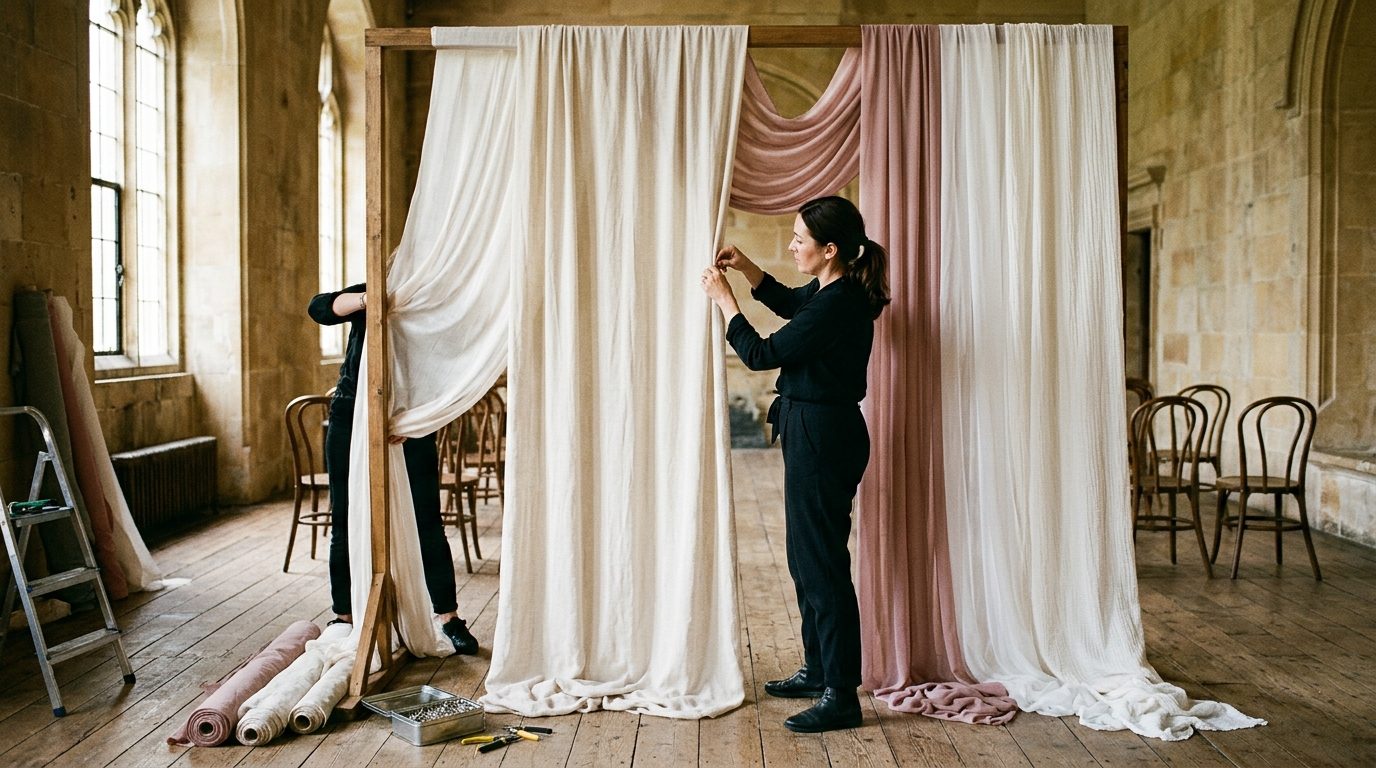
A drapery backdrop is a fabric installation positioned behind the couple at a wedding ceremony or in the reception space. At its simplest, it is a length of fabric hung from a frame, arch, or beam. At its most elaborate, it is a full ceiling treatment combined with layered wall hangings, trailing panels, and integrated florals.
The defining characteristic is fabric as the primary visual element. Floral backdrops use fresh or faux flowers as the focal point. Drapery backdrops use the fabric itself: its weight, movement, texture, and colour are the design.
The difference in photography is significant. Floral backdrops read as detailed and textural in close-up. Drapery reads as atmospheric and architectural in both close-up and wide shots. At ceremony width, a drapery backdrop frames the couple within a visual context the way a stage set frames a performance.
Why the trend is growing in 2026
Several factors are driving the surge in UK interest.
Cost relative to florals. A full floral backdrop using fresh flowers runs £600-£1,800 in the UK, and the flowers are discarded after the day. A fabric installation of similar visual impact costs £400-£1,200 and can be restyled for the reception space. For couples managing tighter budgets, fabric offers more value per pound of visual impact.
Photography across lighting conditions. Drapery photographs consistently whether the ceremony is in a candlelit church, a bright barn, or an outdoor marquee. Floral backdrops can photograph muddy in low light or overexposed in strong afternoon sun. Fine silk or linen in a neutral tone reads well in any light.
Faster installation. UK wedding stylists surveyed for this article reported that fabric installations typically take 2-3 hours for a full ceremony room setup. Comparable fresh floral installations take 4-6 hours. The time saving matters for venues with tight access windows.
Post-ceremony restyling. Fabric panels used at the ceremony altar can be moved to frame the reception table, the bar area, or the entrance for the evening. Fresh florals are typically static once installed. The flexibility of fabric makes it a more efficient investment across the whole day.
Social media aesthetics. The drapery look photographs with movement and softness. For couples creating wedding content for Instagram and Pinterest, a fabric backdrop provides a considered background in both still images and short video.
The main styles of drapery backdrop
The single-panel altar frame. One or two panels of fabric hung from an arch or frame behind the couple, either floor-length or pooling slightly at the base. This is the entry-level version and costs the least to hire or replicate as DIY. It works best with a clean fabric in a strong colour or fine texture.
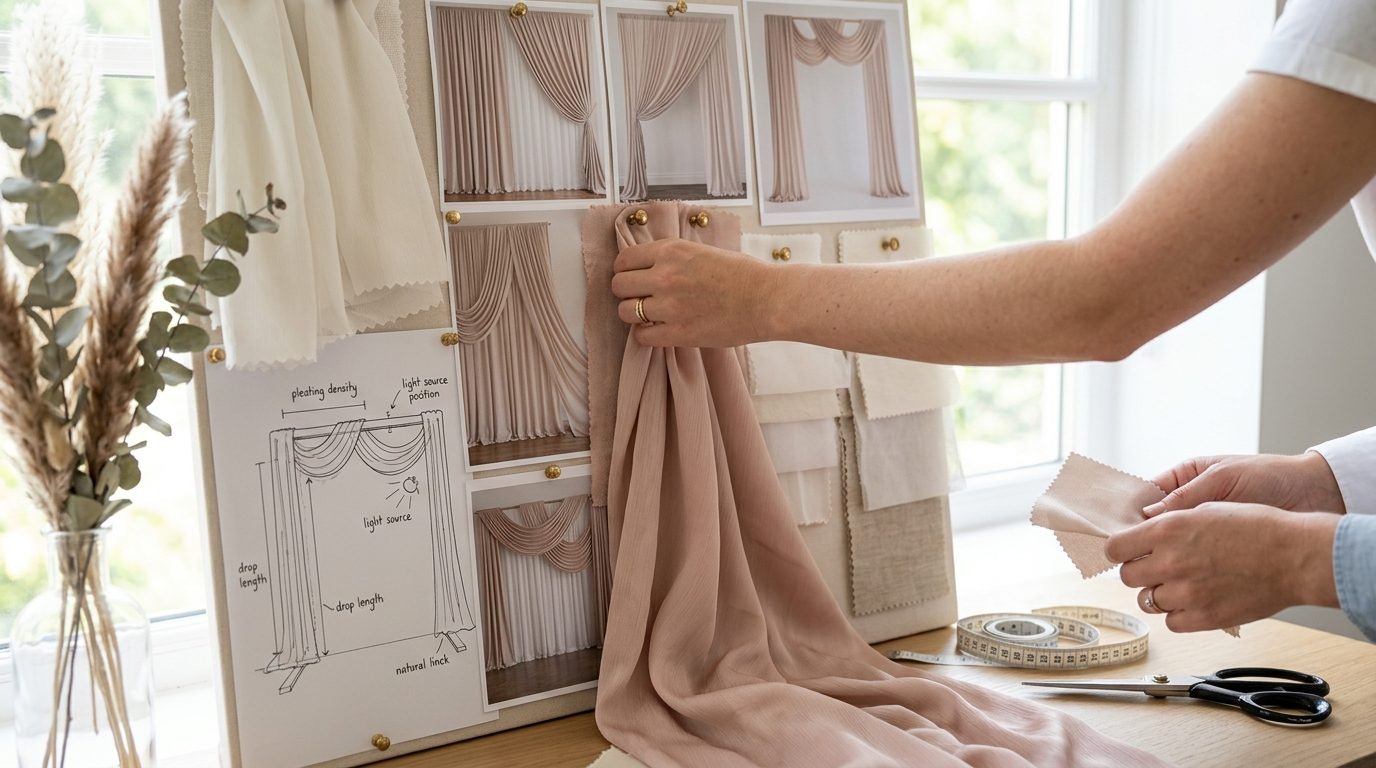
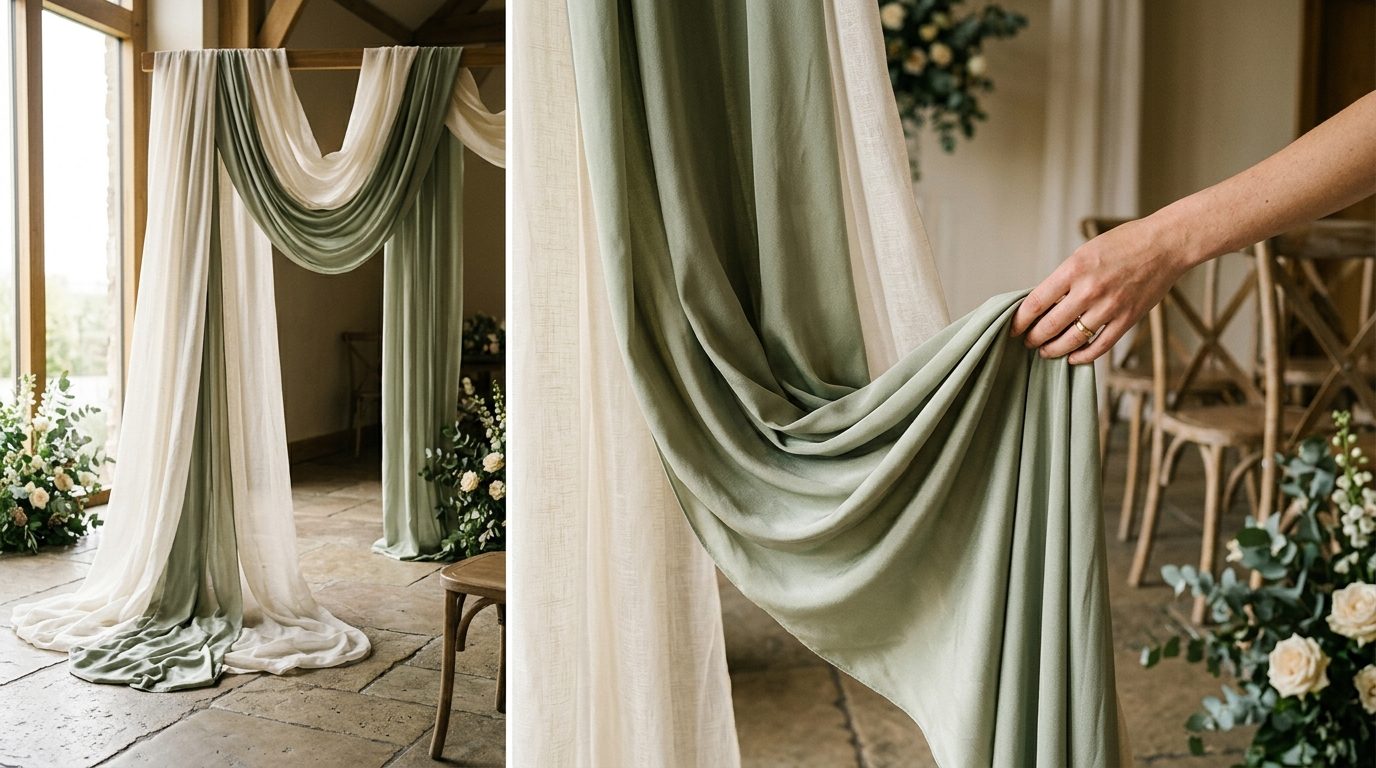
The layered installation. Multiple fabric panels in different weights and colours, overlaid to create depth. Sheer outer panels over a solid inner panel, or mixing linen and silk in complementary tones, creates the layered look that photographs with real richness. This version requires a fabric professional to style correctly.
The ceiling canopy. Fabric swaged from ceiling rigging points above the couple, creating a fabric tent above the ceremony. This requires venue approval and specialist rigging. It is the most dramatic of the three options and the most expensive, typically £800-£1,500 for UK professional installation.
The corridor drape. Fabric panels lining the aisle on both sides, creating a fabric corridor to the altar. Combined with a backdrop behind the altar, this creates a complete fabric environment for the ceremony. At its most refined, this resembles a fashion runway installation and photographs beautifully in the aisle shot.
Fabrics and colours: what works best in 2026
Silk dupion. The most popular choice for formal UK ceremonies. It has a slight texture and a subtle sheen that photographs with a gentle luminosity. Available in the widest colour range of any wedding fabric. Cost: approximately £12-£20 per metre from UK fabric suppliers.
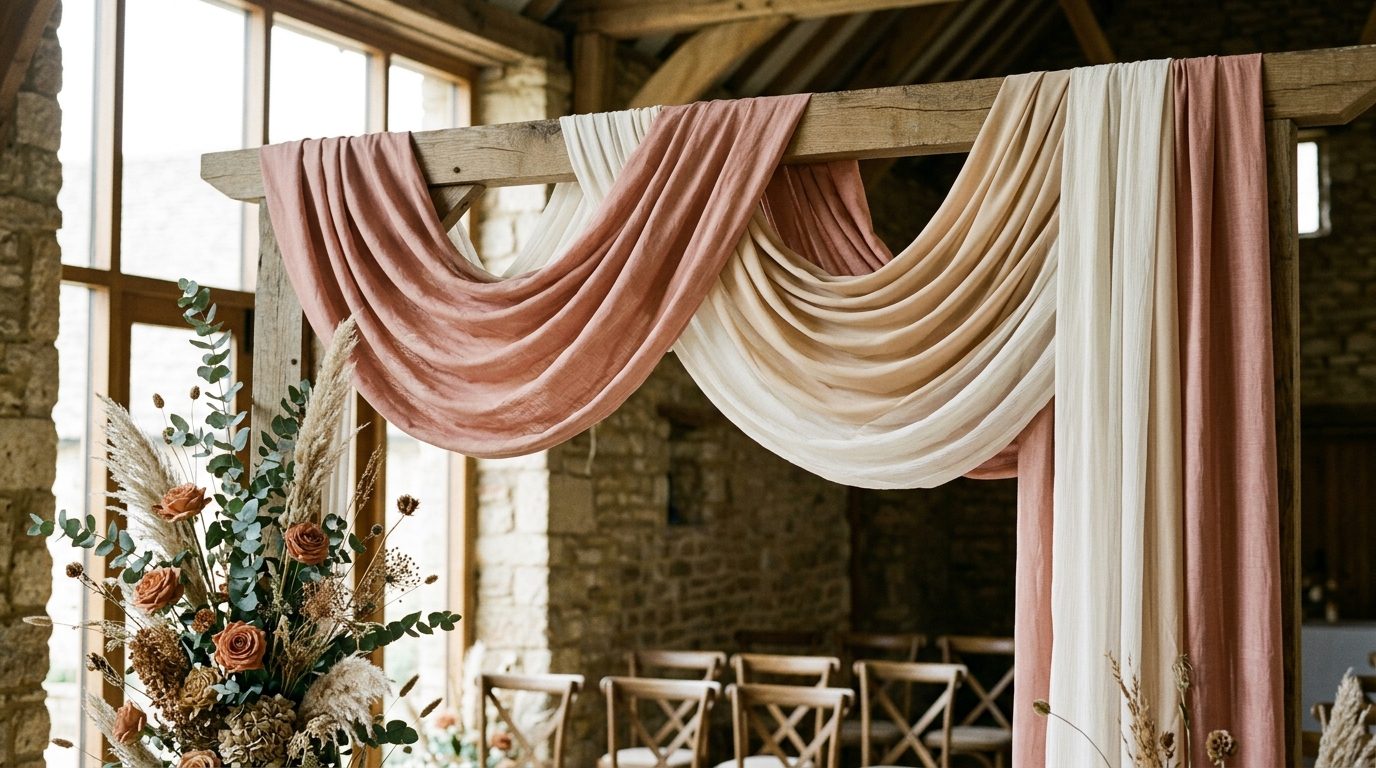
Fine linen. The default choice for barn weddings, outdoor ceremonies, and rustic-aesthetic events. It drapes in natural, unstructured folds and has no sheen. In ivory, it is almost universally appropriate. In sage, terracotta, or muted blue, it creates a warm, natural effect. Cost: approximately £8-£14 per metre.
Velvet. The highest-impact fabric for autumn and winter weddings. In deep berry, forest green, or midnight navy, velvet creates a richness that reads instantly in photographs. It does not suit outdoor daytime settings or summer light. Cost: approximately £18-£30 per metre for curtain-weight velvet.
Chiffon and sheer. Used as overlay panels to create the layered effect. Chiffon allows light through and moves in a breeze, creating soft movement in outdoor settings. It should always be backed with an opaque panel, as it is too light-bodied to stand alone.
2026 colour trends. Warm ivory and ecru remain the dominant base colours across UK ceremony drapery bookings. Terracotta, sage green, and dusty rose are the leading accent colours visible on UK wedding Instagram and Pinterest in early 2026. For evening receptions, deep jewel tones are gaining ground: deep berry, forest green, and dusty navy are appearing on late-2026 bookings already confirmed.
UK drapery backdrop hire: what to expect
Most UK fabric backdrop hire is handled by one of three supplier types.
Dedicated wedding decor hire companies. These carry frame and fabric inventory specifically for weddings. They offer package pricing (frame, fabric, delivery, setup, collection) and can advise on what works in specific venues. A full arch-plus-panel package starts at £350 delivered and installed.
Floristry companies with decor extensions. Many UK wedding florists now offer fabric installation alongside their floral work. Booking through a florist means the fabric and florals are coordinated at the design stage. Pricing typically sits within the same range as dedicated hire companies.
Event decor and marquee companies. Companies that supply marquees and event infrastructure often carry ceiling rigging, frame systems, and fabric panels. If your venue requires ceiling rigging, a company with licensed riggers is the safest choice.
Questions to ask any drapery supplier:
- Can they show you photographs from a similar venue type?
- What is the installation timeline and who handles setup?
- Is the fabric pressed and ready, or will it need steaming on arrival?
- What is covered if fabric is damaged during installation?
- Can panels be repositioned after the ceremony for reception use?
- Do they carry public liability insurance?
DIY drapery backdrop: what is achievable
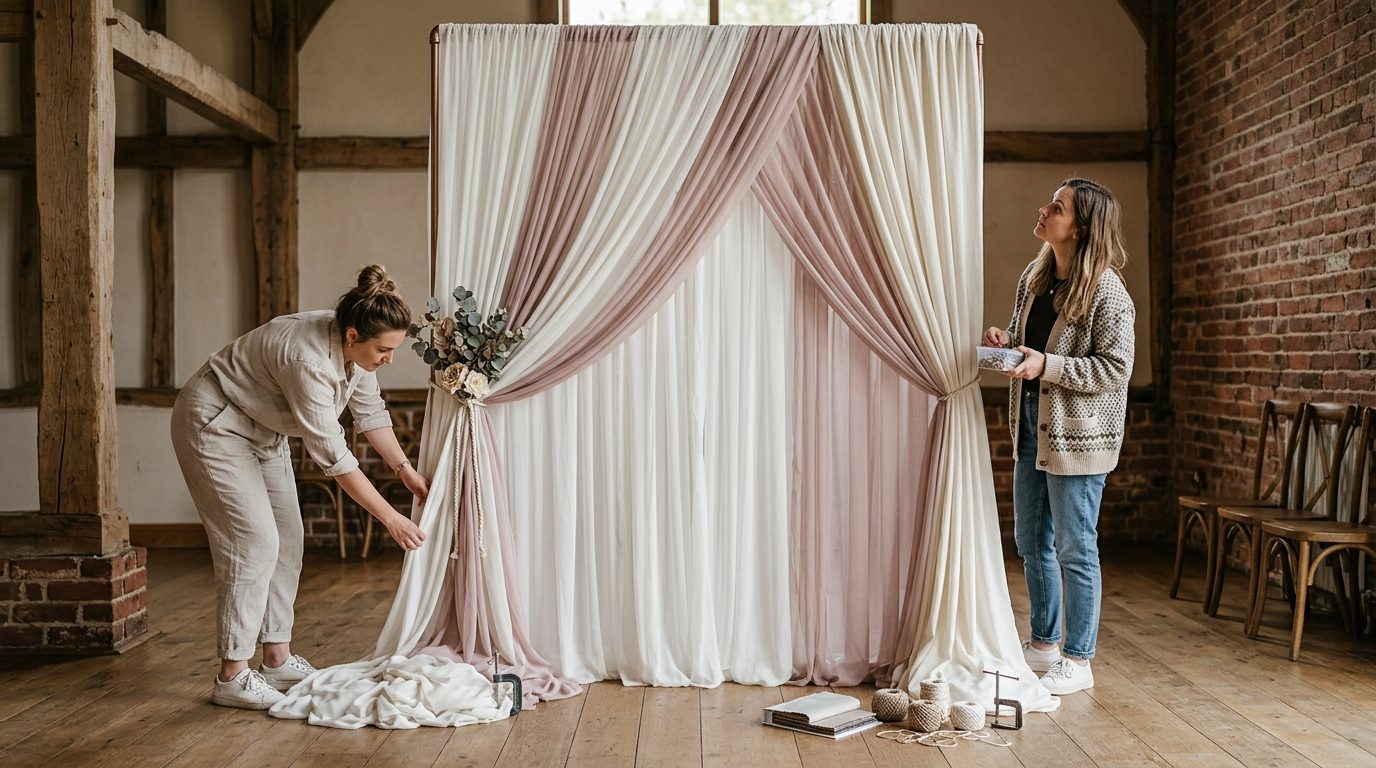
For couples with a flat-walled venue and reasonable access time, a DIY drapery backdrop is achievable at significantly lower cost.
Equipment needed:
- Portable pipe-and-drape kit (frame, uprights, base plates): £120-£200 for a 6-8ft wide kit from wedding supply companies.
- Fabric: 10-15 metres of dupion silk or linen in your chosen colour, at £8-£18 per metre.
- Cable ties or curtain rings for hanging the fabric from the frame.
- A fabric steamer: £40-£80 to hire for the day before from a tool hire shop.
DIY total: £230-£450 depending on fabric choice.
The limitations are real. Pipe-and-drape kits work on flat floors and do not accommodate vaulted ceilings, exposed beams, or irregular walls. Listed buildings often have restrictions on fixing points. The styling element (the draping, folding, and layering that makes a fabric backdrop look designed rather than functional) is harder to achieve without practice.
For a barn or marquee with accessible ceiling structure, a professional installer is worth the premium. For a civil ceremony room with flat walls and plenty of access time the day before, DIY is entirely achievable.
How to style the rest of the ceremony around a drapery backdrop
Florals. A drapery backdrop pairs well with smaller, structured floral arrangements at the altar. Candelabras, single specimen vases, or a low hedge arrangement that sits in front of the fabric works well. Avoid large, exploding floral arrangements that block the fabric.
Candles. Pillar candles on tall stands echo the vertical lines of hanging fabric panels. At a barn ceremony with linen draping, floor-standing candelabras create a complete look that needs little else.
Lighting. Uplighters at the base of fabric columns warm the colour of the fabric significantly. Amber gels with a terracotta linen installation create a warm, Mediterranean feel. For a more dramatic effect, cool white uplighting with deep velvet creates a theatrical quality.
Aisle styling. Pampas grass, dried lavender, or minimalist greenery in vessels along the aisle complements the fabric texture without competing. Heavy florals on the aisle can work against the clean simplicity of fabric as the primary element.
Guest photography. The drapery backdrop becomes a natural photography backdrop for group portraits immediately after the ceremony. Plan the post-ceremony exit so the backdrop is accessible for 20-30 minutes for informal portraits.
For more on 2026 wedding design trends, see the 2026 UK wedding trends overview and the wedding colour schemes guide. For centrepiece and table ideas that complement the drapery aesthetic, see the wedding centrepiece ideas guide. For venue types that suit this style, the barn wedding venues UK guide and country house wedding venues guide are useful starting points. For florists who can integrate fabric and florals in one package, the wedding flowers cost UK guide covers what to expect to pay.
Frequently asked questions
What is a drapery backdrop at a wedding ceremony?
A drapery backdrop is a fabric installation behind the altar or ceremony space. It replaces or supplements floral arrangements with layers of hanging silk, velvet, linen, or sheer fabric, creating a structured visual focal point.
How much does a drapery backdrop cost for a UK wedding?
UK hire packages start from £350 for a basic fabric arch frame and drape. A full ceremony room installation with ceiling fabric, altar backdrop, and aisle draping runs £800 to £1,200, including delivery and installation.
What fabrics work best for a wedding ceremony drapery backdrop?
Silk and dupion silk suit formal ceremonies and photograph with a subtle luminosity. Fine linen suits rustic or outdoor settings. Velvet creates a rich, dramatic effect for autumn and winter weddings.
Can I DIY a drapery backdrop for my wedding ceremony?
Yes, for flat-walled venues. A pipe-and-drape kit (£120-£200) plus 10-15 metres of fabric (£80-£270) covers the basics. Professional installation is needed for ceiling rigging, listed buildings, or irregular spaces.
What colours are trending for drapery backdrops in 2026?
Warm ivory and ecru are the most common base colours. Terracotta, sage, and dusty rose lead the accent palette. Deep berry, forest green, and dusty navy are growing for evening receptions.
Does a drapery backdrop work in a barn venue?
Yes. Barn venues with exposed beams provide natural fixing points. Linen or cotton drapes suit the rustic setting. The combination of natural timber and neutral linen fabric is one of the strongest looks in UK wedding design for 2026.
How do I find a drapery backdrop supplier in the UK?
Search wedding decor hire companies in your county on Bridebook or Hitched. Most event hire companies covering wedding floristry also offer fabric installation. Ask your venue coordinator for a recommended supplier list.