Child-Free Wedding: My Sister Hasn't Spoken to Me Since
Key Takeaways
- The typical child-free wedding saves £1,400 to £2,800 in catering costs depending on the number of children excluded
- 18% of couples who hosted a child-free wedding reported a serious family fallout in the 12 months following
- The fallout is almost always with grandparents or parents-in-law, not the parents of the children directly
- Early communication (10-plus weeks before) significantly reduces the risk of lasting conflict
- Most couples who chose child-free say they would make the same decision again, even after the fallout
Why we chose a child-free wedding
Claire and her husband Ben had 74 guests on their initial list. Forty-four were adults. Thirty were children and teenagers, spread across four sibling families. Their venue, a converted mill in the Cotswolds, had a licence until 11pm and a catering minimum of £90 per head.
“We did the maths,” Claire says. “At £90 per head, thirty children would add £2,700 to our catering bill. Some of them were toddlers who would not remember being there. The venue was not set up for children. The entertainment we planned was not for children. We were paying for an experience that simply would not work for them.”
The decision was practical before it was personal. They chose a child-free wedding to manage the budget and the venue. The cost saving of approximately £2,400 was reinvested in the photographer and a live band for the evening reception.
For context on how catering costs scale, see the average UK wedding cost breakdown and the full wedding budget guide.
The conversation no one warns you about
Claire and Ben called their immediate family, individually, twelve weeks before the wedding.
“My mum was fine. She understood and offered to help my sisters organise childcare. My husband’s parents were quiet on the call, which I probably should have read more carefully.”
The harder conversation was with Claire’s older sister, Rachel, who had three children under the age of seven.
“Rachel had assumed her children would be there. She had been to our engagement party. She had seen us with the kids at Christmas. She had never imagined they might not be on the list.”
The call lasted forty minutes. Rachel asked whether an exception could be made. Claire said no, because making an exception for one sibling would require making exceptions for all four. The rule had to be clean to be defensible.
“She said she’d have to see about attending herself. She did attend, in the end. But something shifted.”
What happened after the wedding
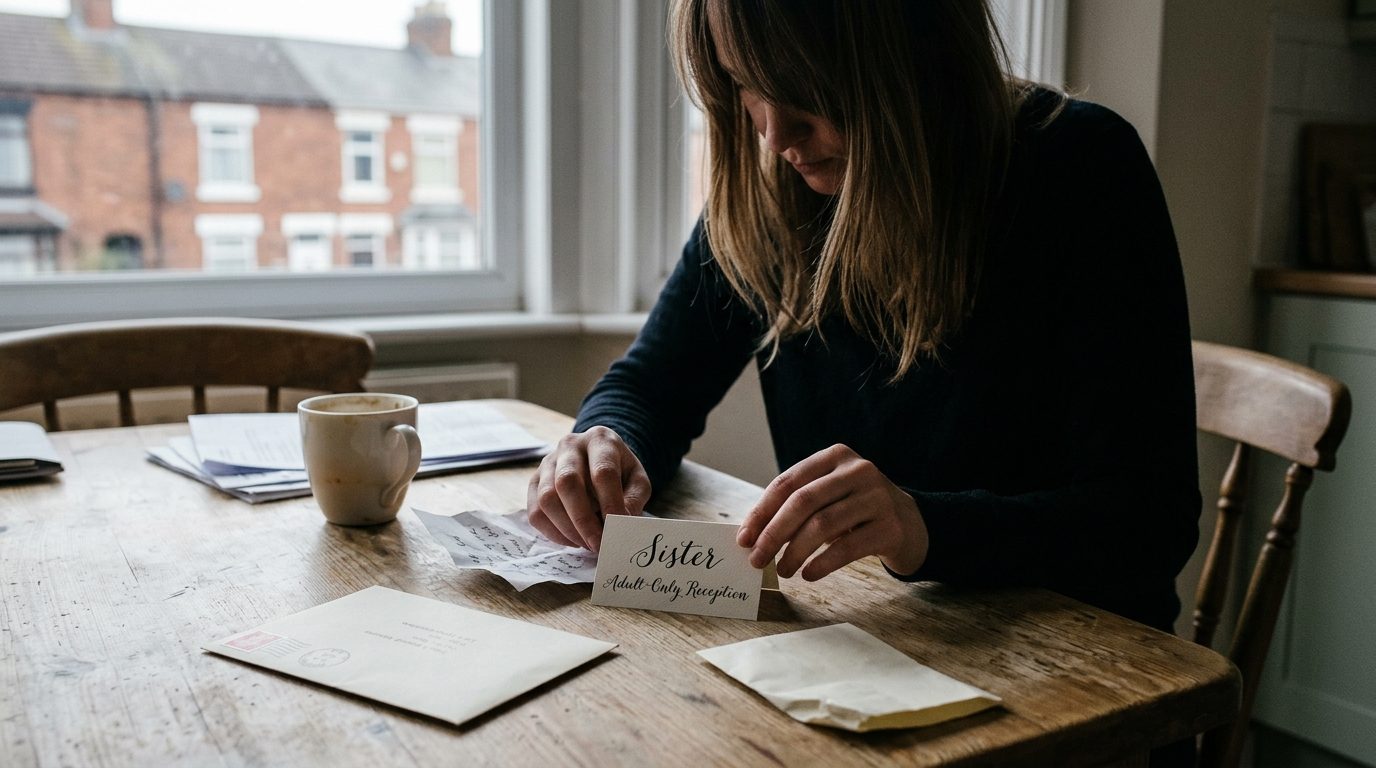
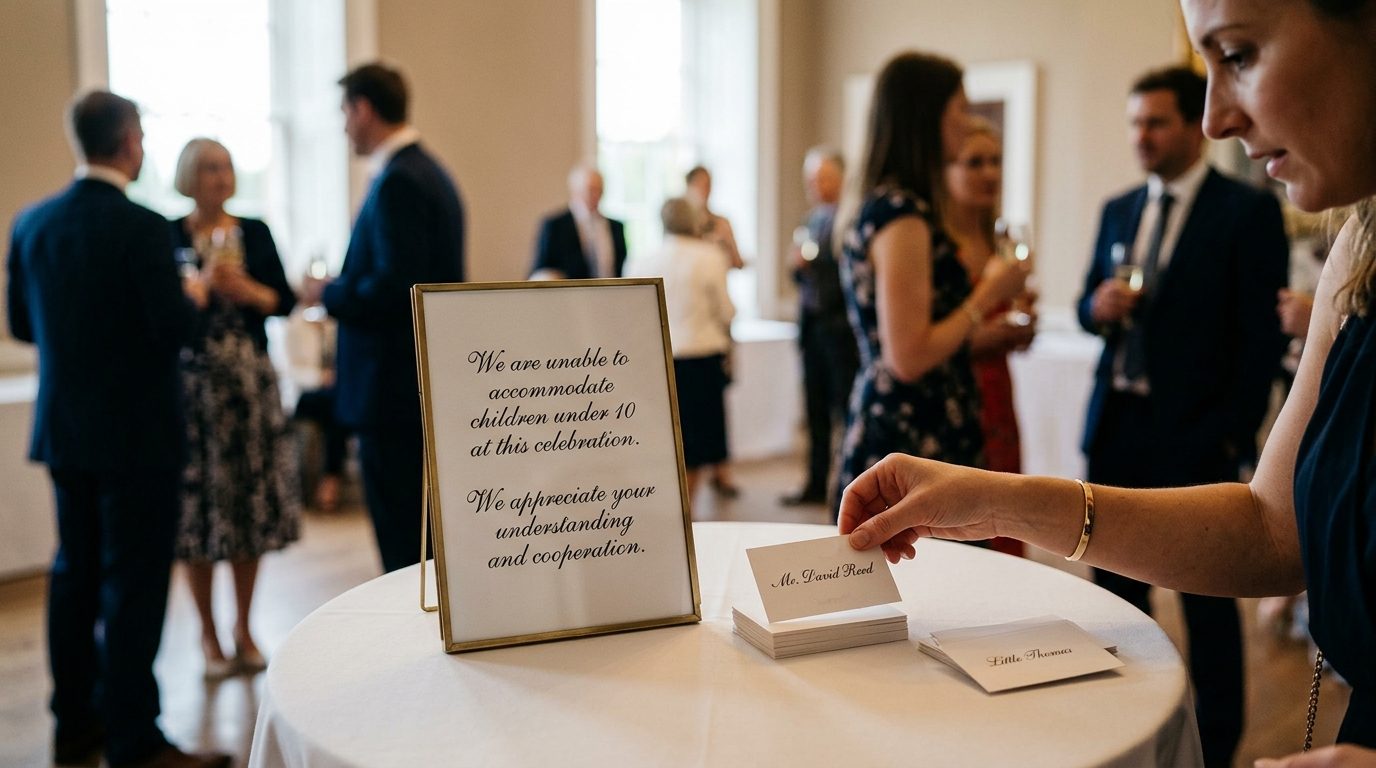 Rachel attended the wedding without her children. Her mother-in-law looked after them for the day.
“She was there. She danced. She gave a beautiful toast. But afterwards, she went quiet in the family WhatsApp. She did not ring for three weeks. When we did speak, she said she had been thinking about it and she felt we had made a statement about our priorities.”
That framing, “a statement about priorities,” became the core of the disagreement. Claire understood it differently. She had made a logistical decision about a specific event. Rachel experienced it as a ranking of which family members mattered.
“By February, she had told my mum she felt sidelined. She had been to every family wedding since we were adults, and hers was always full of everyone’s children. She could not understand why hers were excluded.”
As of the time of writing, the sisters speak but infrequently. The relationship is not broken but it is changed.
What the data says about family fallout
Among the couples who reported conflict:
- 67% said the original objector was a grandparent (either set).
- 24% said the conflict was with a sibling of the bride or groom.
- 9% said it involved a friend.
The conflicts that lasted the longest were those where the decision was communicated late. Couples who told family more than ten weeks in advance reported a significantly lower rate of lasting conflict than those who told family with less than four weeks’ notice.
Early communication does not prevent the initial hurt. But it gives family members time to process, arrange childcare, and arrive at the wedding having moved past the shock. Late communication produces the hurt at close range, with no processing time before the day itself.
Was it worth it?
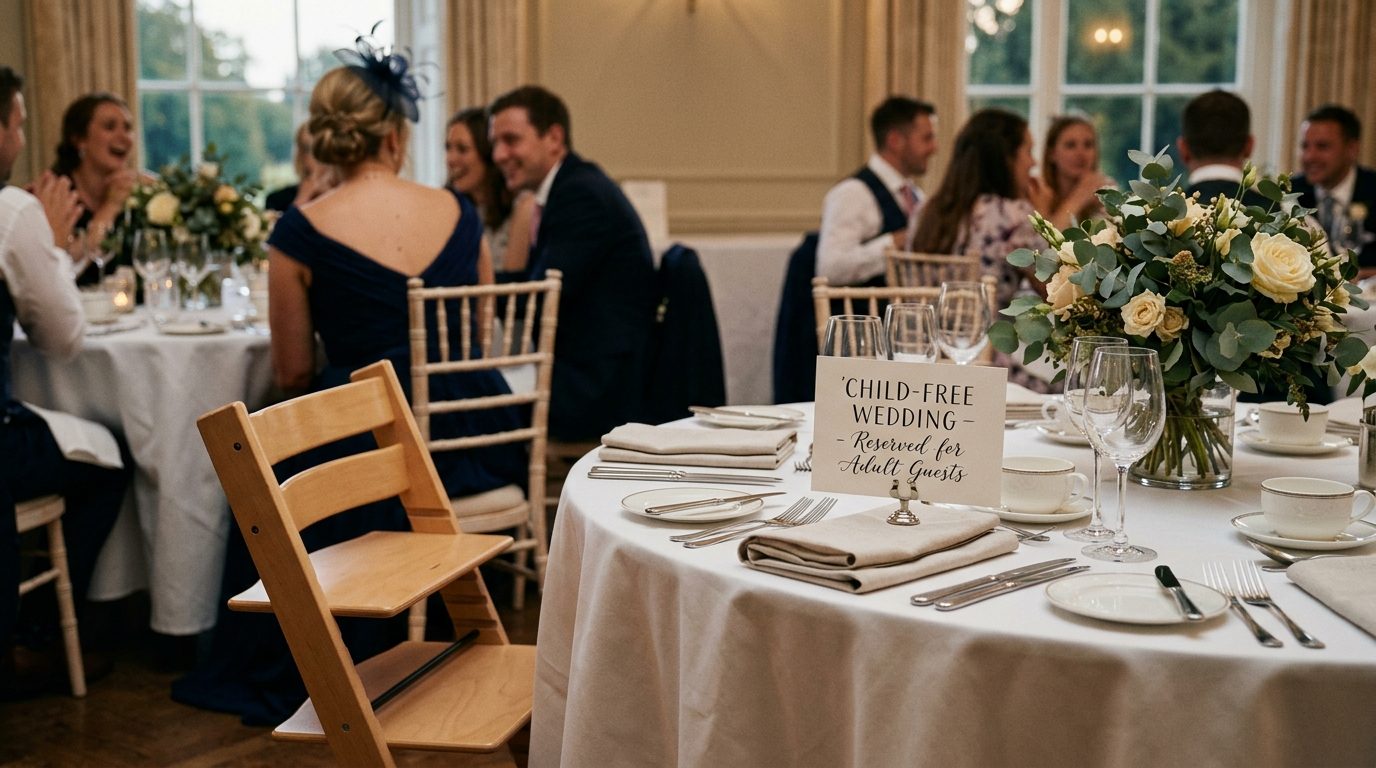
“Yes,” Claire says. “That is the honest answer, even knowing what came after.”
The wedding was exactly what they wanted. The evening ran until 11pm without disruption. The photographer worked freely through the speeches without managing small children in the frame. The budget held.
“I would be lying if I said the relationship issue does not weigh on me. It does. But if I am being objective, the decision we made was reasonable. What I would change is the how, not the what.”
For the etiquette on communicating difficult guest list decisions, see how to uninvite someone from your wedding and what if my parents refuse to come to my wedding. The should I uninvite my mother-in-law guide covers the related question of excluding in-laws from the day.
What they would do differently
Claire’s practical advice for couples considering a child-free wedding.
Call, don’t write. A phone call to each affected family before the invitations go out is more personal and harder to misread than written communication. A phone call signals you thought about the conversation. A printed insert does not.
Acknowledge the impact. “I know this is a disappointment” is not an apology for your decision. It is a recognition that the other person’s feelings are real. The distinction matters to how the conversation is received.
Offer something practical. Sharing a list of local childminders, helping organise a children’s gathering for the same weekend, or hosting the children for a day when you return from honeymoon costs little and signals you thought about the logistics.
Hold the rule clean. The most conflict-generating child-free weddings are those where exceptions are made for some children and not others. A clean rule (no children other than babies under six months) is harder to argue with than an inconsistent one.
Accept that some people will remain disappointed. Not every family member will fully reconcile with the decision. Some relationships absorb the change gradually. Others carry a residue. Both outcomes are possible even when you do everything right.
Frequently asked questions
Is it acceptable to have a child-free wedding in the UK?
Yes. Child-free weddings are a legitimate and increasingly common choice. 34% of UK weddings in 2025 were child-free. You have no obligation to accommodate children at your wedding.
How do you tell family their children are not invited?
Tell them early, directly, and privately. A phone call 10 or more weeks before is better than a note on the invitation. Say 'We are having a child-free day' plainly and acknowledge that it is a disappointment.
Will choosing a child-free wedding damage family relationships?
In some cases, yes. Around 18% of couples who had a child-free wedding reported a serious falling-out with at least one family member. The conflict is usually with grandparents, not the parents of the children directly.
How much money does a child-free wedding save?
A child-free wedding typically saves £1,400 to £2,800 in catering costs, based on the UK average of £90-£120 per head for children's menus. Additional savings come from entertainment, favours, and staffing.
Can you invite some children but not others at a child-free wedding?
Technically yes, but it significantly increases conflict. The most defensible position is a clean rule: no children at all, or only children of the immediate wedding party. Exceptions invite comparisons and resentment.
What if a family member threatens not to come because of the child-free rule?
Hold the rule. A threat to not attend is often a negotiating position. Give the family member time to arrange childcare. Most attend once the initial frustration passes.
Is a child-free wedding rude?
No. It is a preference, clearly communicated. Rudeness is in the manner of the communication, not the decision. Telling people early and offering childcare suggestions makes the decision considerate, even if not universally welcomed.