Home / Articles / Engagement Rings
Champagne Diamond Engagement Rings: UK Guide
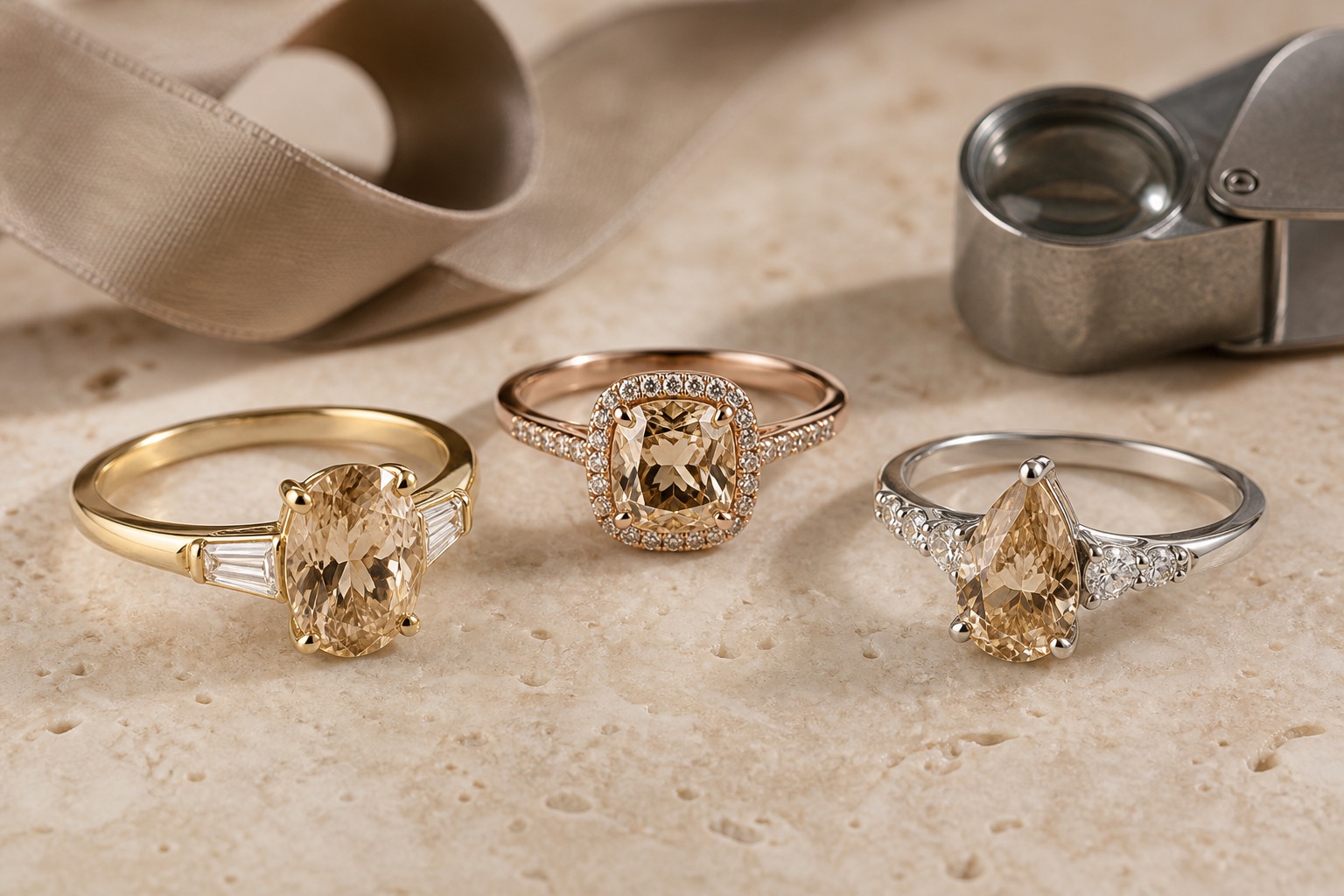
Champagne diamond is a trade description for a diamond with an attractive brown, golden or warm appearance; it is not a single universal laboratory grade. GIA grades light yellow or brown diamonds within D-to-Z and uses separate fancy-colour terminology beyond that range. UK buyers should verify natural or laboratory-grown origin, treatments, colour wording, report number and return terms in writing.
Key Takeaways
- Champagne is a retail description, not one universal laboratory colour grade
- GIA's D-to-Z scale can include light brown, while stronger colour may receive fancy-colour terminology
- Natural or laboratory-grown origin and any treatment must be disclosed clearly
- Metal colour and setting style change how warmth appears face-up
- Compare the actual stone in neutral light and verify its grading report before purchase
Champagne diamond is a trade description for a diamond with an attractive brown, golden or warm appearance; it is not a single universal laboratory grade. GIA grades light yellow or brown diamonds within D-to-Z and uses separate fancy-colour terminology beyond that range. UK buyers should verify natural or laboratory-grown origin, treatments, colour wording, report number and return terms in writing.
What does champagne mean?
Retailers use the word for a broad family of warm brown, honey and golden diamonds. Two stones sold under the same label may have different laboratory descriptions.
GIA’s standard D-to-Z scale runs from colourless D to light yellow, brown or grey at Z. Stronger yellow or brown beyond that range may use fancy-colour grading, where hue, tone and saturation become central.
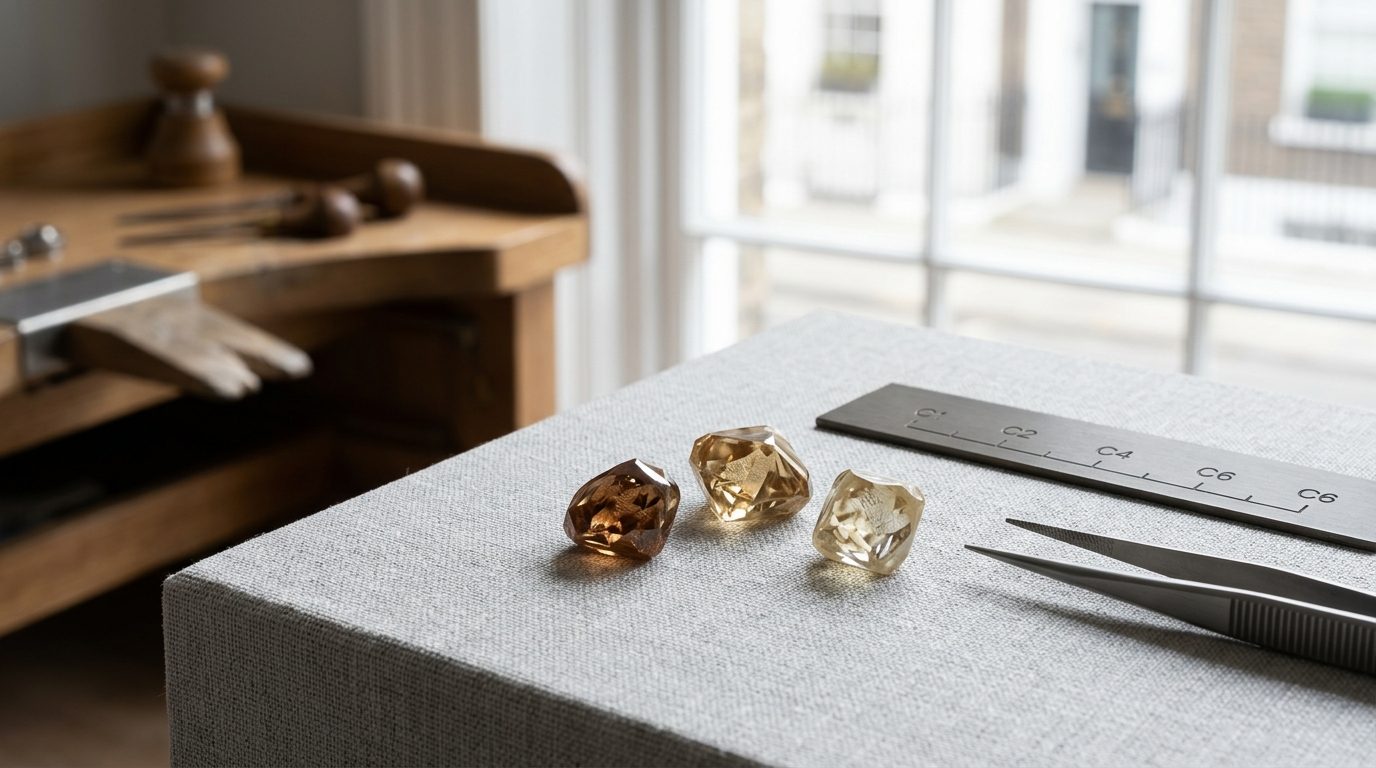
Ask for the laboratory’s exact colour description rather than relying on a shop name.
The six checks on the report
- Natural or laboratory-grown: this is separate from colour and must be clear.
- Treatment: ask whether colour or clarity has been altered.
- Colour wording: read the actual grade or fancy-colour description.
- Carat and measurements: spread depends on dimensions, not weight alone.
- Clarity: view inclusions at normal distance as well as magnified.
- Report number: verify it through the issuing laboratory’s official service.
The report describes the loose stone at grading. It does not guarantee setting workmanship, insurance value or resale price.
How metal changes the appearance
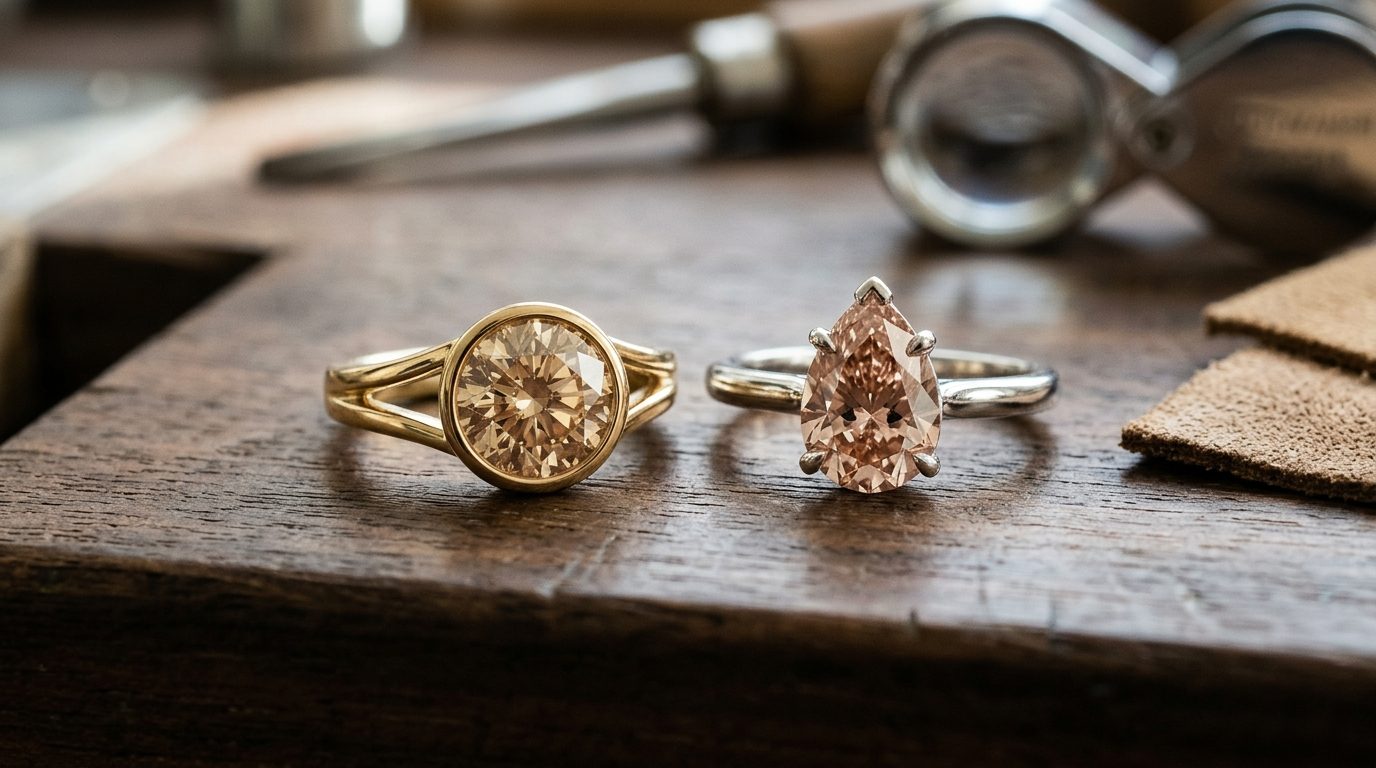
Yellow gold can blend with golden warmth. Rose gold may emphasise pink or copper undertones. Platinum and white gold create contrast and can make a brown stone look more distinct.
Mixed-metal settings offer another route: white claws can hold the centre stone while a yellow or rose band supplies warmth.
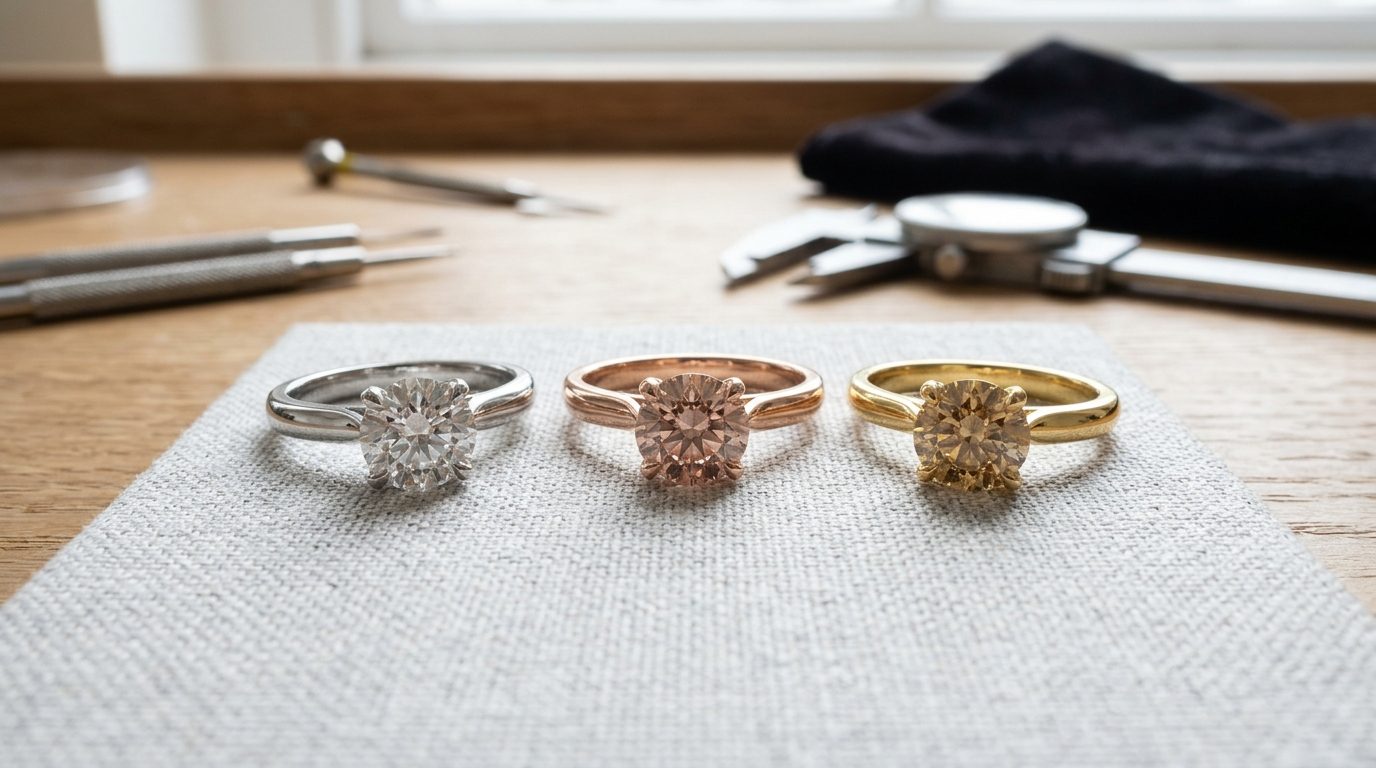
Compare complete rings, because claws, gallery and neighbouring stones affect face-up colour.
Read our mixed-metal engagement-ring guide before pairing the ring with a wedding band.
Natural, lab-grown and treated stones
A warm diamond can occur naturally, be created in a laboratory or receive treatment. These are different products with different disclosure and pricing considerations.
Do not accept vague phrases such as “real diamond” as an answer about origin. Ask for the words “natural diamond” or “laboratory-grown diamond” and treatment status on the invoice.
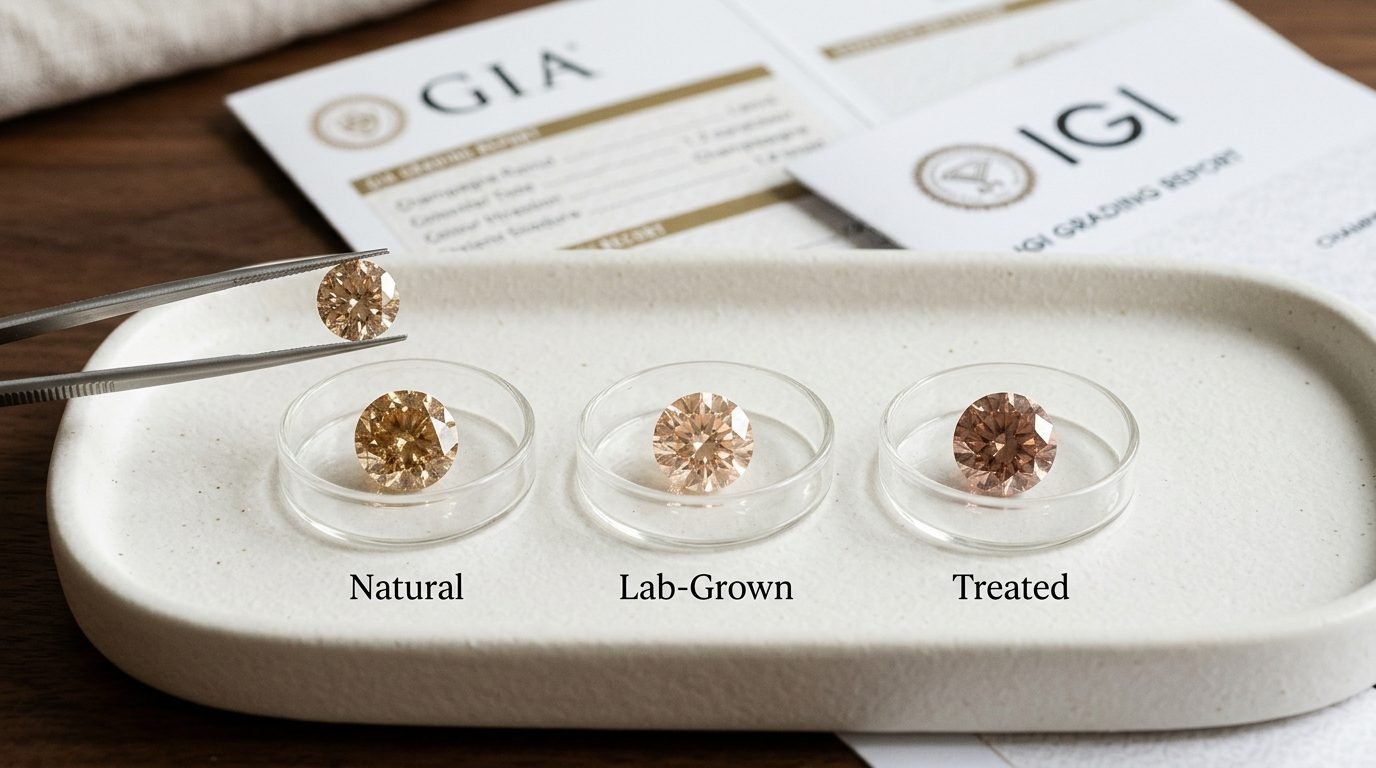
Laboratory-grown diamonds are diamonds, but their origin must be disclosed and priced transparently.
Cut and setting choices
Fancy-colour diamonds may be cut to strengthen face-up colour rather than chase the same light-return targets used for colourless round brilliants. Judge the actual balance of colour, brightness and dark areas.
Halos can increase visual size and create contrast. Bezel settings protect the edge but change the amount of visible metal. Claw settings expose more of the stone but need periodic inspection.
Antique-style cuts can complement warm colour, but age and cut style should be described accurately.
Price and comparison
There is no responsible single UK price range for “champagne diamonds”. Natural versus laboratory-grown origin, strength of colour, cut, clarity, carat, treatment and brand all matter.
Compare stones with the same origin and similar reports. Ask each jeweller for a line-by-line quotation covering the centre stone, side stones, metal, setting work, sizing, warranty and delivery.
Browse UK wedding jewellers and keep the written specification, invoice and grading report together.
Care and insurance
Diamond resists scratching well, but it can still chip at an exposed edge. Remove the ring for heavy impact, check claws regularly and use the cleaning method recommended for the complete setting.
Arrange appropriate insurance using an independent valuation where required. A retail receipt and an insurance replacement value serve different purposes.
Sources and related guides
Frequently asked questions
What is a champagne diamond?
It is a trade description for a diamond with a warm brown, golden or champagne-like appearance.
Is champagne an official GIA grade?
No. GIA uses D-to-Z grades for colorless to light yellow or brown diamonds and fancy-colour terms beyond that range.
Are champagne diamonds natural?
They can be natural or laboratory-grown, and colour can also be treated. The seller should disclose origin and treatment in writing.
Which metal suits a champagne diamond?
Yellow and rose gold emphasise warmth, while platinum or white gold can create stronger contrast.
Do champagne diamonds cost less?
Price varies with colour, cut, clarity, carat, origin, treatment, report and demand. Compare like-for-like written specifications.