Can I Wear My Old Wedding Dress to a Friend's Wedding?
Key Takeaways
- No hard etiquette rule bans wearing your own wedding dress to another couple's wedding
- The key test is whether the dress reads as bridal to other guests, not to you
- Full-length ivory or white gowns with a train almost always fail that test
- Dyeing, shortening, or adding bold colour can restyle most wedding dresses into acceptable guest outfits
- When in doubt, ask the bride directly before the day
The etiquette question is really about perception
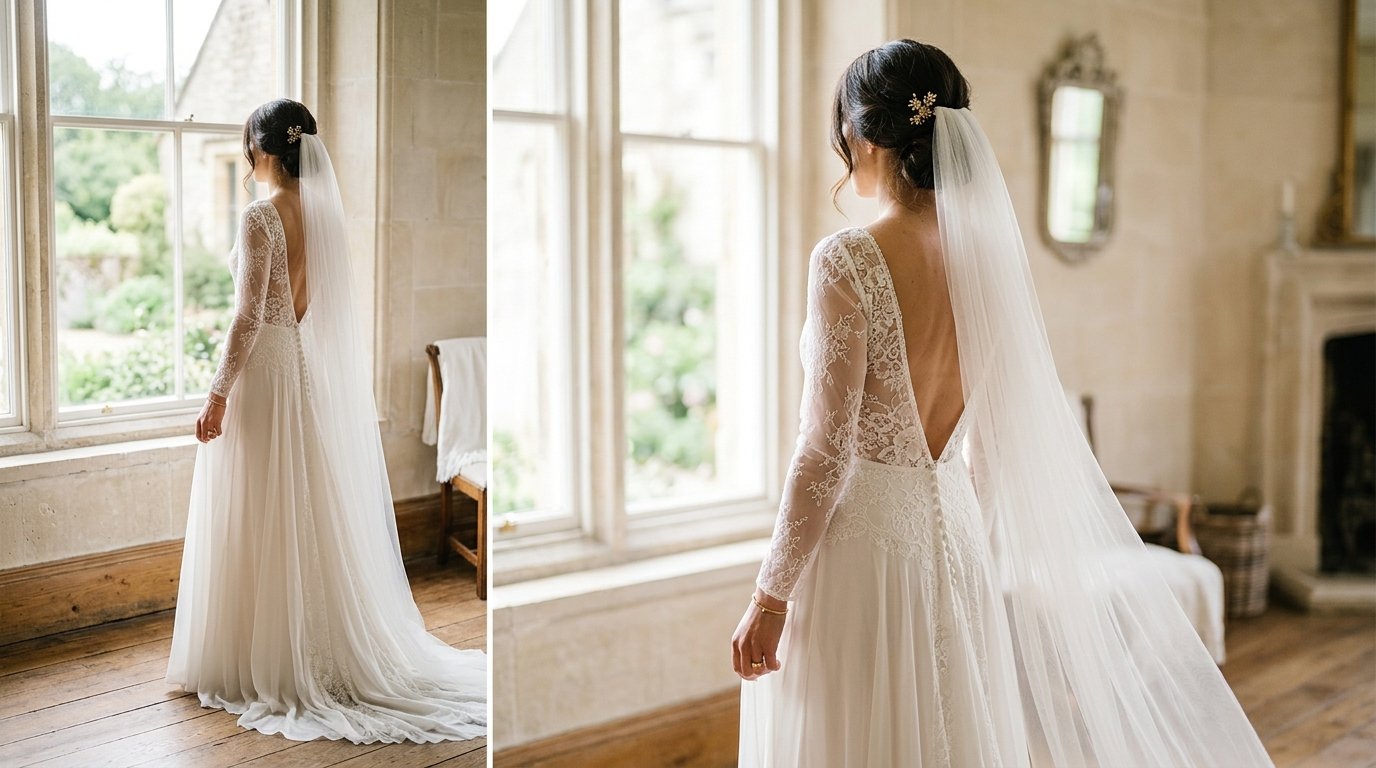
The rule against wearing white to a wedding is about not competing visually with the bride. A wedding dress raises that issue more directly, because it is specifically engineered to signal “bride.” That is its purpose. When you wear it as a guest, you are borrowing that signal in a context where it belongs to someone else.
This is why the question is about perception, not ownership. The dress is yours. You wore it on your wedding day. That history is real and it matters to you. But the other guests do not have that context. They see a woman in what appears to be a wedding gown. Some will wonder. Some will stare. A few will assume you are the bride.
The scenario with a restyled, dyed, or shortened dress produced far less discomfort. Only 8% of the same respondents said they would object to a former wedding dress that had been clearly altered.
What makes a dress “read as” a wedding dress
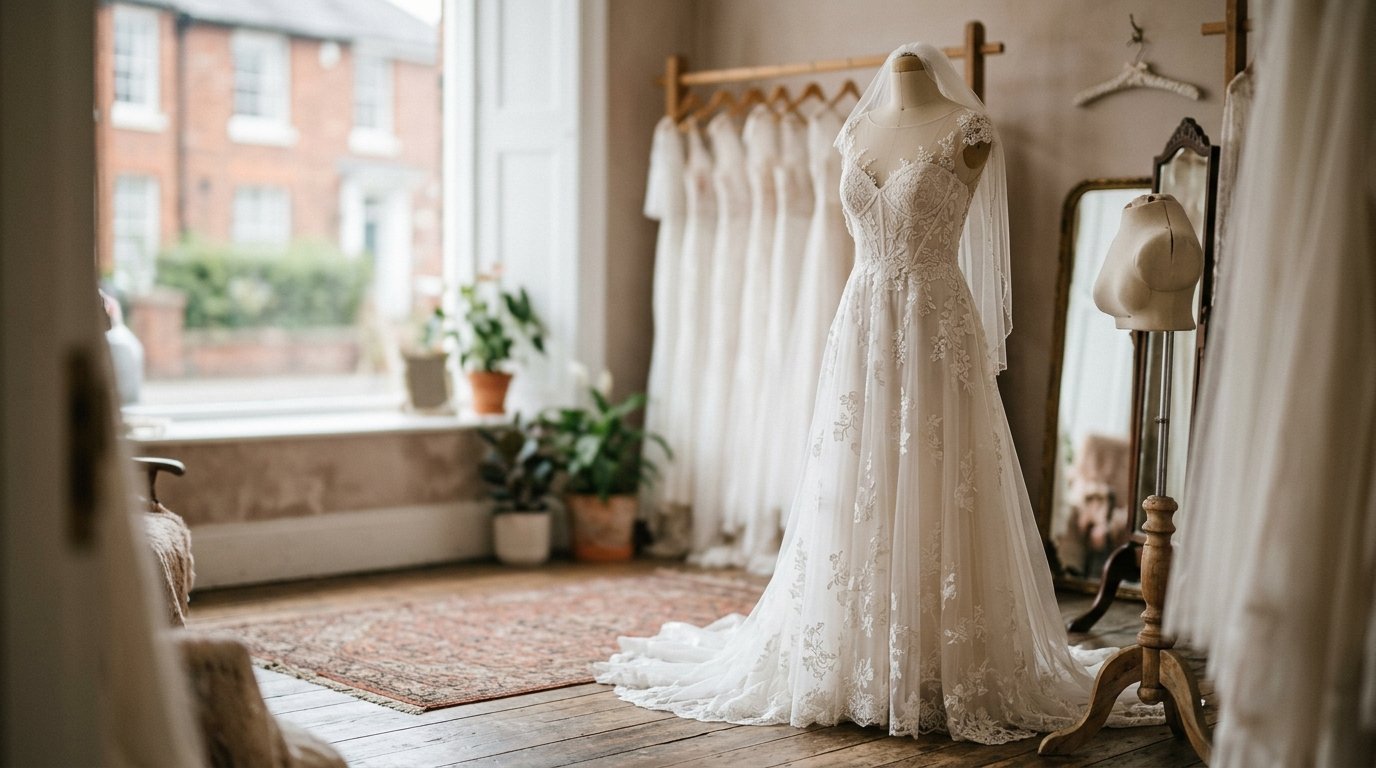
Four elements combine to create the bridal signal.
Length. Floor-length gowns in formal settings instantly read as significant. A tea-length or midi version of the same design reads differently.
Colour. White and ivory are the strongest signals. Champagne and blush are neutral enough that most guests do not register them as bridal, particularly at an evening reception.
Fabric. Heavy lace, tulle layers, and structured duchess satin are category-specific fabrics in most UK guests’ experience. Lightweight chiffon or crepe in the same silhouette reads less formally.
Structure. Boning, a cathedral train, and structured bodice panels signal “ceremony dress” in a way that a flowing slip dress does not, even at the same length.
If your wedding dress has two or more of these elements intact, it will read as bridal to most guests at most UK weddings.
When wearing your old wedding dress is probably fine
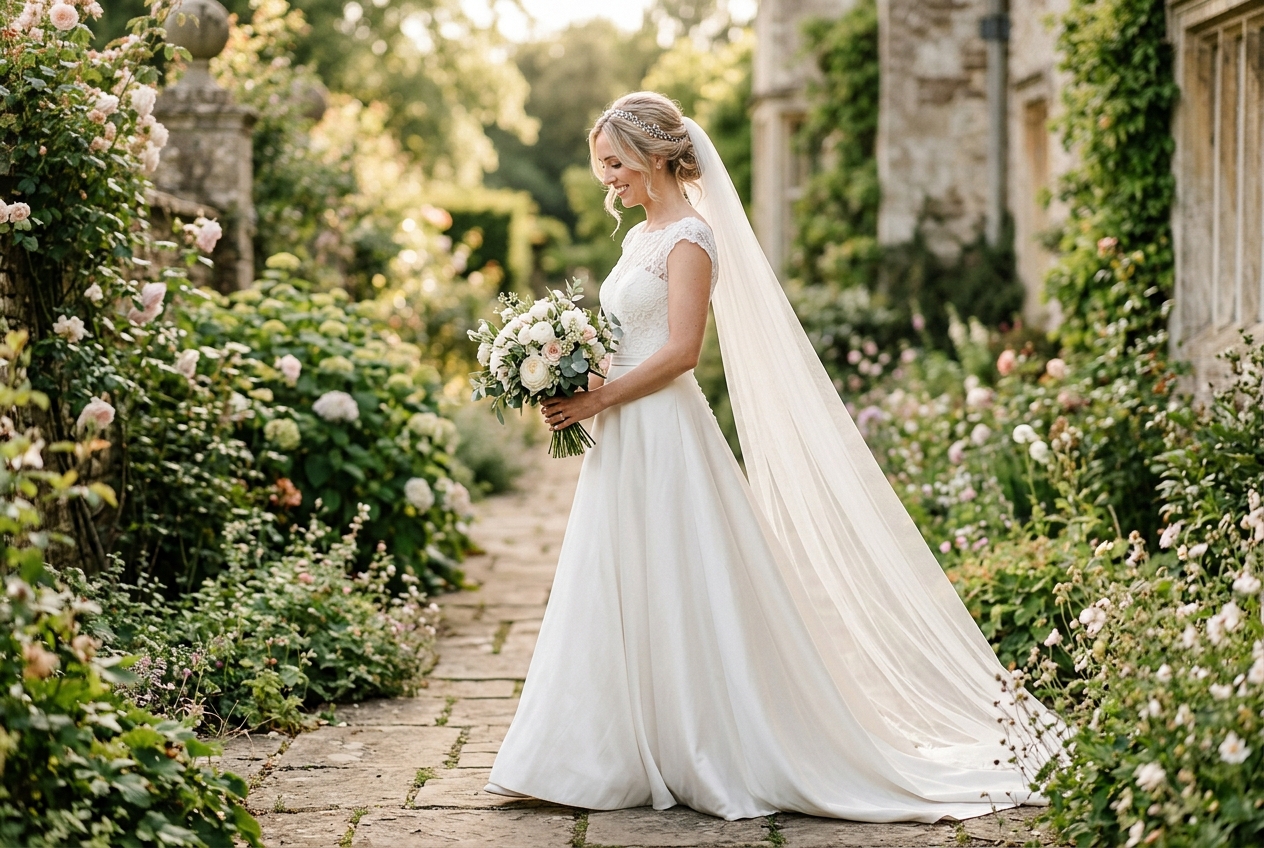
A few scenarios exist where wearing your old wedding dress to another wedding is unlikely to cause any issue.
The dress has been significantly restyled. Dyeing to a non-white tone, shortening to knee or midi length, removing the train, or pairing with a bold-coloured jacket transforms the visual message. The design remains, but the bridal signal is gone.
The dress is not obviously a wedding dress. Some wedding dresses are simple slip dresses or tailored suits in ivory or cream. If yours looks like elegant eveningwear, it is not going to register as bridal on a guest.
The bride has actively said it is fine. If you have asked directly and she has said yes without reservation, proceed. Take her at her word.
It is an informal or unconventional wedding. A festival-style wedding, a beach ceremony, or a deliberately eclectic event has different visual rules. A vintage wedding gown at a relaxed outdoor party reads very differently to the same gown at a formal church ceremony.
When it is probably not a good idea
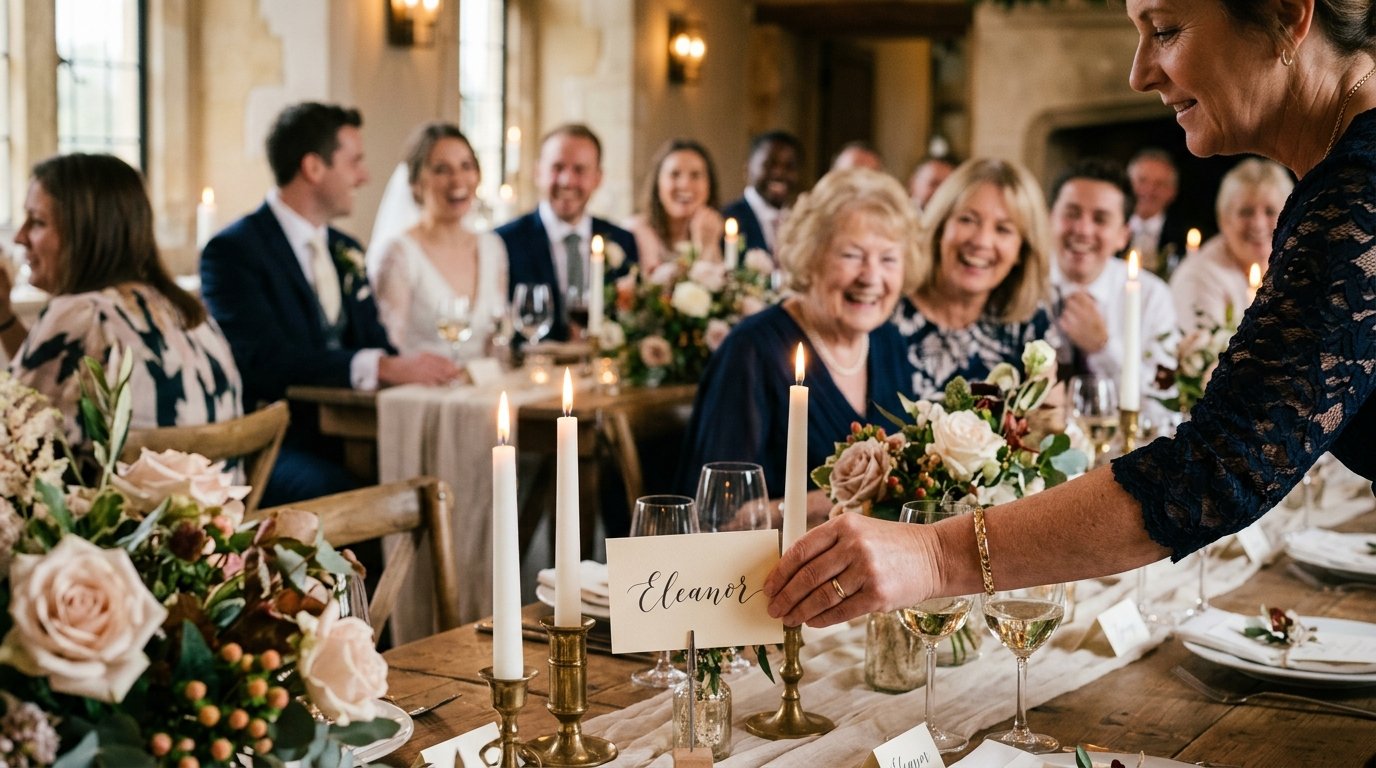
The dress is full-length, ivory or white, and structurally intact. If it has a train, visible boning, heavy lace, and a sweetheart neckline, it will read as bridal to nearly every guest.
You have not asked the bride. If you are planning to surprise her on the day with your choice, this is the wrong approach. The uncertainty of how she will react sits with her for the whole day.
The dress is more memorable than hers. A very elaborate designer gown worn by a guest can upstage a simpler bridal style. If your dress is more dramatic than the bride’s, it is the wrong choice.
The wedding is formal or traditional. Church ceremonies, black-tie receptions, and formal country house weddings are contexts where the bridal role is visually important. A guest in a wedding dress disrupts that.
How to restyle a wedding dress for a guest role
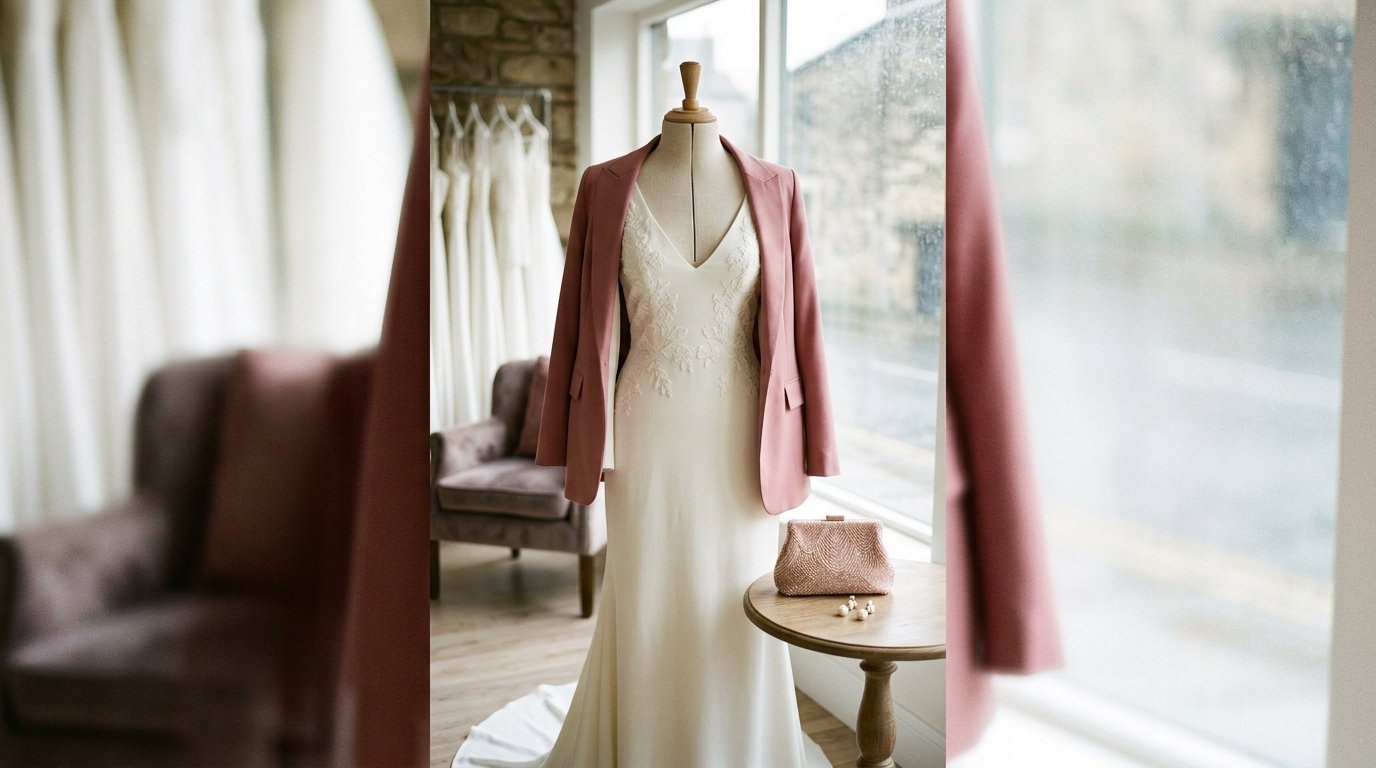
Dyeing. UK specialist dry cleaners offer fabric dyeing for wedding dresses starting at £80-£150 for a basic single-colour process. Champagne, soft gold, rose gold, and dusty lilac are popular choices that clearly signal “not the bride.” Ring ahead and ask for fabric swatches before committing.
Shortening. A floor-length gown shortened to mid-calf or knee length loses most of its bridal signal. A skilled seamstress charges £80-£200 for a hem alteration on a wedding dress, depending on the weight of the fabric.
Adding colour. A wide satin belt in a contrasting colour (navy, emerald, terracotta) breaks the monochrome bridal silhouette. A coloured blazer or tailored jacket does the same. You are using colour contrast to reframe the garment as eveningwear.
Removing the train. A detachable train is easy to leave off. A sewn-in train can be bustled or removed by a seamstress for £50-£90. Without the train, the floor-length silhouette reads less dramatically.
Swapping the shoes. White or ivory shoes reinforce the bridal look. Bold colour, cobalt, red, or gold, works against it. This is the cheapest single change you can make and has a noticeable effect on the overall impression.
Should you ask the bride first?
Yes, if the dress is obviously bridal. The downside of asking is low: the worst outcome is that she says she would prefer you wear something else, and you do.
The downside of not asking is higher. If she is uncomfortable on the day, she will not say anything. But you will see it, and you will carry that.
Keep the conversation light and short. “I was thinking of wearing my wedding dress for your wedding. Is that fine with you, or shall I wear something else?” That is the whole conversation. If she says it is fine, she means it. If she hesitates, read that.
Most brides, given the choice, say yes when the dress has been restyled. Most say a quiet no when asked about an intact full-length bridal gown. The asking gives both of you a chance to avoid an uncomfortable surprise.
For more on wedding guest dress decisions, see our guides to wearing white to a wedding, wearing black to a wedding, and the full wedding guest outfit guide. If you are the bride managing guest expectations, the wedding dress code guide covers how to communicate your preferences on the invitation. For broader planning context, the wedding planning timeline sets out when each decision typically needs to be made.
Frequently asked questions
Can I wear my old wedding dress to a friend's wedding?
There is no rule banning it outright. The practical test is whether the dress reads as bridal to other guests. A full-length ivory gown with a train almost certainly will. A restyled lace midi in a neutral tone may not.
Is it offensive to wear a wedding dress to someone else's wedding?
It depends on the dress and the bride. If the gown is visibly bridal, UK etiquette advisers say it draws unwanted attention. If you are genuinely unsure, ask the bride directly before the day.
What makes a dress read as a wedding dress at another wedding?
Length (floor-length), colour (white or ivory), fabric (heavy lace, tulle, satin), and structure (boning, a train). The more of these your dress has, the more likely it will register as bridal.
Can I dye my wedding dress to wear to another wedding?
Yes. Dyeing to champagne, blush, or soft gold starts at around £80 at specialist UK dry cleaners. Removing a train and adding a coloured sash can also change the overall effect.
Should I ask the bride if I can wear my old wedding dress?
Yes, if the dress is obviously bridal. Most brides appreciate being asked rather than discovering on the day. Keep it light: 'I was thinking of wearing my wedding dress. Is that fine, or shall I wear something else?'
What are the best ways to restyle a wedding dress for a guest role?
Add a bold coloured belt or sash to break the bridal look. Pair with a coloured blazer. Swap white shoes for a vibrant colour. Remove or bustle the train. Statement jewellery in a contrasting metal shifts the whole look.
Is wearing a wedding dress to a wedding the same as wearing white?
Not exactly, but the concerns overlap. Wearing a wedding dress raises the issue more sharply than wearing white, because the design signals 'bride' beyond just colour.