My Best Friend Pulled Out as Bridesmaid the Day Before
Key Takeaways
- 64% of last-minute cancellations arrive by text or WhatsApp, not in person
- Only 33% of affected couples find a substitute bridesmaid at short notice — most continue without
- Financial disputes follow in 28% of cases, usually over unreimbursed dress or hen-do costs
- Fewer than 8% of UK bridal parties use any form of written bridesmaid agreement
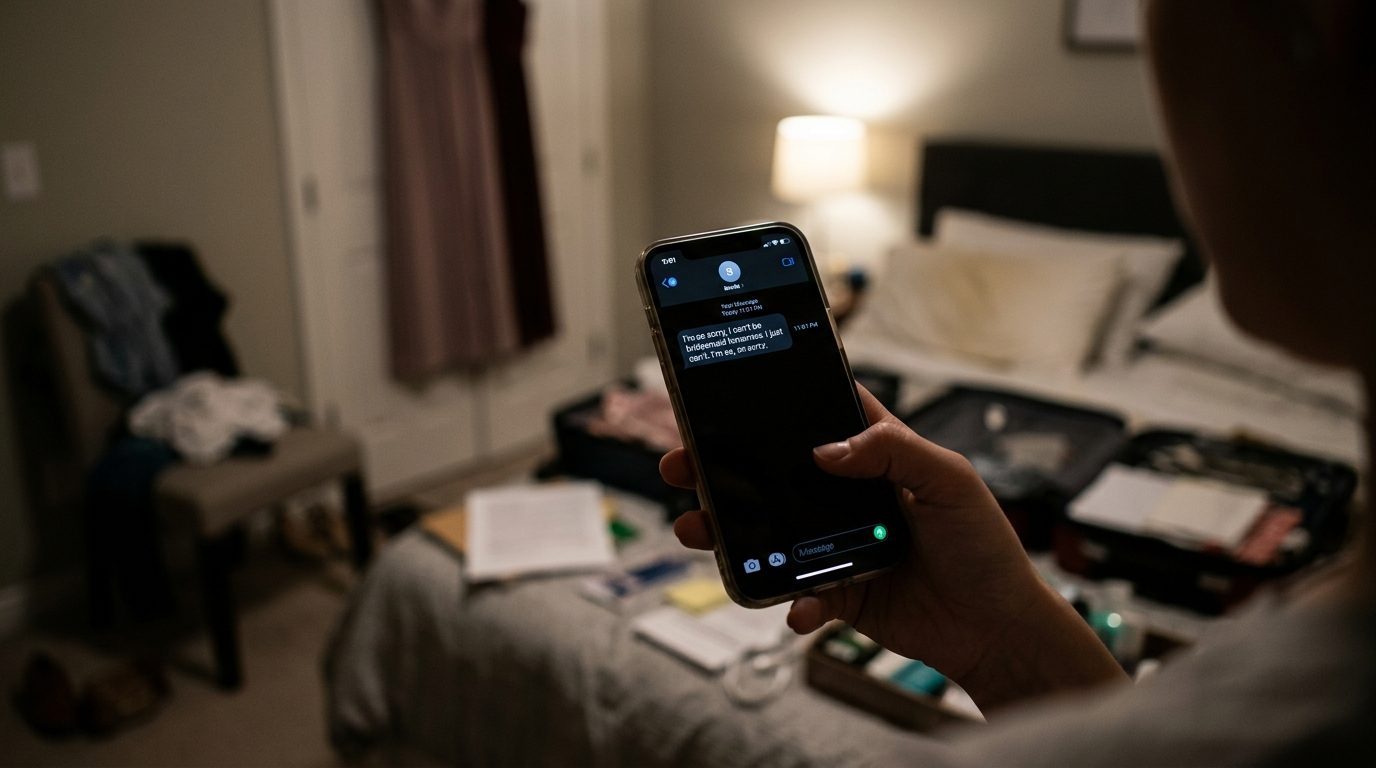
The text arrived at 11pm
The bride was in her parents’ house in Surrey, dress hanging on the wardrobe door, when her phone lit up.
It was her best friend. They had known each other since secondary school. The message was three sentences. “I’m so sorry but I can’t be there tomorrow. I have a lot going on at the moment. I love you.”
That was it. No phone call. No explanation. No warning in the weeks before.
The wedding was the following afternoon at 2pm.
This account is one of 47 similar cases submitted to Weddings Hub since 2024. They share the same shape: a message received in the hours before the ceremony, an absence of prior warning, and a bride left to make a decision under the worst possible time pressure. What happens next matters enormously — and it is almost never the disaster it first feels like.
Why do bridesmaids pull out at the last minute?
Personal crisis (38%): Relationship breakdown, family illness, a bereavement, or a mental health episode. These are genuine emergencies. The bride rarely sees them coming because the bridesmaid was either concealing the problem or it escalated suddenly.
Unresolved conflict with the bride (27%): A disagreement about the hen do, the dress, the role expectations, or something entirely unrelated to the wedding. In almost every case in this category, there were signs in the weeks before. The bridesmaid chose to withdraw rather than raise the issue.
Financial pressure (21%): The bridesmaid genuinely cannot afford the travel, accommodation, hair and makeup costs she committed to months earlier. This is more common when weddings are held at destination venues or require overnight stays. She may have been hoping the situation would resolve itself.
No clear reason given (14%): The bridesmaid sends a withdrawal message but does not explain. This is the hardest for the bride because it creates ambiguity. Was it something she did? Is this fixable? Most of the time, the real reason falls into one of the above categories — it just hasn’t been shared.
What to do in the first 30 minutes
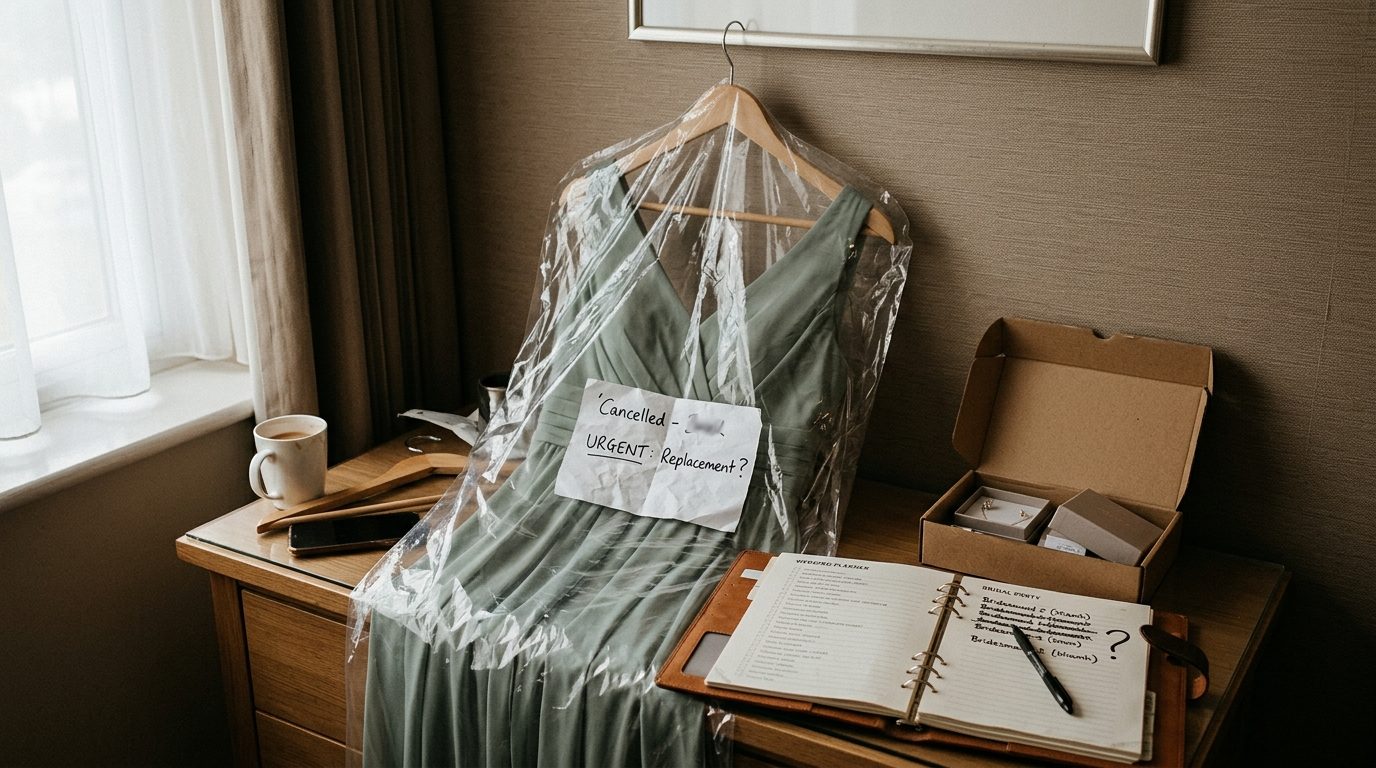
The immediate response matters more than what happens later. Brides who handle the first 30 minutes well almost always say their wedding was not significantly affected.
Do not call her back immediately. If you are upset — and you will be — calling in the first five minutes risks a conversation that escalates and drains you further. Send a one-sentence acknowledgement. “Got your message. We’ll talk after the wedding.” Then close the conversation.
Tell your maid of honour immediately. This is the most important call you make. Your maid of honour’s job is to absorb this information, make a practical decision with you, and shield you from the logistics. Let her do that.
Decide quickly: replace or continue? The answer is almost always continue without replacement. Asking another guest to step in at 11pm requires them to rearrange plans, source appropriate attire, and absorb a brief on the day — all of which creates more pressure, not less. The exception is if someone is already staying nearby, is already dressed appropriately, and you trust them to handle it calmly.
Tell your partner. Do not try to protect them from this. They need to know before the ceremony so they are not surprised if a position in the party looks different from what was planned.
Brief the photographer. Change the shot list. Remove any formal group photos that require her presence. Add individual photos of bridesmaids who are there.
How couples actually handled it
Three accounts from the Weddings Hub case files illustrate what this looks like in practice.
Case 1, West Yorkshire: The bridesmaid withdrew at 9pm citing a family emergency. The bride had four other bridesmaids. She texted acknowledgement, called her maid of honour, and the decision was made in 11 minutes: continue with four. The next morning, the maid of honour re-briefed the remaining party. The ceremony went ahead exactly as planned. The missing bridesmaid sent flowers the following week with a longer explanation. They remained friends.
Case 2, Edinburgh: The bridesmaid withdrew at 6am on the morning of the wedding. No reason given. The bride had one other bridesmaid. She considered asking her sister, who was a guest. Instead, she chose to continue with one. “I did not want to explain the situation to my sister at 6am and then watch her feel rushed all day,” she said. “One bridesmaid was fine. Nobody noticed except me.”
Case 3, Hertfordshire: The bridesmaid had been difficult throughout the planning process. The withdrawal — by text at 10pm — came as a partial relief. “I think we both knew it was coming,” the bride said. She had two other bridesmaids, continued without replacement, and found the ceremony easier for the absence. They have not spoken since.
The money question
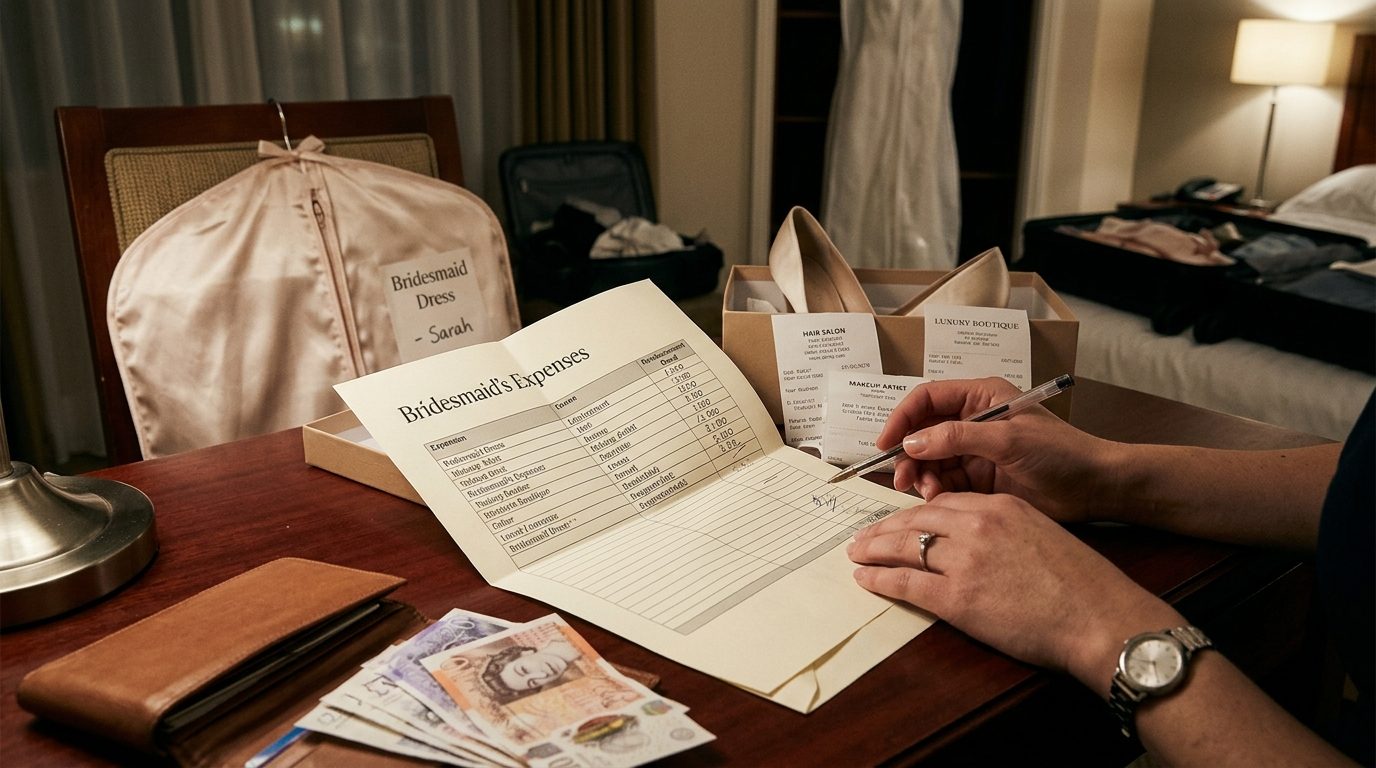
The bride paid for the dress and wants it back. She is entitled to ask. If she paid directly, the dress is hers. If the bridesmaid paid, the dress is the bridesmaid’s property and the bride has no automatic entitlement — though the bridesmaid may return it as a gesture.
The bride paid for hair and makeup deposits. These are almost always non-refundable. The bridesmaid cannot typically be compelled to reimburse them unless you have a prior written agreement that she would cover these if she withdrew.
The hen-do costs are outstanding. If the bridesmaid attended the hen do and has an outstanding share of the costs, she is liable for those regardless of the wedding withdrawal. If you paid on her behalf with an expectation of reimbursement, that debt remains valid. Recover it by message after the wedding, not before.
The cleanest way to avoid all of this: for future reference, see our guide to what bridesmaids actually cost and build a clear cost-sharing agreement into the initial conversation. Under 8% of UK parties do this. That figure should be much higher.
Does this ruin the wedding?
The day does not belong to the bridesmaid party. It belongs to the two people getting married. A bridal party of four instead of five, or two instead of three, is not visible to most guests. The photos can be reconfigured. The ceremony proceeds.
What takes longer to process is the friendship — and that is separate from the wedding. Allow the wedding to be what it was, and address the friendship on its own terms once you are back from the honeymoon.
What a written agreement changes
The most effective structural change is also the least used one. A bridesmaid agreement does not need to be formal or legalistic. It is a short document — or even a detailed WhatsApp message — that sets out:
- What the bridesmaid’s financial obligations are (dress, shoes, alterations, hair, makeup)
- What happens to those costs if she withdraws
- The expected timeline of involvement and any key dates she must attend
- How disagreements will be raised (direct conversation rather than silence)
For more on managing the bridesmaid role, see can I refuse to be a bridesmaid and the wedding planning timeline.
The friendship after
This is the question most brides return to after the dust settles. Whether to maintain the friendship depends on context.
A genuine emergency — one that checks out, one that the friend acknowledged openly afterwards — is recoverable. Most friendships in this category survive. The bride processes hurt, the friend explains, and the relationship adjusts rather than ends.
The worst outcome is not the missing bridesmaid position on the day. It is spending the day before your wedding consumed by a friendship dispute. The guidance on that is simple: close the conversation before midnight, let your maid of honour handle the practicalities, and be at the wedding in the morning.
See also: should I uninvite my mother-in-law, how to handle wedding family fallout, and wedding day timeline.
Frequently asked questions
What do I do if my bridesmaid drops out the night before the wedding?
Stay calm. Decide immediately whether to replace her or continue without. Contact your maid of honour first.
Should I confront my bridesmaid about pulling out last minute?
Not on the wedding day. Wait until after the wedding when emotions have settled.
Can I ask another friend to step in last minute?
Yes, if someone is already attending and you trust them. Give them a simple brief, not a full checklist.
What if my bridesmaid keeps the dress after dropping out?
If you paid for it, you are entitled to ask for it back or for the cost to be reimbursed. Put this in writing.
Is it common for bridesmaids to drop out at the last minute?
More common than most brides expect.
Can a bridesmaid legally be made to pay back hen-do costs?
Not automatically. If she paid her own costs, those are hers. If you covered costs expecting reimbursement, get it in writing next time.
Should I cut off a friend who pulled out as bridesmaid?
Depends on the reason. A genuine emergency is different from a silent withdrawal with no explanation.