UK Beach Weddings: Venues, Costs and Logistics
Key Takeaways
- You cannot legally marry on a UK beach — the ceremony must happen in a licensed structure nearby
- Cornwall, Devon, Dorset, Pembrokeshire, and the Norfolk coast offer the best coastal wedding options
- June to August is the only realistic window — and even then, have a wet weather plan
- Wind is the biggest enemy: candles, table decorations, veils, and hairstyles all suffer
- Coastal venue packages cost £6,000-£15,000 depending on location and exclusivity
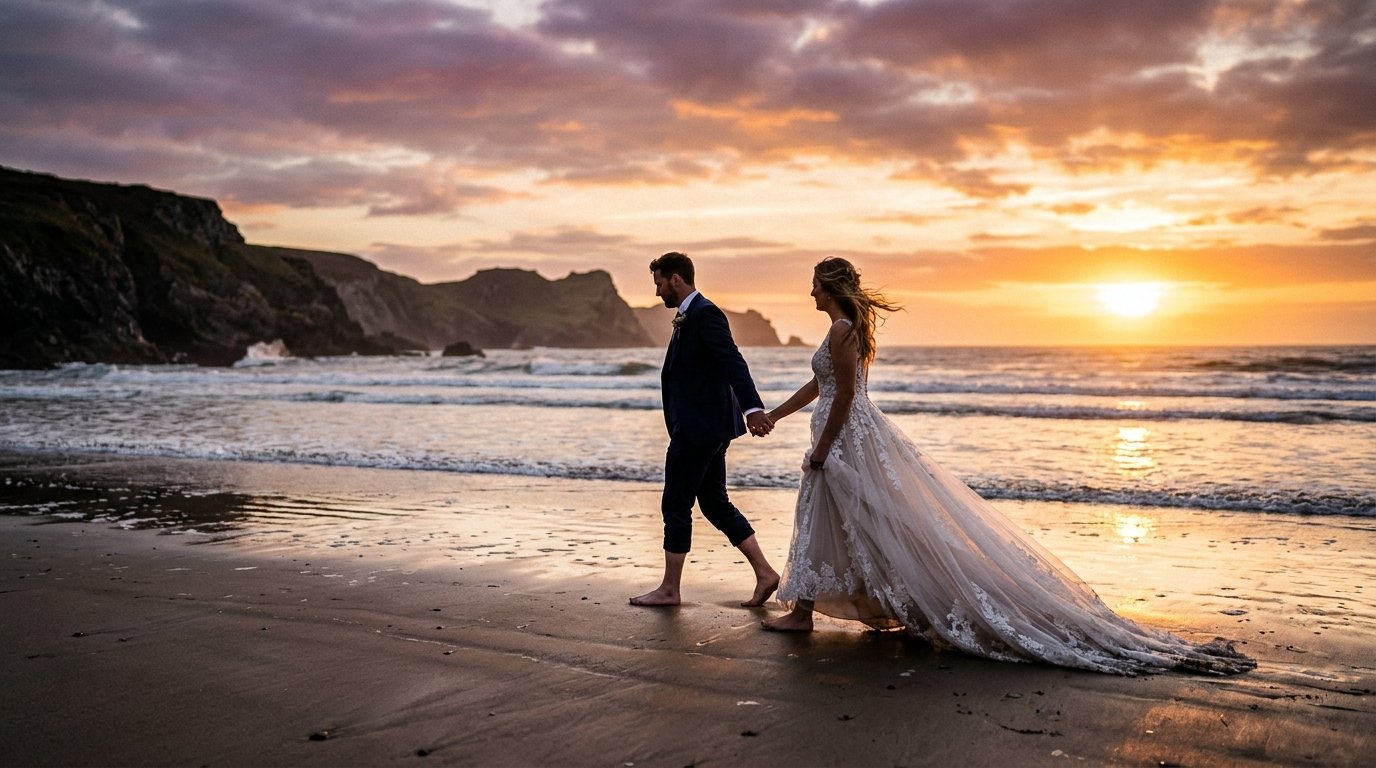
A beach wedding in the UK sounds romantic until you picture Aunt Margaret with sand in her shoes and a gust of wind removing the table centrepieces. But done right — the right coast, the right venue, the right month — a British coastal wedding can be genuinely stunning.
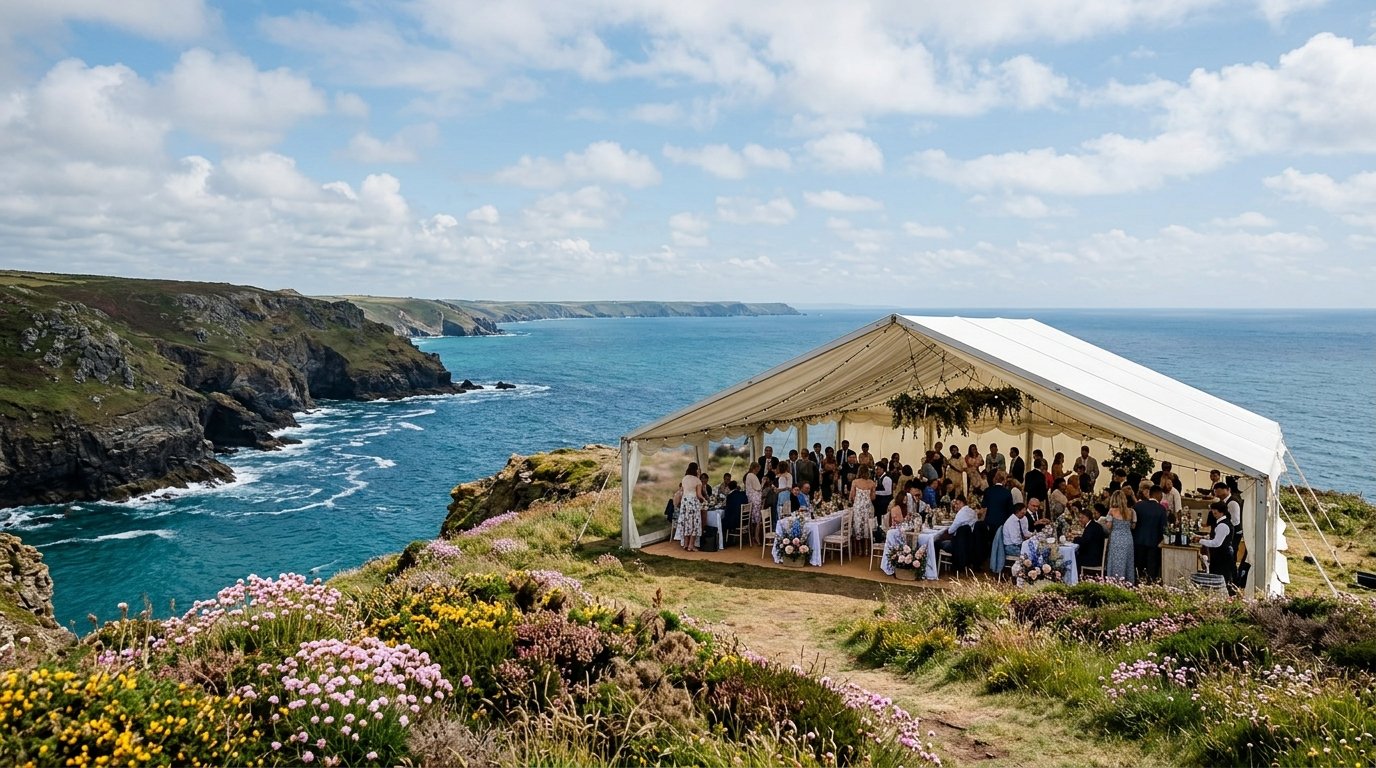
The catch: you cannot legally marry on a beach in England, Wales, or Northern Ireland. The ceremony must happen inside a licensed structure. But that structure can be a cliff-top hotel with floor-to-ceiling sea views, a beachside restaurant, or a marquee on the headland.
This guide covers where to look, what the law actually says, how to manage the weather, and what a UK beach wedding realistically costs.
The legal reality
English and Welsh law requires civil ceremonies to take place in a permanently licensed building or approved premises. This rules out a ceremony on the sand, in a temporary gazebo, or under a driftwood arch.
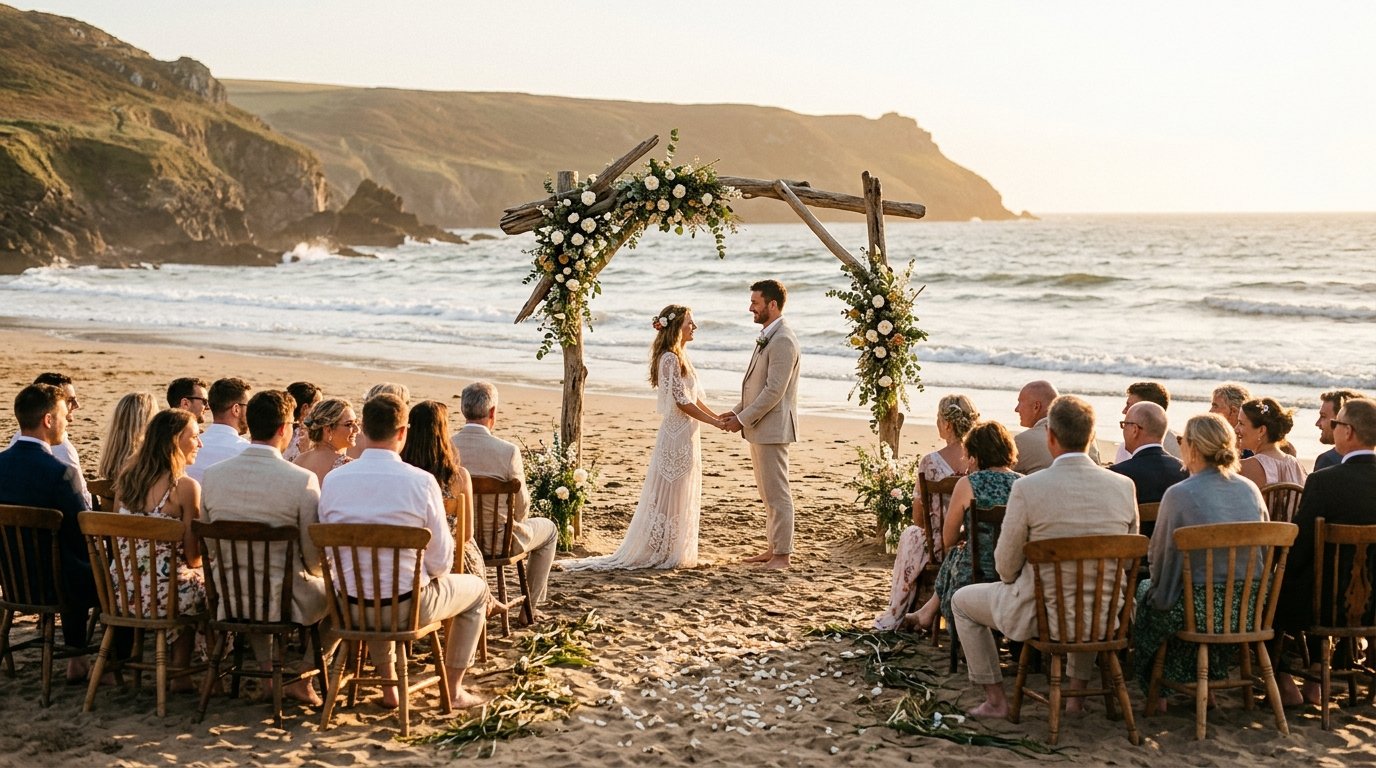
Scotland is different. Scottish law allows ceremonies almost anywhere — including beaches — as long as an authorised celebrant conducts it. If a barefoot ceremony on the actual sand matters to you, Scotland is the legal route.
What works in England and Wales:
| Option | How It Works |
|---|---|
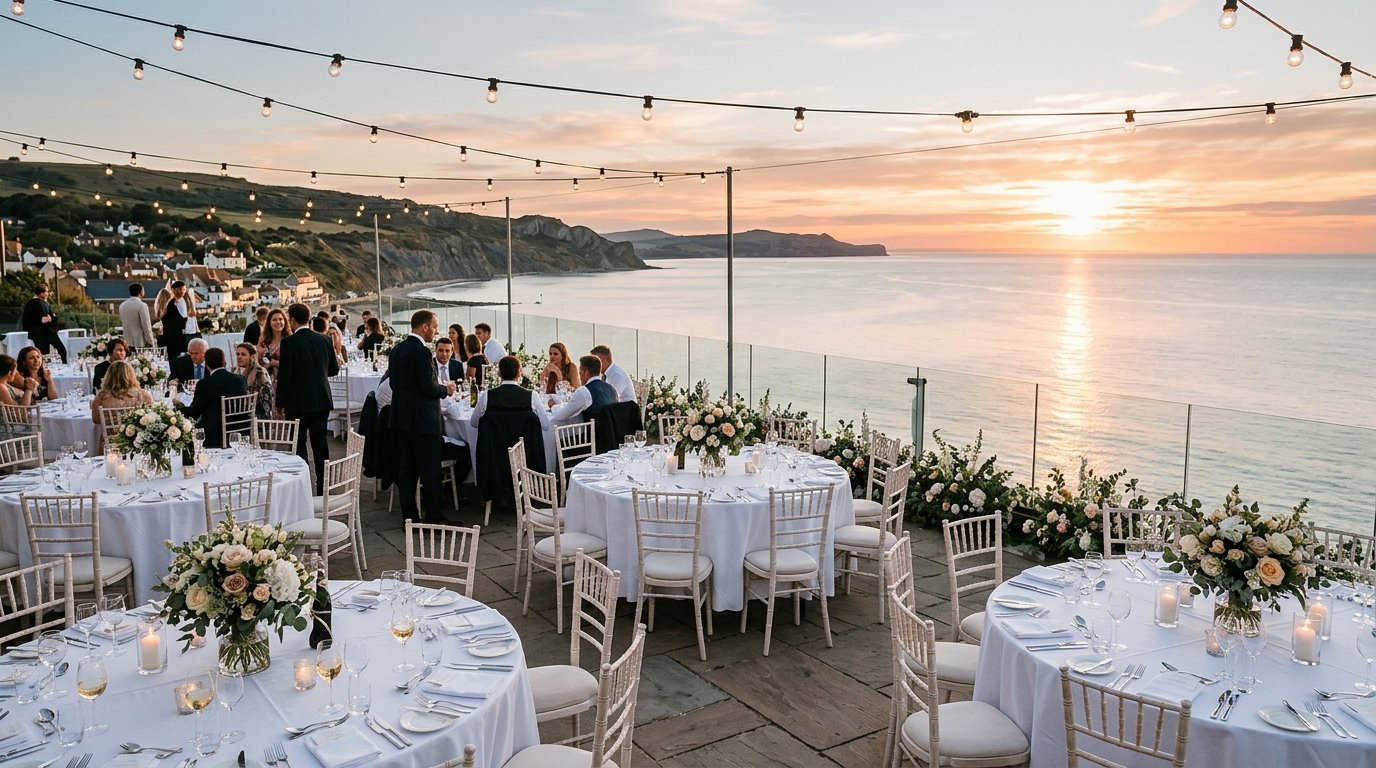
| Cliff-top hotel ceremony | Legal ceremony inside, drinks and photos on the beach |
| Licensed beach club | Ceremony and reception in the same beachside venue |
| Marquee on licensed land | Some venues have permanent marquees with wedding licences |
| Register office + beach celebration | Quick legal ceremony elsewhere, symbolic ceremony on the beach |
| Church near the coast | Church ceremony, then walk to the beach for the reception |
The most popular approach: hold the legal ceremony in a licensed coastal venue (hotel, restaurant, or function room), then move outside for photographs and the reception.
Where in the UK
Not all coastline is equal. Some stretches have a cluster of licensed wedding venues. Others have beautiful beaches but nowhere to legally marry within 20 miles.
Cornwall
The most popular coastal wedding destination in the UK. Golden sand, turquoise water, and a concentration of venues from St Ives to Falmouth. The north coast (Newquay, Padstow, St Ives) faces the Atlantic and gets more dramatic waves and sunsets. The south coast (Falmouth, Fowey, Mevagissey) is more sheltered.
Best for: dramatic scenery, wide venue choice, photographer-friendly light.
Watch out for: peak season traffic (A30 gridlock in August), limited accommodation in small villages, and premium pricing in July-August.
Devon
North Devon (Woolacombe, Croyde) offers surfing beaches with a laid-back feel. South Devon (Salcombe, Dartmouth, Burgh Island) is more refined. The English Riviera (Torquay, Paignton) has classic seaside architecture.
Best for: variety of coastline styles, good road links from the Midlands and London, quieter than Cornwall.
Watch out for: North Devon has fewer licensed venues. South Devon can feel exclusive (and expensive).
Dorset — the Jurassic Coast
Dramatic cliffs, fossil-strewn beaches, and a World Heritage coastline. Bournemouth has large hotel venues. Lulworth Cove and Durdle Door provide stunning backdrops but limited licensed options nearby.
Best for: dramatic geological scenery, closer to London and the South East, year-round appeal.
Watch out for: many of the most photogenic spots have no licensed venues within walking distance.
Pembrokeshire
South Wales’s answer to Cornwall — dramatic headlands, empty beaches, and a fraction of the crowds. Tenby, St David’s, and Saundersfoot all have licensed coastal venues.
Best for: quieter beaches, lower costs than the English south-west, dramatic scenery.
Watch out for: further travel for guests from the South East or Midlands, limited accommodation in remote areas.
Norfolk
Wide, flat, sandy beaches along the north Norfolk coast (Holkham, Wells-next-the-Sea, Brancaster). A different character from the south-west — marshland, big skies, and nature reserves rather than cliffs and surf.
Best for: wide open beaches, birdwatching atmosphere, quieter and more affordable, accessible from the East Midlands and London.
Watch out for: can feel bleak in poor weather, fewer venue options than Cornwall or Devon.
Scottish islands
Skye, Mull, Harris, and the Hebrides offer remote, wild beaches with white sand and clear water. Legal ceremonies on the beach are possible under Scottish law. The scenery rivals the Caribbean — until the rain arrives.
Best for: adventurous couples, intimate weddings (under 40 guests), dramatic photography, legal beach ceremonies.
Watch out for: unpredictable weather, expensive travel for guests, limited accommodation, midges in summer.
Weather: the honest conversation
No guide to UK beach weddings should pretend the weather is reliable. It is not. But it is manageable.
Average coastal conditions by month
| Month | Avg Temp | Sunshine (hrs/day) | Rain Days | Verdict |
|---|---|---|---|---|
| May | 13-15°C | 6-7 | 9-10 | Risky but cheaper |
| June | 16-18°C | 7-8 | 8-9 | Good odds, still cool evenings |
| July | 18-21°C | 7-8 | 7-8 | Best overall |
| August | 18-20°C | 6-7 | 8-9 | Warm but busiest |
| September | 15-17°C | 5-6 | 9-10 | Golden light, higher risk |
The golden hour rule: coastal light at 6-8pm in July and August is extraordinary. If your ceremony is at 2pm, schedule formal photographs for the late afternoon and casual beach photos at golden hour.
Wind management
Wind is the biggest practical problem. It is worse than rain — rain stops, wind persists.
Things that fail in wind:
- Candles in glass holders (even hurricane lamps)
- Tall centrepieces and top-heavy flower arrangements
- Veils, fascinators, and elaborate hairstyles
- Lightweight stationery (menus, place cards)
- Order of service sheets
- PA systems and live music outdoors
Solutions:
- Use low, heavy centrepieces (glass bowls, stone, driftwood)
- Pin stationery to the table or use weighted holders
- Bride considers a cathedral-length veil only if the ceremony is indoors
- Hire a PA system with windshields on the microphones
- Position outdoor seating with the wind at guests’ backs
Guest logistics
Getting there
Coastal venues are, by definition, at the end of the road. Consider:
- Parking: most beach venues have limited car parks. If you expect 80+ guests, check capacity and arrange overflow parking or shuttle buses.
- Public transport: coastal train stations are often 10-20 miles from the venue. Arrange taxis or a minibus from the station.
- Accommodation: small coastal villages may not have enough hotel rooms for your guest list. Check availability early — summer weekends sell out months ahead.
Footwear and access
Sand and formal shoes do not mix. Communicate this in advance:
- Suggest flat shoes or sandals on the invitation
- If there is a beach walk between ceremony and reception, warn guests
- Check wheelchair and pushchair access — many beach paths are steep or stepped
- Provide flip-flops in a basket for guests who ignore the advice
Tidal planning
If you are photographing on the beach or holding a drinks reception near the water, check the tide times for your date. High tide on a narrow beach can leave you with no sand at all. Low tide on a tidal estuary can reveal mud. The UK Hydrographic Office provides free tide predictions.
Photography at the coast
Coastal light is a photographer’s dream — but only if you time it right.
Best conditions:
- Overcast days produce soft, even light (no squinting)
- Golden hour (1-2 hours before sunset) creates warm, dramatic portraits
- Sunrise shoots (if you are willing) give you an empty beach
Worst conditions:
- Midday sun creates harsh shadows, especially on cliffs
- Sea mist can roll in fast and flatten everything
- Rain on a clifftop is horizontal, not vertical
Tip: book a photographer who has shot at the coast before. They will know which direction the light falls, where the shelter is, and how to use the wind creatively.
Costs: what a UK beach wedding actually costs
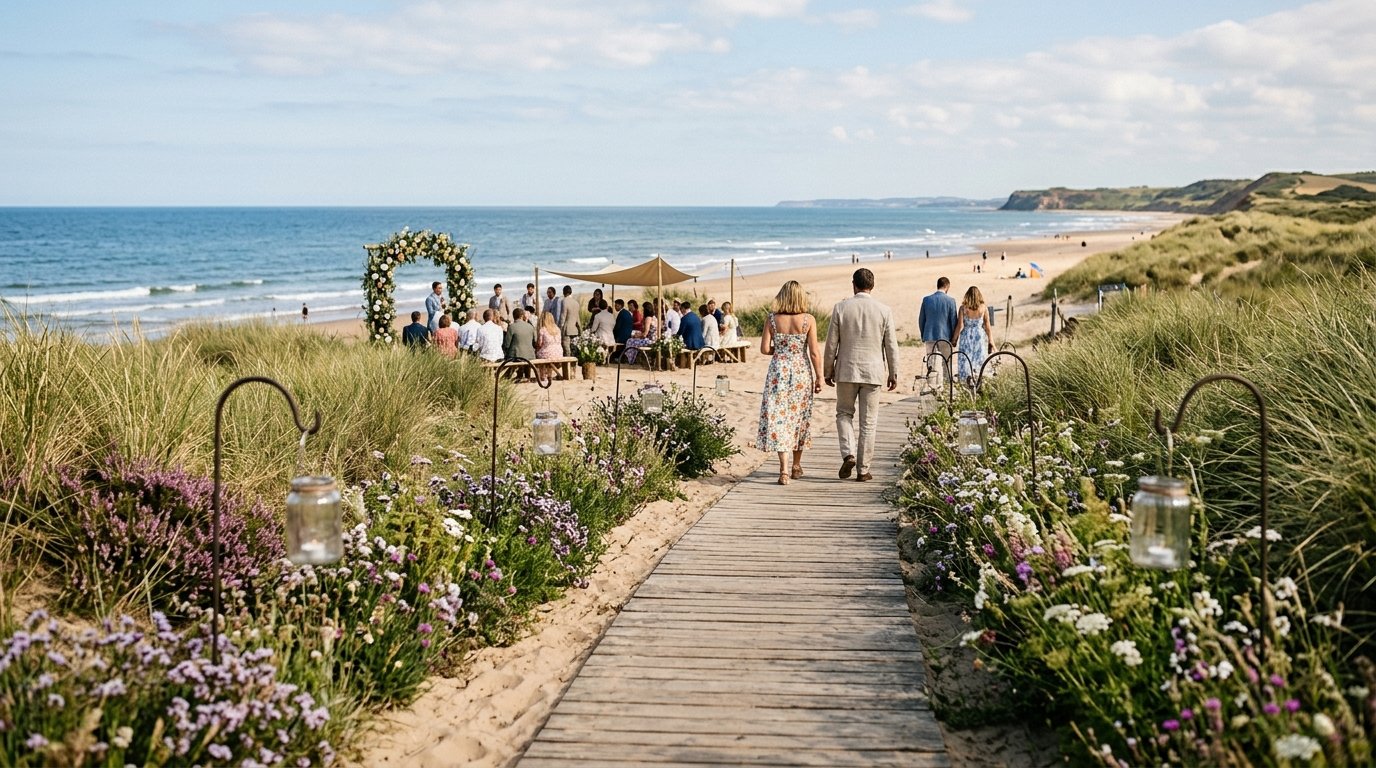
Coastal weddings are not automatically cheaper. The venue might cost less, but transport, accommodation, and weather contingency add up.
| Item | Budget Range |
|---|---|
| Coastal venue hire | £2,000-£8,000 |
| Catering (80 guests) | £4,000-£8,000 |
| Marquee or outdoor shelter | £1,500-£4,000 |
| Accommodation (wedding party) | £1,000-£3,000 |
| Transport (shuttle/taxis) | £500-£1,200 |
| Photographer (coastal specialist) | £1,800-£3,000 |
| Flowers (wind-resistant) | £600-£1,200 |
| DJ/musician | £400-£1,000 |
| Weather contingency | £500-£2,000 |
| Total | £12,300-£31,400 |
The wide range reflects the difference between a seaside restaurant reception for 50 and an exclusive-use cliff-top venue with a marquee for 120.
Where to save
- Off-peak dates: May, June, and September coastal venues cost 20-30% less than July-August
- Midweek: Thursday and Friday coastal weddings are significantly cheaper
- Smaller guest lists: coastal venues suit intimate weddings — fewer guests means lower catering and transport costs
- Self-catering cottages: rent a large holiday cottage for the wedding party instead of booking hotel rooms
How to plan for bad weather
Do not hope for the best. Plan for the worst.
Tier 1 — the ideal: ceremony inside, drinks on the terrace, dinner in the restaurant, beach photographs at golden hour.
Tier 2 — light rain: ceremony inside, drinks inside with sea views, beach photographs during a dry window.
Tier 3 — all-day rain: everything moves inside. The sea views through the windows still create the atmosphere. Beach photographs happen another day (some couples book a “trash the dress” shoot the following morning).
The venues with the best wet weather plans are those with large windows facing the sea. You still get the view, the light, and the atmosphere — just from behind glass.
A word on themed beach weddings
A coastal setting does not mean you need a beach theme. Starfish place card holders, shell centrepieces, and anchor motifs can tip quickly into cliche.
The beach is already the theme. Let the venue and location do the work. Neutral colours, natural textures (linen, driftwood, greenery), and simple decoration complement the setting without competing with it.
If you do want a theme, lean nautical or maritime rather than tropical. The UK coast has its own character — embrace it rather than trying to recreate the Maldives.
The verdict
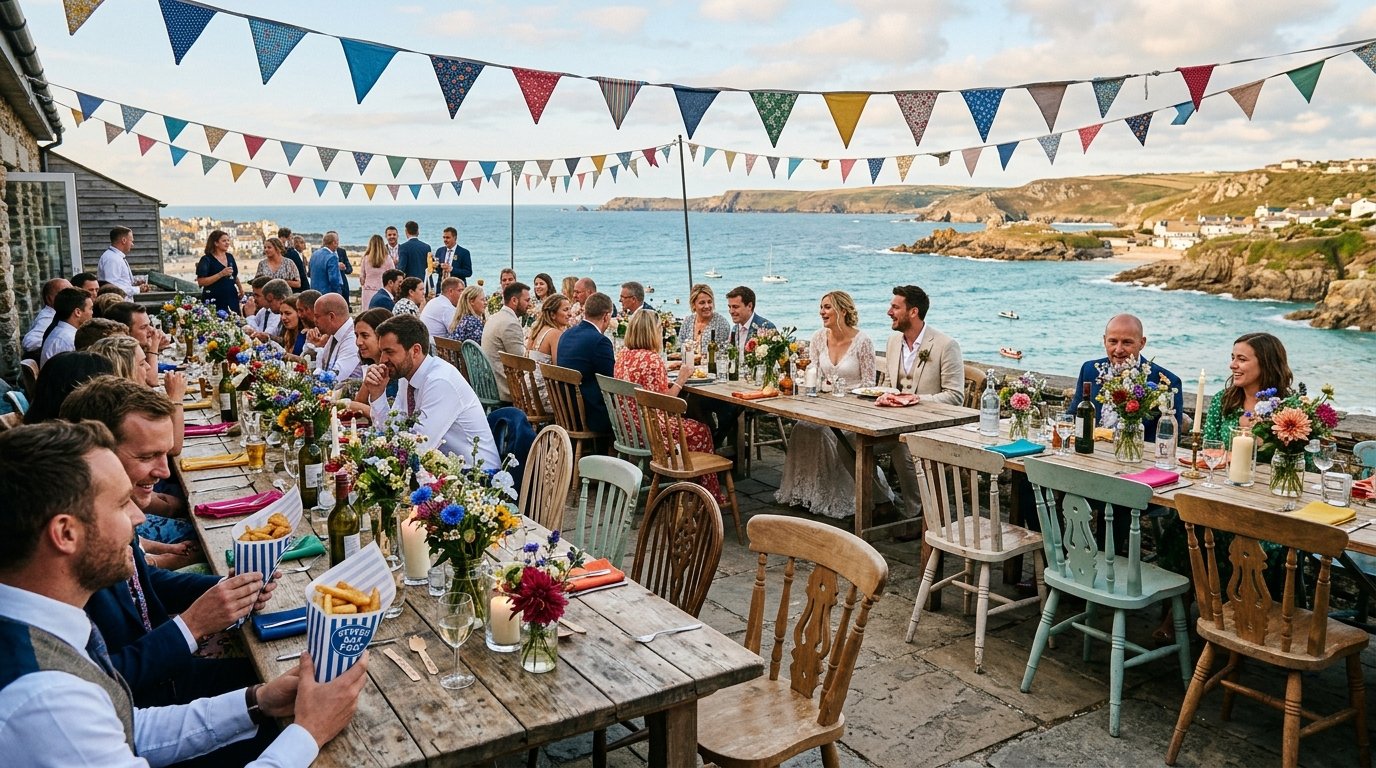
A UK beach wedding is entirely possible — but it is not a lazy choice. It requires more planning than a standard hotel or barn wedding: weather contingency, transport logistics, tidal awareness, and wind management all need attention.
The reward is a wedding that looks and feels different from 90% of the weddings your guests will attend. Coastal light, the sound of waves, salt air, and a sunset over the sea create an atmosphere that no amount of indoor decoration can replicate.
Start with the right questions for any venue, understand the true cost of a UK wedding so you can budget properly, and if bad weather is your biggest fear, consider seasonal wedding planning to pick the month with the best odds.
For couples on a tighter budget, a seaside pub or beach restaurant can deliver the coastal atmosphere without the price tag of an exclusive-use venue. See our budget wedding ideas for more ways to cut costs without losing what matters.
Frequently asked questions
Can you get married on a beach in the UK?
Not on the sand itself — UK law requires civil ceremonies in a permanently licensed structure. However, many coastal hotels, cliff-top venues, beach clubs, and seafront marquees hold wedding licences. You get the beach views and atmosphere without breaking the law. Some couples hold a legal ceremony indoors then stage a symbolic ceremony on the beach.
Where are the best beach wedding locations in the UK?
Cornwall and Devon offer the widest choice of licensed coastal venues. The Jurassic Coast in Dorset has dramatic cliff-top options. Pembrokeshire in South Wales combines rugged coastline with quieter beaches. Norfolk offers wide sandy beaches with a different character. The Scottish islands (Skye, Mull, Harris) provide remote, dramatic scenery.
How much does a beach wedding cost in the UK?
A coastal wedding costs £6,000-£15,000 for the venue and catering. Cliff-top hotels and exclusive-use beach venues sit at the top. Seaside restaurants and beach clubs with smaller capacities start from £3,000-£6,000. Add £1,000-£3,000 for weather contingency (marquee hire or indoor backup space).
What month is best for a UK beach wedding?
July offers the best odds for dry, warm weather. June and August are close seconds. May and September are riskier but cheaper. Average UK coastal temperatures in July reach 18-21C, with around 7 hours of sunshine per day. But coastal weather changes fast — always have a Plan B.
What are the biggest problems with beach weddings?
Wind is the number one issue — it affects hair, candles, table settings, and sound. Sand is the number two: guests in heels struggle, wheelchair access is limited, and sand gets everywhere. Guest logistics are third — coastal venues often have limited parking and poor public transport links.