Basque-Waist Wedding Dresses: 2026 UK Guide
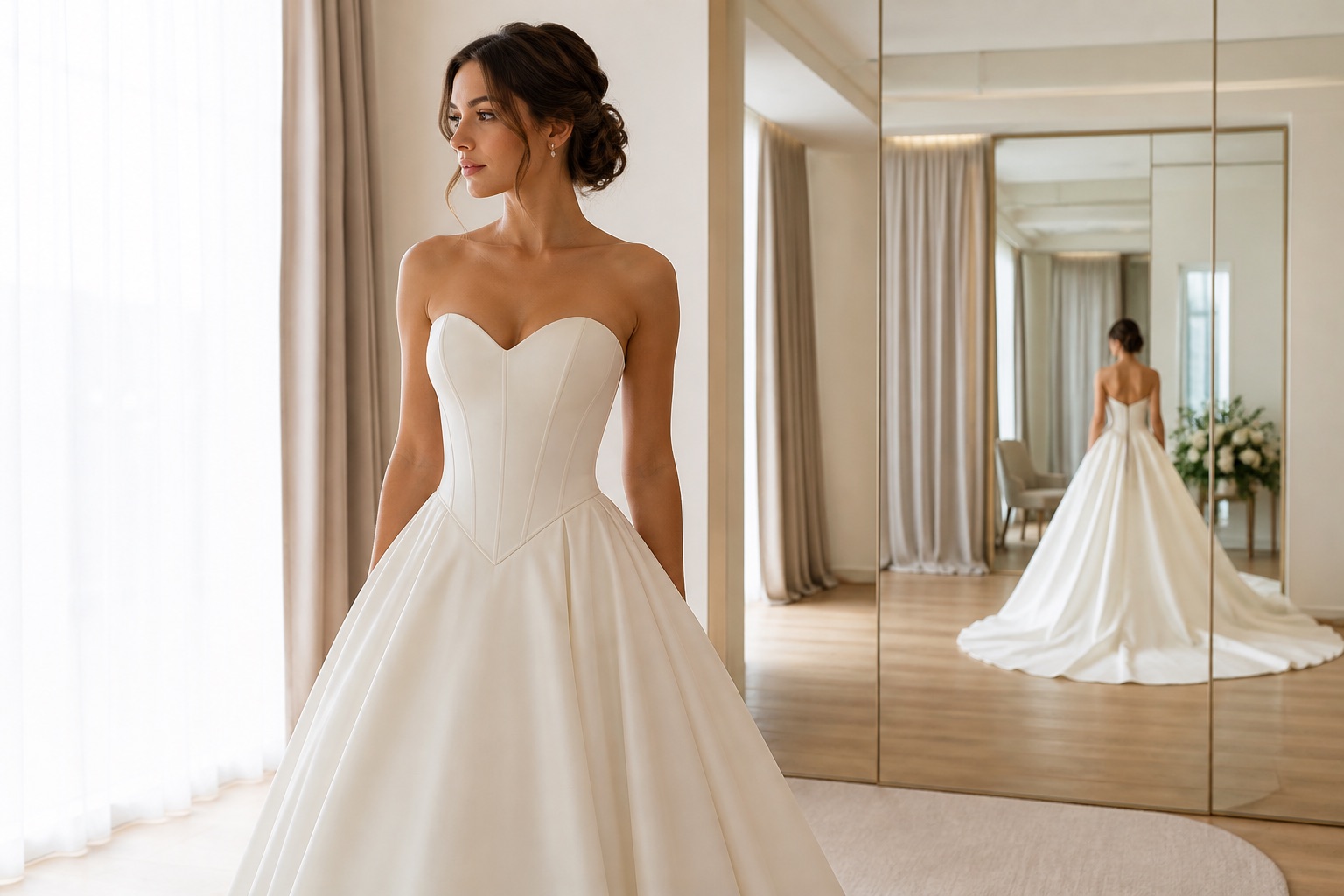
A basque-waist wedding dress has a fitted bodice that extends below the natural waist into a V or U shape before meeting the skirt. Hitched reported a 333% rise in searches in its 2026 trend report. The shape can appear on ballgowns or slimmer dresses, but comfort depends on boning, torso length, seam placement and skilled alterations.
Key Takeaways
- A basque waist extends the bodice below the natural waist in a V or U shape
- Hitched reported 333% year-on-year search growth for the style
- A basque waist describes seam shape, while corsetry describes internal structure
- Torso length and seam placement matter more than body-shape rules
- Sit, walk, breathe and eat during a fitting before choosing a structured gown
A basque-waist wedding dress has a fitted bodice that extends below the natural waist into a V or U shape before meeting the skirt. Hitched reported a 333% rise in searches in its 2026 trend report. The shape can appear on ballgowns or slimmer dresses, but comfort depends on boning, torso length, seam placement and skilled alterations.
Basque waist, drop waist and corset compared
| Term | What it describes | Main fitting question |
|---|---|---|
| Basque waist | A bodice seam extending into a V or U below the natural waist | Does the point sit correctly on the torso? |
| Drop waist | A waist seam lowered more evenly towards the hips | Can the wearer sit and walk without pulling? |
| Corset | Internal or visible structure using panels, boning or lacing | Is support secure without restricting breathing? |
A dress can combine all three, but the terms are not interchangeable.
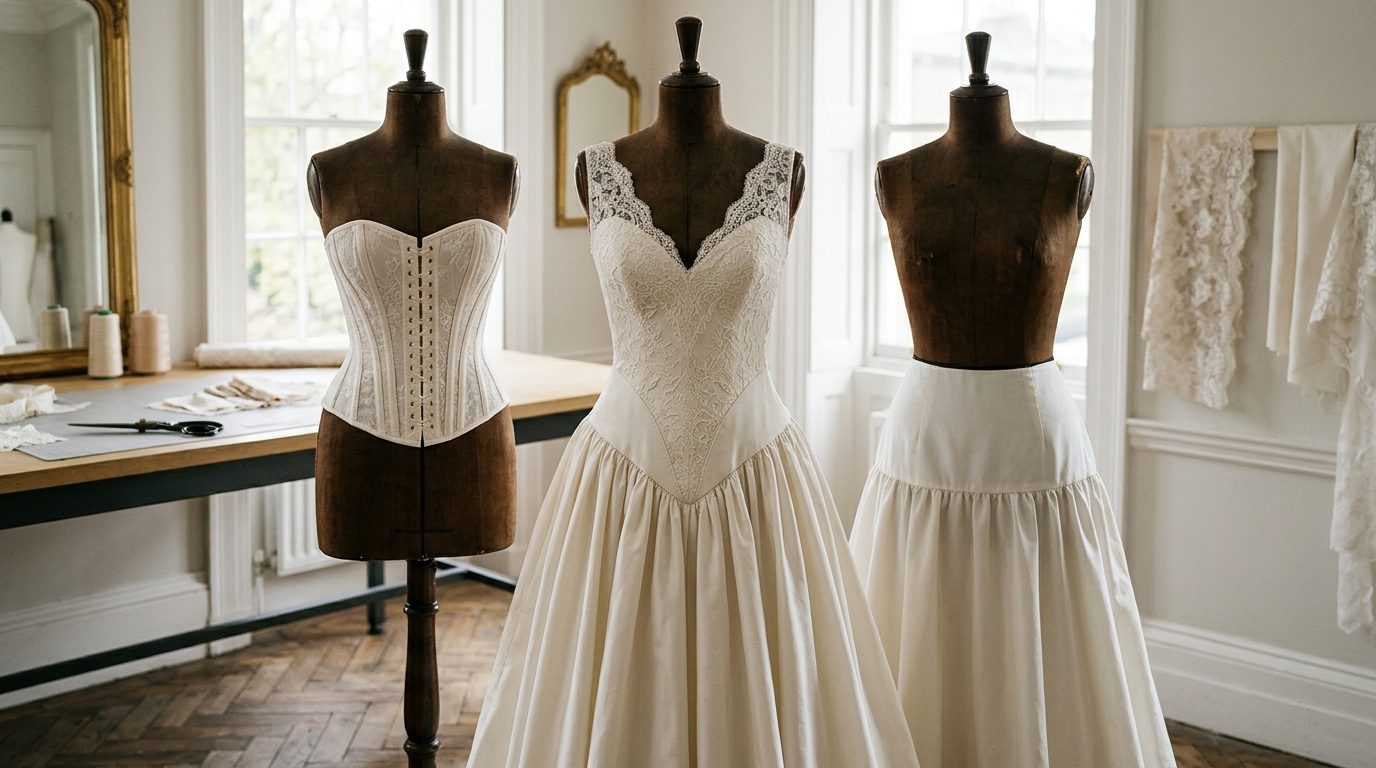
Ask the fitter to explain the visible seam and the internal support separately.
Why the shape looks distinctive
The lowered point creates a longer uninterrupted line through the bodice. A full skirt then appears to open below that point rather than directly at the natural waist.
This is a construction effect, not a promise to change anyone’s body. Ignore rigid “best for” rules. The useful question is whether this particular pattern sits well on your torso and remains comfortable through the day.
Five checks in the fitting room
1. Find the actual seam point
Stand naturally and look from the side as well as the front. If the point sits too high or low, ask whether the pattern can be ordered or altered for your torso length.
2. Sit for several minutes
Lowered boning and seams can press into the lap or hip crease. Sit on a chair similar in height to the venue’s dining chairs.
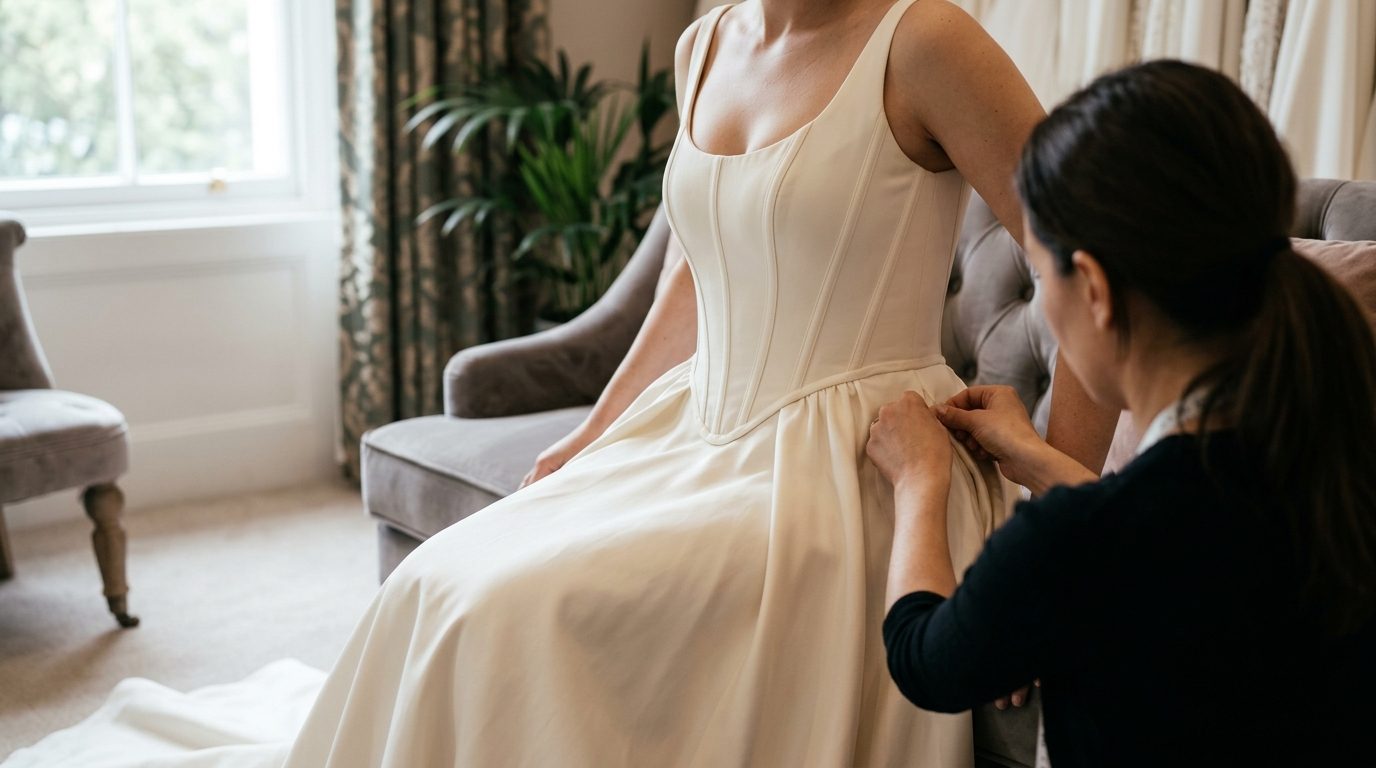
A full-length mirror reveals pulling at the back and side seams.
3. Take full breaths
Support should not require shallow breathing. Speak, laugh and raise both arms. The gown needs to work during vows, dinner and dancing.
4. Check the skirt weight
A heavy ballgown skirt places load on the bodice. Ask where that weight is supported and whether an internal waist stay is used.
5. Test the planned underwear
Bring the bra, shapewear or cups you expect to use. The back height and internal support may make additional underwear unnecessary.
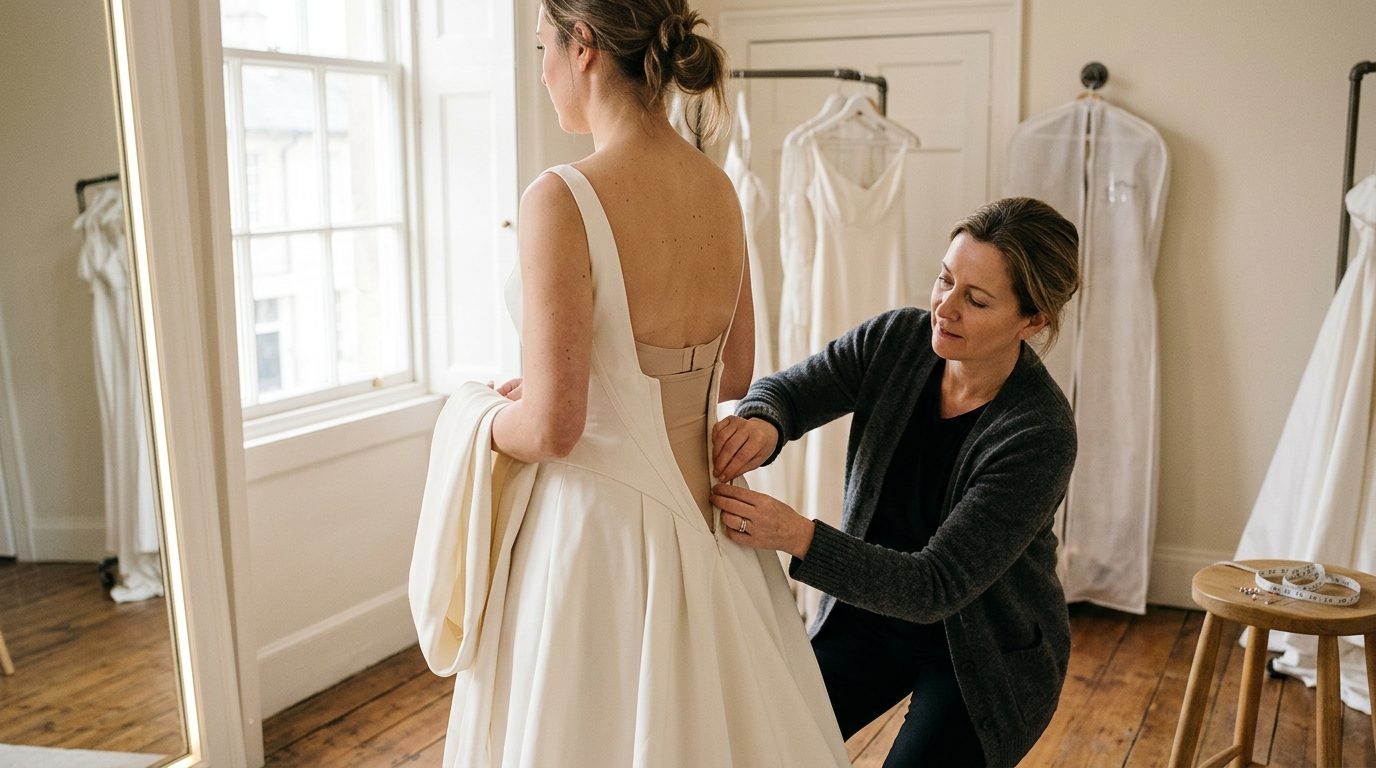
A full skirt can begin below the basque point, but the internal structure must carry it comfortably.
Alteration questions to ask before ordering
- Can the bodice length be changed in the ordered size?
- Is the boning stitched into separate channels?
- Can the waist point move without disturbing lace or beading?
- How will the back closure be altered?
- Is hemming complicated by a shaped or decorated skirt?
- What is the final safe date for major adjustments?
Get the likely alteration range in writing. A boutique assistant may identify the issue, but a qualified alterations specialist should confirm complex work.
Browse UK bridal boutiques and ask whether alterations are in-house, referred or entirely separate from the dress purchase.
Fabric and styling choices
Plain satin makes the seam shape very clear. Lace can soften it, while visible corset panels make the construction a stronger feature.
Long gloves, a clean veil or simple earrings keep attention on the bodice. If the neckline, waist, sleeves and veil are all highly detailed, the silhouette may become difficult to read.
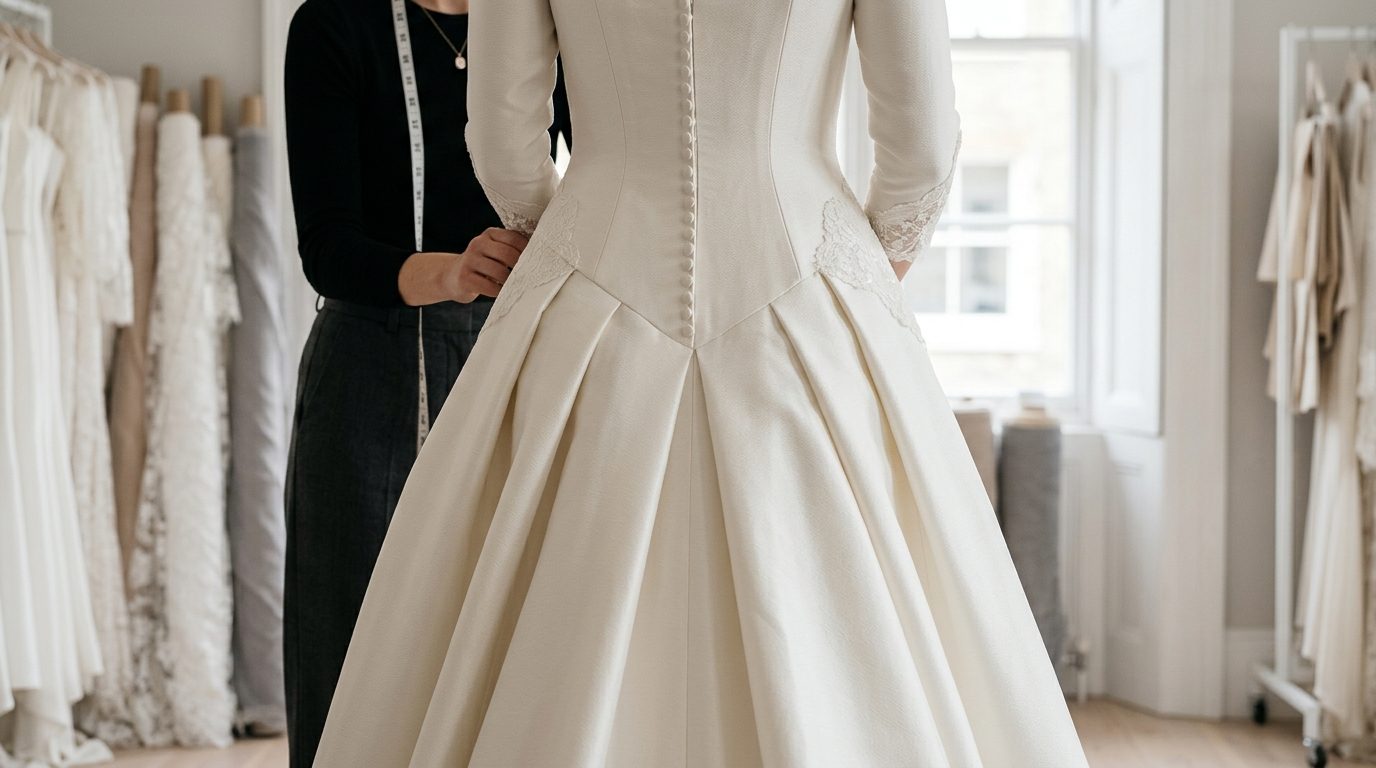
The basque line has historical associations, but a modern gown does not need costume styling.
Budgeting for the look
Price depends on designer, fabric, construction and handwork, not the waist seam alone. Reserve part of the budget for alterations, underwear, pressing and storage.
Do not order a smaller size based on an expected body change. Follow the boutique’s measurement policy and ask how the gown can be adjusted if measurements vary.
Sources and related guides
- Hitched 2026 wedding trends report, including its published search-data methodology
- Wedding dress shopping guide
- UK wedding dress costs
- Ballgown wedding dresses
Frequently asked questions
What is a basque-waist wedding dress?
Its bodice extends below the natural waist into a pointed or curved shape before joining the skirt.
Is a basque waist the same as a drop waist?
No. A drop waist usually lowers the seam more evenly, while a basque waist forms a distinct V or U.
Does a basque-waist dress need a corset?
No. It may use boning or corsetry, but the name refers to the visible waist seam rather than the internal structure.
Can a basque-waist gown be altered?
Usually, but changing the waist point or boning can be complex. Ask an experienced bridal alterations specialist before ordering.
What underwear works with a basque-waist gown?
That depends on the neckline, back and internal support. Take the intended underwear to every fitting.