Aesthetic Wedding Dress Codes: Garden Pastels & More
Key Takeaways
- 'Smart Casual' is the most complained-about dress code in the UK — 71% of guests say they find it confusing
- Aesthetic dress codes specify colour palette, mood, or era rather than formality level
- The 5 most popular UK aesthetic dress codes in 2026: Garden Pastels, Coastal Cocktail, Terracotta Chic, Black Tie Optional, and Whimsical Garden Party
- Couples using aesthetic dress codes report 38% fewer 'what should I wear?' questions from guests
- Dress code wording belongs on the wedding website and invitation insert, not on the formal invitation card
The problem with traditional dress codes
The traditional British wedding dress code ladder has five rungs: White Tie, Black Tie, Lounge Suit, Smart Casual, and Casual. This system made sense in an era when everyone understood precisely what each rung meant and when wedding guest wardrobes were largely separate from everyday wardrobes.
That era is over.
The top two rungs (White Tie, Black Tie) still work clearly — their conventions are well understood and guests who need to wear them know exactly what to buy or hire. The problem is the middle and lower rungs.
Lounge Suit is still reasonably clear for men (a suit, not a morning coat), but women find it ambiguous — does it mean a trouser suit? A formal dress? A smart skirt?
- “I’ve been to Smart Casual weddings where people wore jeans and Smart Casual weddings where people wore floor-length gowns.”
- “My mum wore a full suit. My friend wore a maxi dress. Both were technically right.”
- “I spent three days Googling it and still wasn’t sure.”
Casual produces the most visible variation of any dress code at UK weddings. In 2026, Casual can mean anything from a sundress to shorts and trainers, and the guests who interpret it one way and arrive to find everyone else interpreted it the other way feel uncomfortable for the entire event.
The gap between what couples want (a visually cohesive event that photographs beautifully) and what traditional dress codes deliver (a wide range of interpretations) is exactly where aesthetic dress codes have stepped in.
What aesthetic dress codes are
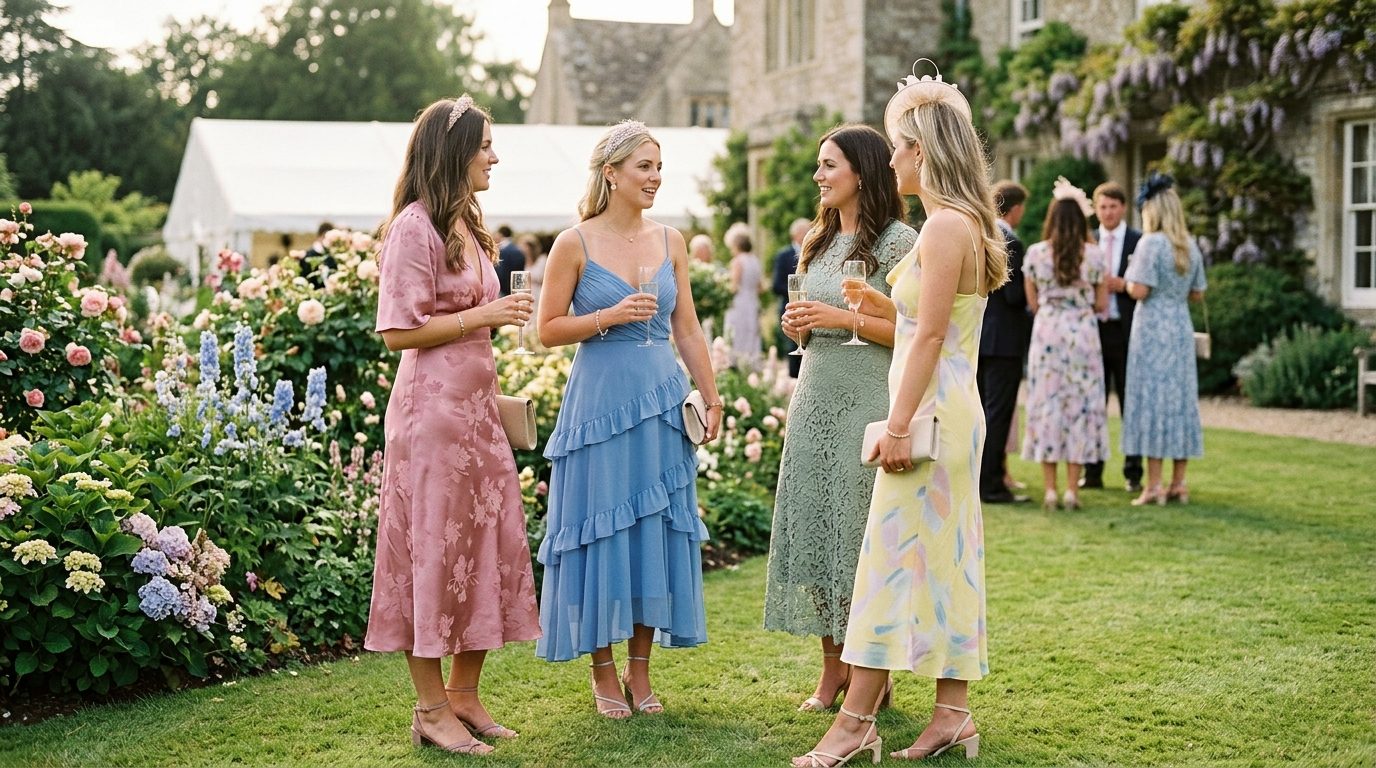
An aesthetic dress code replaces the formality-level vocabulary with a visual vocabulary. Instead of telling guests how formal to be, it tells them what to look like.
The building blocks are:
Colour palette. “Garden Pastels” tells guests to wear soft, light colours. “Terracotta Chic” tells guests to wear warm earth tones. “Coastal Cocktail” tells guests to lean into navy, white, and sandy colours. The couple is curating the visual of their wedding photographs by directing the palette.
Mood or setting. “Whimsical Garden Party” evokes a specific kind of relaxed outdoor setting. “Jazz Club Glamour” points toward the 1930s speakeasy aesthetic. “Highland Romantic” suggests tweed, warm tones, and Scottish tartans. The mood-word communicates an era, a setting, and an emotional register.
Texture and fabric. “Linen & Florals” or “Barefoot Elegant” communicates that heavy formal fabrics (velvet, satin) are wrong for this wedding, and that light natural materials are right.
The combination of these elements means guests arrive knowing both the formality level and the specific visual direction — which is what couples actually want from a dress code.
The 5 most popular aesthetic dress codes in 2026
1. Garden Pastels
The most popular UK aesthetic dress code in 2026. Suits every outdoor or country house wedding from May to September.
What it means for guests: Soft solid colours (blush, mint, sage, lavender, lemon, ivory) or floral prints in the same palette. Light fabrics: chiffon, linen, georgette, broderie anglaise. Natural textures. Hats and fascinators encouraged.
What to avoid: Black, dark navy, red, neon. Heavy fabrics.
Best for: Gardens, marquees, country houses, barn venues with outdoor ceremony.
2. Coastal Cocktail
Growing fast in 2026, particularly for coastal and riverside venues.
What it means for guests: For women, midi dresses or smart separates in navy, white, coral, sky blue, or sandy beige. Linen and lightweight fabrics preferred. For men, navy or beige chinos with a linen shirt or smart polo. Loafers acceptable — heavy black oxfords feel wrong.
What to avoid: Neon, heavy black, formal wool suits.
Best for: Seaside venues, riverside receptions, boathouse and waterfront settings.
3. Terracotta Chic
The autumn wedding dress code of 2026. Warm, earthy, and deeply photogenic.
What it means for guests: Terracotta, burnt orange, rust, chocolate brown, olive, warm cream, dusty rose. Velvet, suede, and textured fabrics appropriate for autumn. For men, brown or rust-toned suits or a warm-coloured blazer.
What to avoid: Cool blues, greys, neons, white.
Best for: Autumn weddings, barn venues, country house estates, October-November.
4. Black Tie Optional
The sharpest rise in 2026: Black Tie Optional (BTO) has increased from 14% to 26% of UK couples specifying a formal dress code. The appeal is that it gives guests permission to go formal (full Black Tie: tuxedo, floor-length gown) or stay very smart (a dark cocktail dress, a sharp lounge suit). Everyone photographs well and no one feels underdressed.
What it means for guests: Men: tuxedo or very smart dark suit. Women: floor-length gown, formal cocktail dress, or tailored jumpsuit. No jeans, no casual shoes, no lighter coloured suits.
Best for: Evening-start weddings, city venues, luxury hotels, winter celebrations.
5. Whimsical Garden Party
A slightly less formal version of Garden Pastels, with the addition of print-mixing, statement accessories, and a playful spirit.
What it means for guests: Floral prints, fruit or insect prints, maximalist pattern-mixing, statement hats, bold jewellery. Think the best of Chelsea Flower Show meets Ascot Royal Enclosure, slightly relaxed. Midi to full length for women; linen blazer and smart chino for men.
What to avoid: Overly formal (full ball gown feels wrong), overly casual (shorts and trainers are definitely wrong).
Best for: Meadow weddings, walled garden venues, summer country house parties.
How to communicate an aesthetic dress code
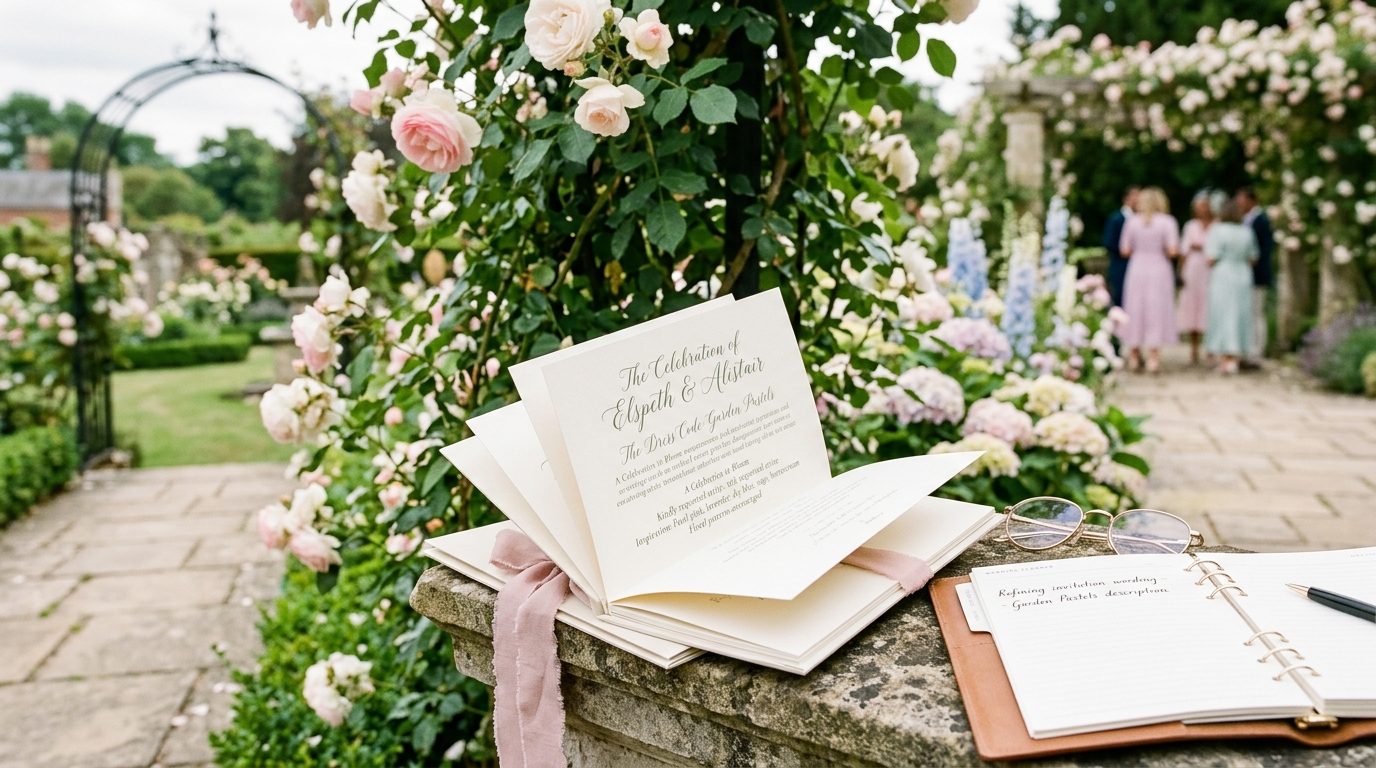
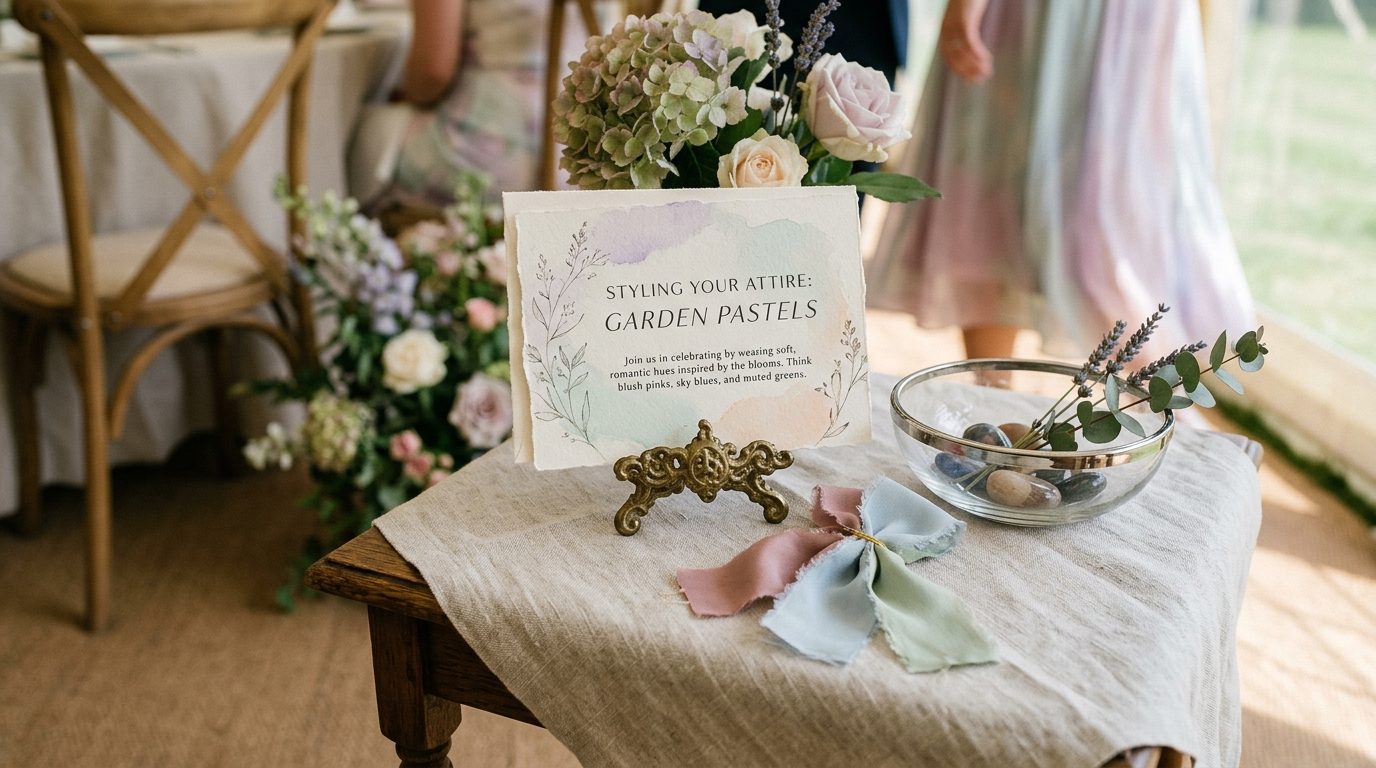
On the wedding website: A full paragraph with:
- The name of the dress code (bold, at the top)
- Two to three sentences explaining the palette and mood
- A Pinterest board or specific visual references
- One or two “What NOT to wear” notes (avoids conflict with the couple’s colour scheme — particularly relevant if the wedding party is in a specific colour)
On an invitation insert card: A single sentence summarising the code, with a note to “see our website for full details and inspiration.”
Not on the formal invitation card itself. The invitation card is for the ceremony and reception details. Dress code information belongs with the practical guidance.
On the RSVP form: Some couples add a dress code reminder at the top of the RSVP form. This reaches guests who complete the RSVP without visiting the full website.
A practical example of full dress code communication, used by a Bristol couple in 2025:
Website: “Garden Pastels — We’re celebrating in the gardens at Deene Park, and we’d love our photos to look like a meadow in full bloom. Think: soft florals, light fabrics, anything in pastel, white, or sage. Hats and fascinators are completely welcome. Avoid black and dark navy if you can — we want the garden to sparkle. Not sure? Our [Pinterest board] shows exactly the vibe.”
Insert card: “Dress code: Garden Pastels. Soft colours, light fabrics, florals welcome. See weddingofclaireandmark.co.uk/dress-code for full guidance.”
When aesthetic dress codes cause problems
The most common complaint about aesthetic dress codes is from older guests who find the non-traditional terminology unclear. “Garden Pastels” doesn’t have the same instinctive clarity as “Lounge Suit” for a 65-year-old who grew up with the traditional system.
The solution is simple: always include a clarifying formality signal alongside the aesthetic description. “Garden Pastels (Smart Casual level formality)” or “Coastal Cocktail (Cocktail level)” bridges the two vocabularies.
The second most common issue is conflicting with the wedding party colours. If the bridesmaids are in dusty rose and the dress code is “Garden Pastels”, guests in blush pink will clash with the bridal party. Specify which colours to avoid for this reason: “We’d ask guests to avoid dusty rose and sage — those are our bridal party colours.”
A first-hand account: Norfolk, 2025
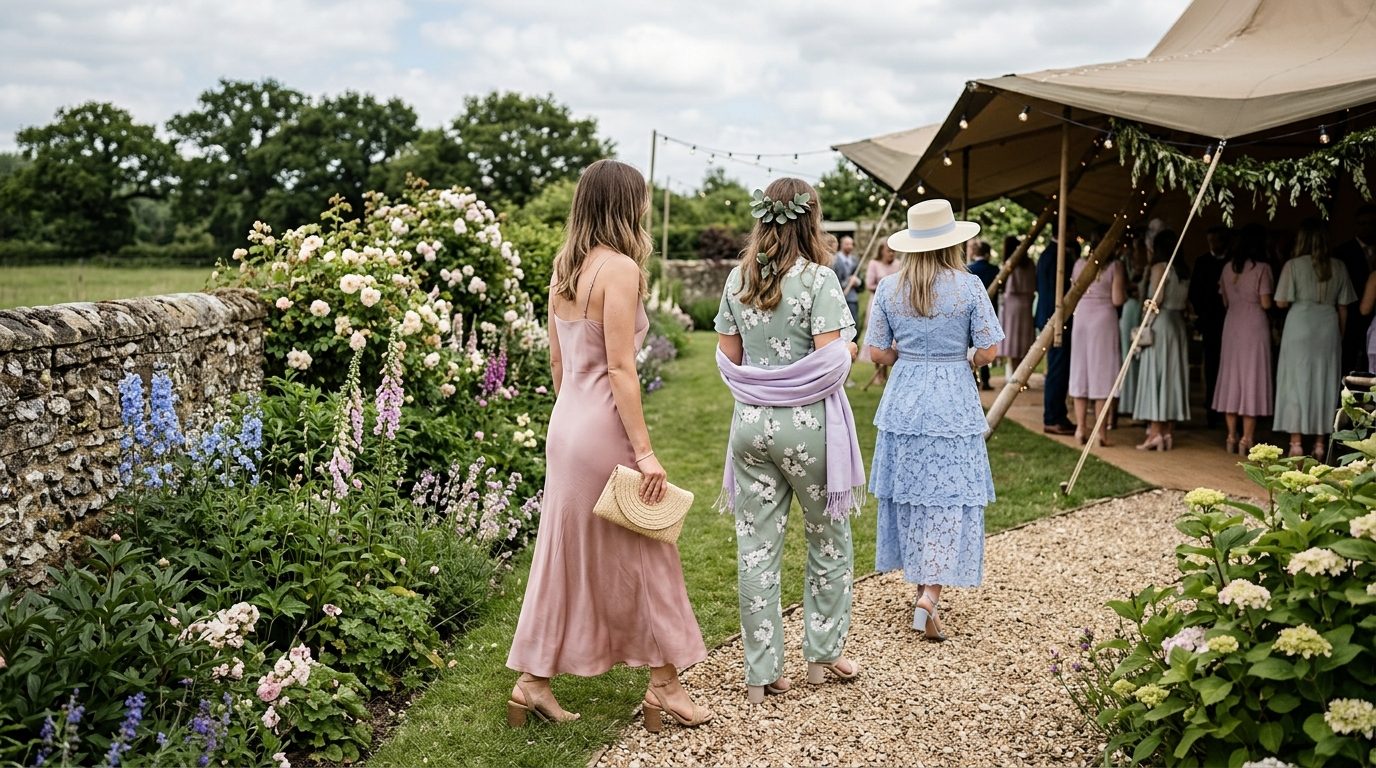
Hannah and James, both 31, married in June 2025 at Voewood in Norfolk. Hannah spoke with Weddings Hub in March 2026.
“We used ‘English Garden Party’ as our dress code. We added a note on the website: ‘Think floral prints, soft colours — blues, greens, pinks, yellows. Hats and fascinators encouraged. No black please — we want the garden to look like it’s in bloom.’
“We had maybe 4 messages asking what to wear, compared with the 30+ messages my sister got for her ‘Smart Casual’ wedding the year before. The photos look incredible — you can see the whole colour palette working together in the group shots. And almost every guest commented that they loved the dress code because it gave them a reason to wear something beautiful rather than defaulting to a safe black dress.”
Hannah confirmed that the handful of guests who wore black felt conspicuous and that two specifically mentioned wishing they had read the website guidance more carefully.
Does it work?
The three stylists Weddings Hub spoke with all described the same observation: when guests know what palette they’re dressing for, they make different choices from when they’re told a formality level. Formality level produces a spread of colours. Palette direction produces a visual theme. The couple’s photographs capture a different kind of event.
Related reading
- What to Wear as a Wedding Guest in June 2026: The Ascot Effect
- Royal Ascot 2026 Wedding Guest Outfit Guide
- The 12 Wedding Etiquette Rules Every UK Guest Gets Wrong
- Is It Tacky to Wear Black to a UK Wedding?
- 9 Things UK Brides Have Banned Guests From Doing
Frequently asked questions
What is an aesthetic dress code?
An aesthetic dress code describes the mood, colour palette, or visual theme a couple wants at their wedding, rather than the traditional formality category (Black Tie, Smart Casual, etc.). Examples include 'Garden Pastels' (soft florals and light colours), 'Coastal Cocktail' (navy, white, coral, linen), or 'Terracotta Chic' (warm earth tones). Aesthetic dress codes give guests more creative freedom while actually producing a more cohesive visual result than vague terms like 'Smart Casual'.
What does 'Coastal Cocktail' mean as a dress code?
Coastal Cocktail is a cocktail-level dress code with a nautical and coastal colour palette. For women: midi dresses or smart separates in navy, white, coral, sky blue, or sandy beige — linen and light fabrics preferred. For men: navy or beige chinos, a linen shirt or smart polo, loafers or clean white trainers acceptable. Avoids heavy black or neon colours. It signals 'smart but relaxed, sunlit venue, seaside or outdoor setting'.
What does 'Garden Pastels' mean as a dress code?
Garden Pastels means floral prints, soft solid colours (blush, mint, lavender, sage, buttercream), and natural fabrics suited to a garden, country house, or outdoor venue. For women: floral midi dresses, linen blazer over wide-leg trousers, or a tailored suit in a soft colour. For men: pastel shirt under a lightweight blazer, chinos in sand or sage, no tie required. Avoids black, dark navy, and heavy formal fabrics.
Is 'Smart Casual' still an acceptable wedding dress code?
The problem is that Smart Casual means genuinely different things to different people and different generations. A 28-year-old and a 65-year-old will interpret it very differently. If you use Smart Casual, add one clarifying sentence: 'Think smart trouser/skirt and a blouse or blazer — not jeans, not a suit.'
Where does the dress code go on a wedding invitation?
The dress code belongs on the wedding website and optionally on an insert card in the invitation envelope. It does not go on the formal invitation card itself. The format: a short name for the code ('Garden Pastels'), followed by one or two sentences of guidance. Some couples add a Pinterest board link for visual inspiration. The website is the best place for full detail and photos. A dress code insert card in the invitation envelope bridges the gap for guests who don't visit the website.
What are the most popular aesthetic dress codes for UK weddings in 2026?
Black Tie Optional has risen sharply in 2026 as couples want formal photos but don't want to force guests into full Black Tie.